One system from request to payment. AUD and GST built in. Your own escalation ladder. Every document under your State or Territory’s law. Private sector today, public sector when you sign. The process is built. We set up your jurisdiction’s rules before you go live.
AUD and GST 10%8 states and territoriesRequisition to payment
.../rules
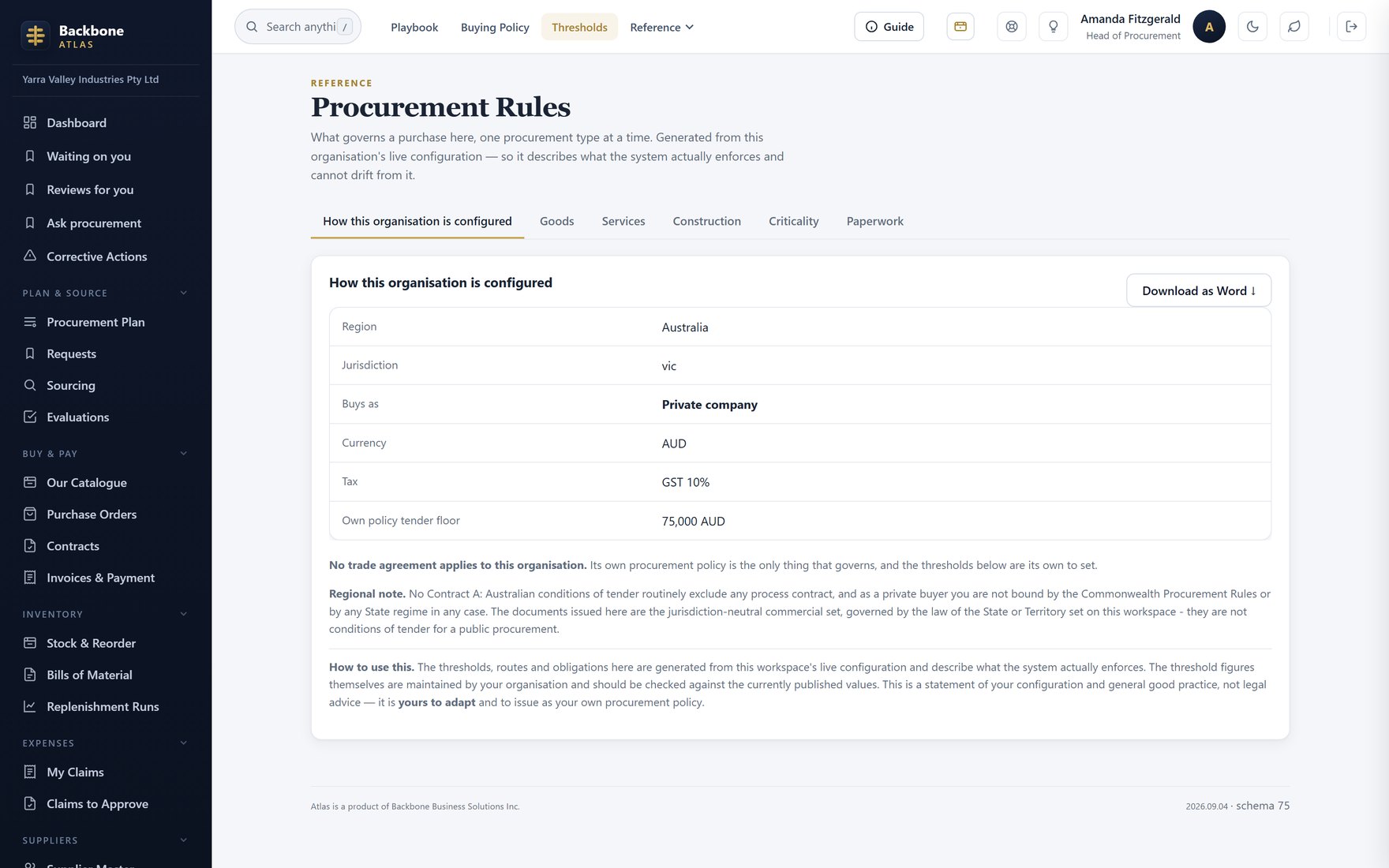
The real settings screen
Australia isn't a currency symbol. It's how the system runs.
Choose Australia and it sets the currency to AUD and tax to GST at 10%. One national rate, not a stack of state taxes. Your State or Territory decides the law your agreements are written under.
A private buyer has no trade-agreement floors. So there is no threshold table pretending to
govern you. Your own escalation ladder is the whole rule, and the system enforces exactly that.
.../rules
Private sector Manufacturing · Construction · Services · Mining
Control spend without a procurement department.
Set the ladder once. Direct purchase. Where three quotes start. Where a formal solicitation begins. Where a written contract becomes mandatory. Value and how critical an item is both move it up the ladder. A $2,000 safety-critical part gets the process it needs.
Requisition, approval, sourcing, PO, receipt, invoice and three-way match in one place
No purchase order without a requisition behind it. Enforced, not advised.
Supplier portal at no extra licence cost, so quotes and invoices stop arriving by email
Every figure on every policy page comes from your own settings
Reads UBL/Peppol and Factur-X e-invoices and checks their arithmetic. Produces Peppol purchase orders. Delivery runs through an accredited access point, contracted before first use.
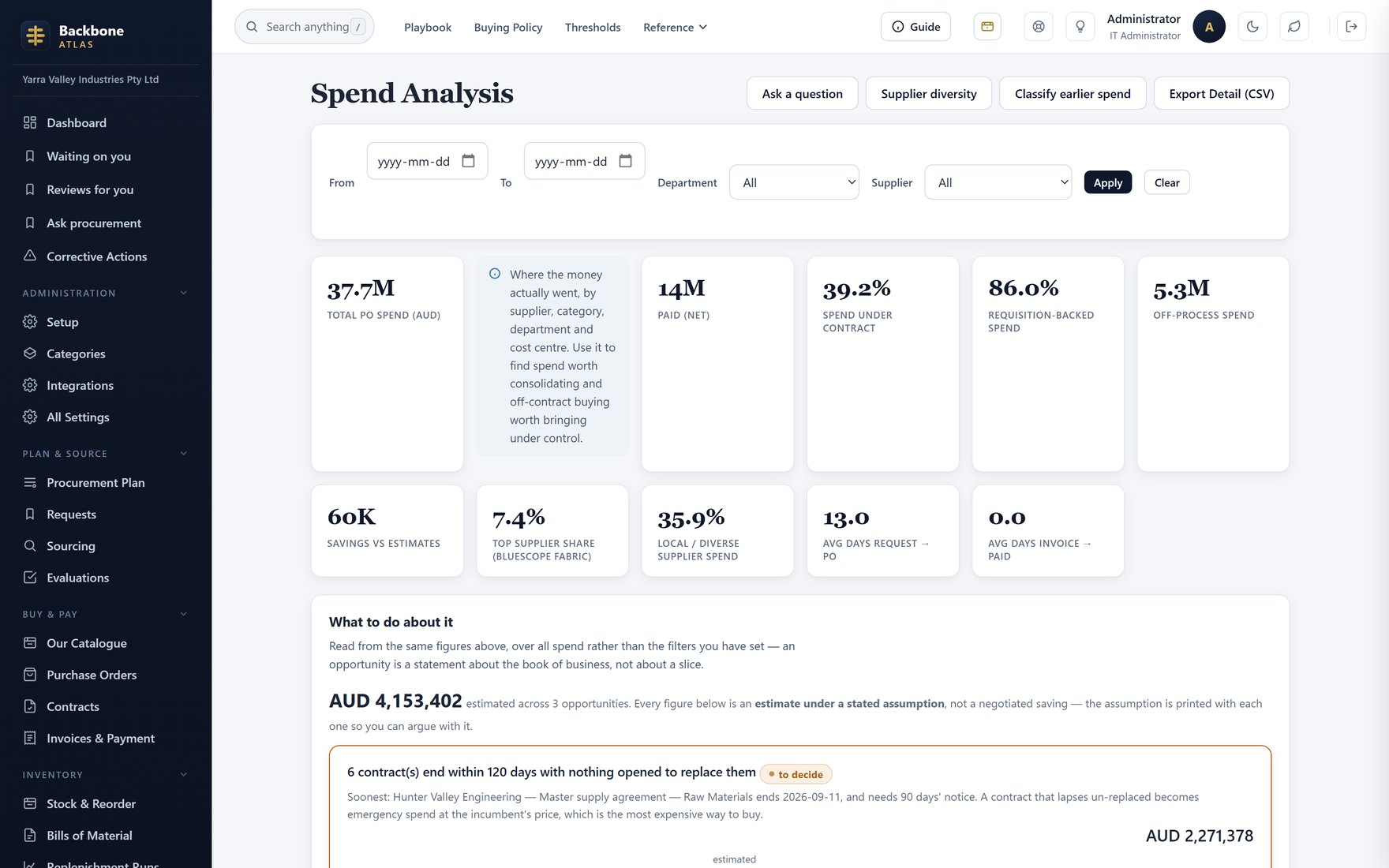
.../spend
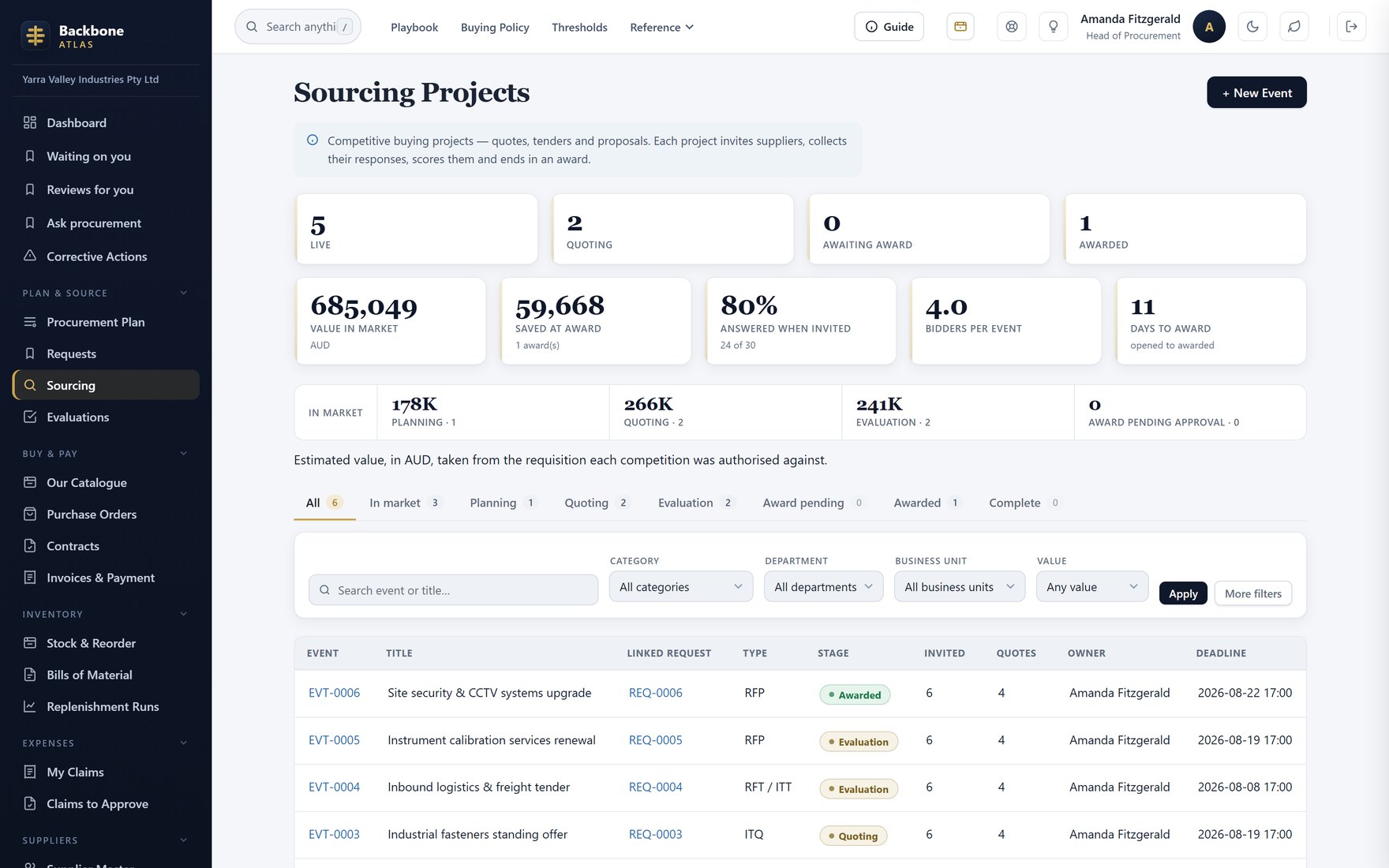
.../sourcing
The whole event in one place
Run it properly, or run it quickly.
An RFQ for simple buys. An RFT when the specification decides. An RFP when value for money matters more than price. An EOI first, to find who is capable before anyone prices.
Price is scored four ways: proportionally, lowest compliant wins, line by line across a schedule of rates, or day rates costed against expected volumes. Bidders see the method in their documents. The evaluation uses that exact method.
Public sector
The public-sector process is built. Your rules are set up when you sign.
An Australian public buyer runs the same process
as public buyers in Canada, the UK, the EU and the Gulf. Sealed bids, evaluation, award, contract and
three-way match. What differs is your thresholds, rules and conditions of tender. We configure those
for your entity and State before you go live.
A Commonwealth entity, State agency or council needs more. The entity categories the
Commonwealth Procurement Rules distinguish. CPR thresholds for non-corporate and corporate entities,
and for construction. Each State’s own regime on top. And conditions of tender that address the
process-contract position Australian tenderers expect.
Set up for you when you sign. The Commonwealth or State rules that apply to your entity
are configured before you go live. Never an empty threshold table that looks configured and
enforces nothing.
Some systems would sell you the private-sector product with new labels. You would
find the gap in your first tender.
Until your rules are in, it refuses. No public solicitation until your rules are
configured. Atlas declines, names the Commonwealth Procurement Rules, and says
why.
An Australian public buyer? Tell us your entity and State. The process stays the same. We set up your thresholds and documents before you go live.
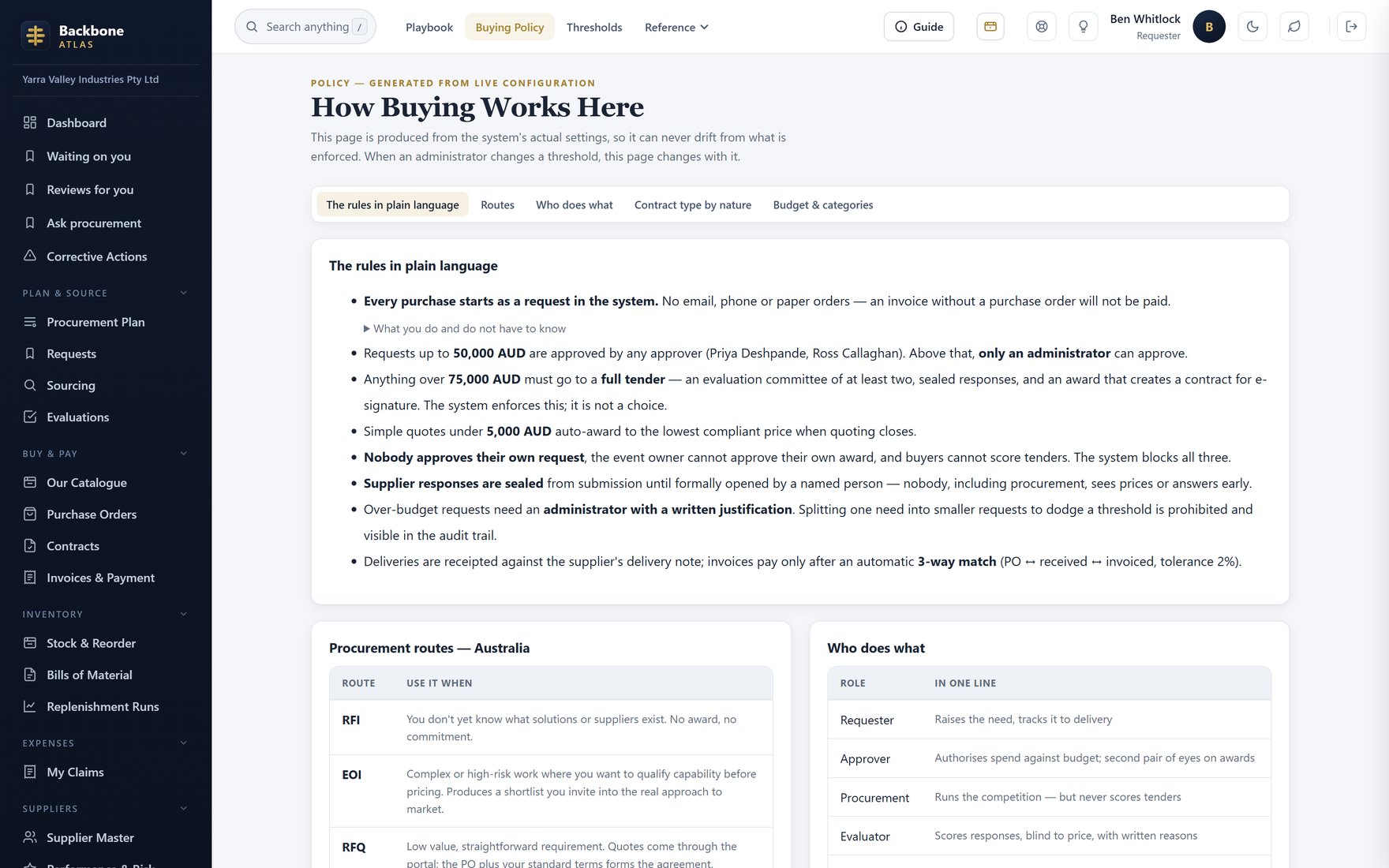
Generated, not hand-written
Your procurement policy can't drift from what the system does.
The Procurement Rules page, the role guides and the process walkthroughs all come from the
same settings the system enforces. Change a threshold and the policy document changes with it.
No Word file to keep up, slowly drifting from reality. You get a policy you can show an
auditor, not one you have to apologise for.
.../policy
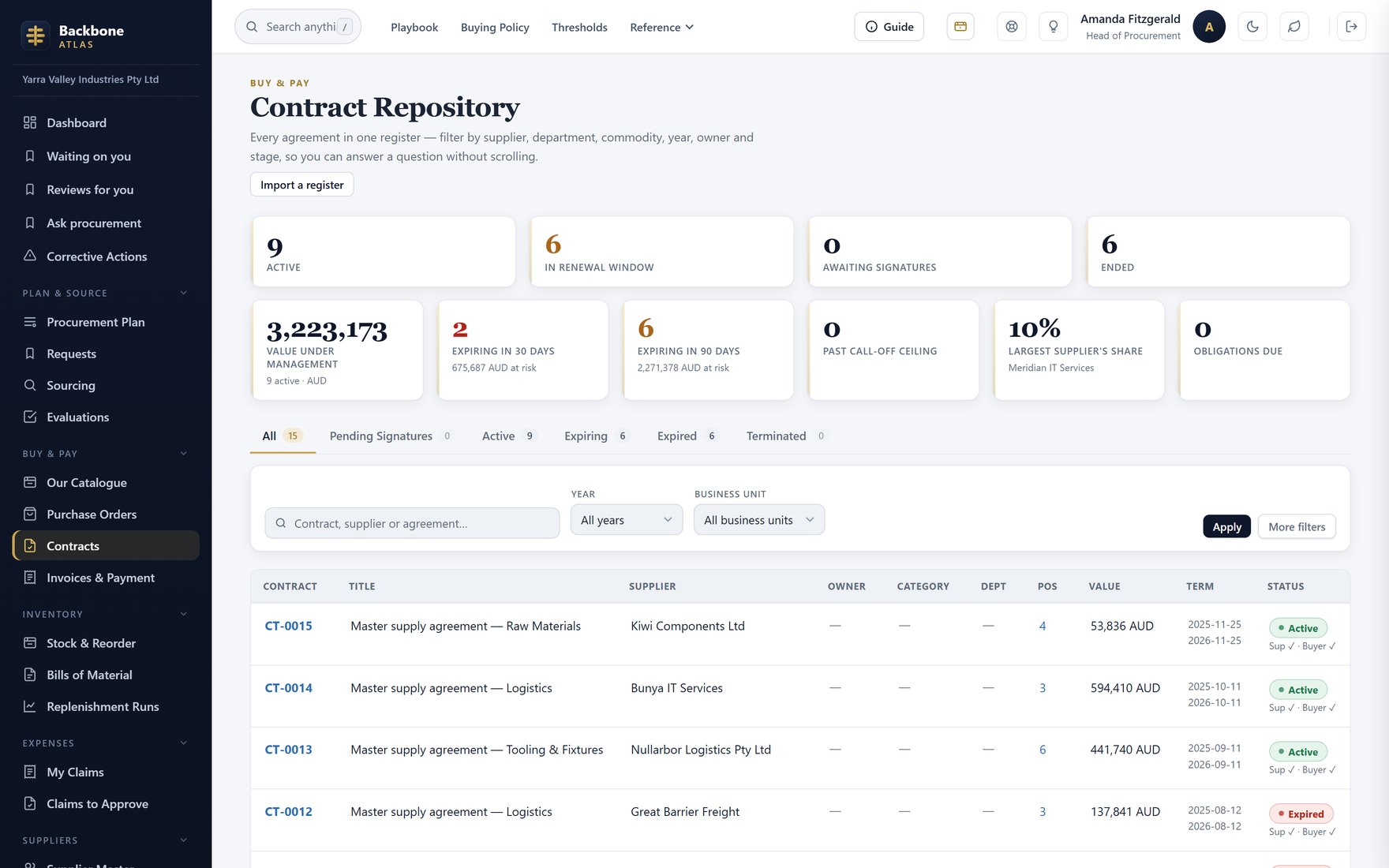
.../contracts
From award to payment
The award isn't the end of it.
An award raises the purchase order. Where required, it also raises the contract, with its milestones, certification and retention. Goods receipt, invoice and three-way match follow in the same system. Nothing handed over, nothing retyped.
Suppliers confirm orders, send delivery notes and submit invoices in the portal. No
extra licence cost to you or to them.
See it on your own procurement
Bring Australian procurement out of the inbox.
A short demo on your own categories,
thresholds and State. If it is not right for you, we will say so.