Category management
One category tree. Everything codes against it.
One category tree drives every request, order, contract and report. So spend by category is a fact, not a reconciliation job.
The taxonomy
Defined once, used everywhere.
Chosen on the request, and carried by everything after it.
- One treeYour categories, used by every request, order, contract, supplier and report
- CodesAll 158,463 UNSPSC codes load by default. Your provider can leave out segments a workspace never buys in
- OwnedSwitch off an unused category without rewriting its history
- HonestNo mapping step, and no unchecked spreadsheet
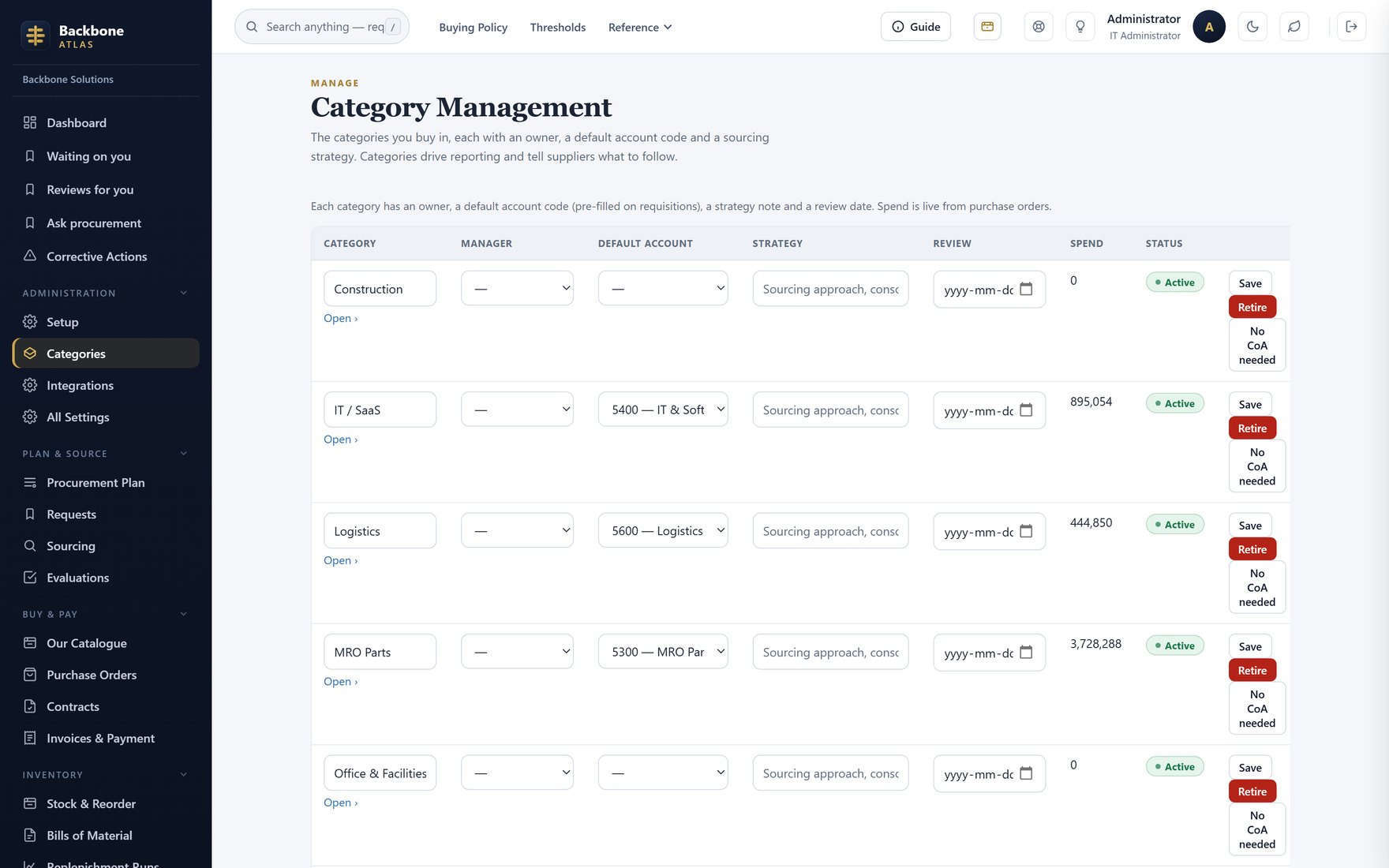
CategoriesThe tree every record codes against.
For the category manager
See the whole category, not one purchase.
Find out what the organisation buys in the category, and from whom.
- SimpleRead total category spend, by supplier and department
- ThenFind repeat buys split too small to compete
- ThenPlan the category with target dates and values
- ComplexGroup related demand into one competition and a standing arrangement
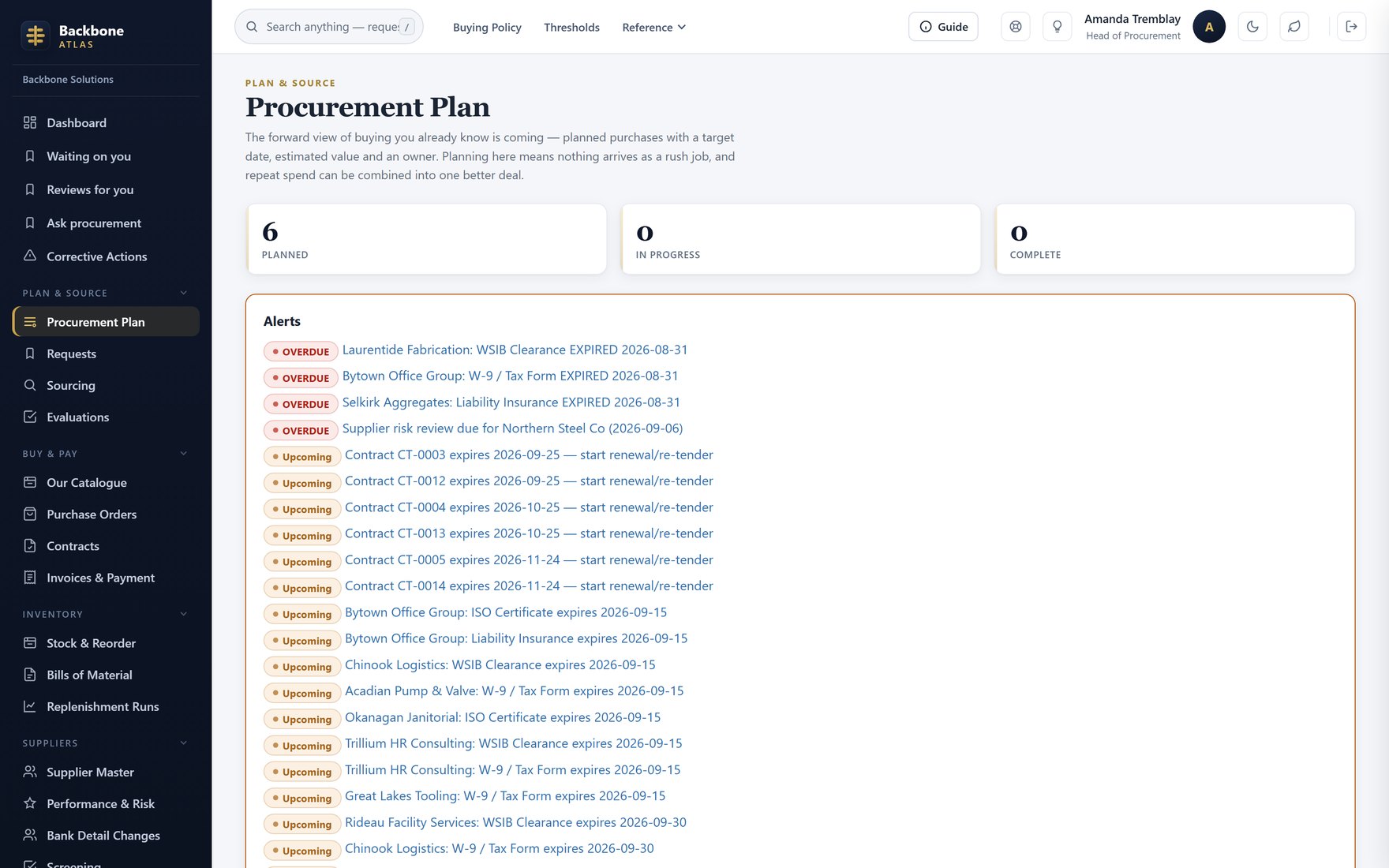
Procurement planThe forward plan, by category and date.
For a procurement director
Where the money is, and where to focus.
A small team must pick where sourcing effort pays.
- SeesSpend by category, and the share under contract
- SeesWhich categories use one supplier and which use forty
- DoesDirects sourcing effort where it will pay
- ProofMeasured on the same data the buying runs on
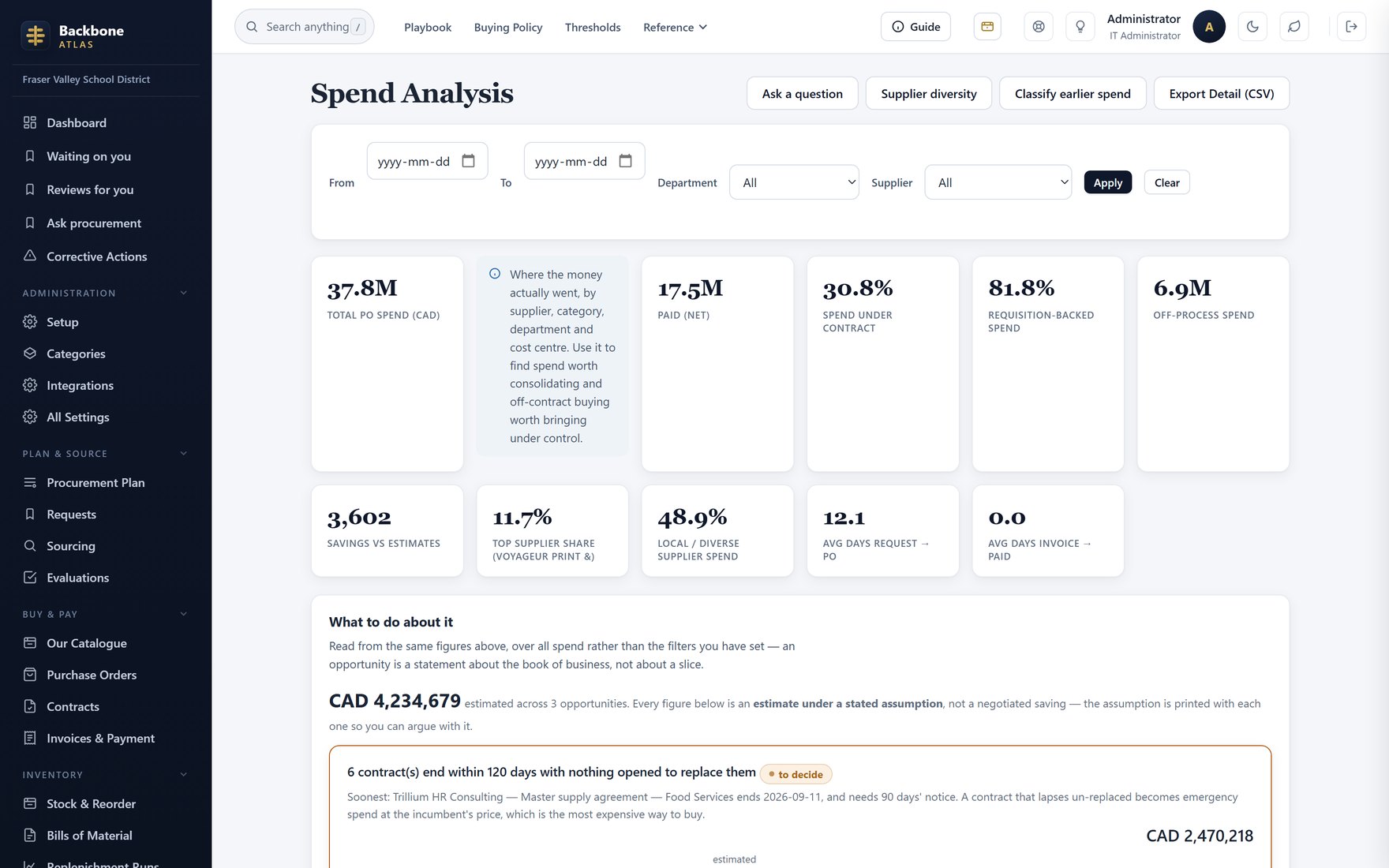
Spend analysisSpend by category, supplier and department.
For a CPO
A category saving must trace to its category.
Finance doubts savings with no category or baseline behind them.
- SeesSavings by category: forecast, realised or validated
- SeesThe baseline and method behind each claim
- DoesReports figures someone outside procurement has agreed
- ProofOne tree carries spend and savings, so the two compare
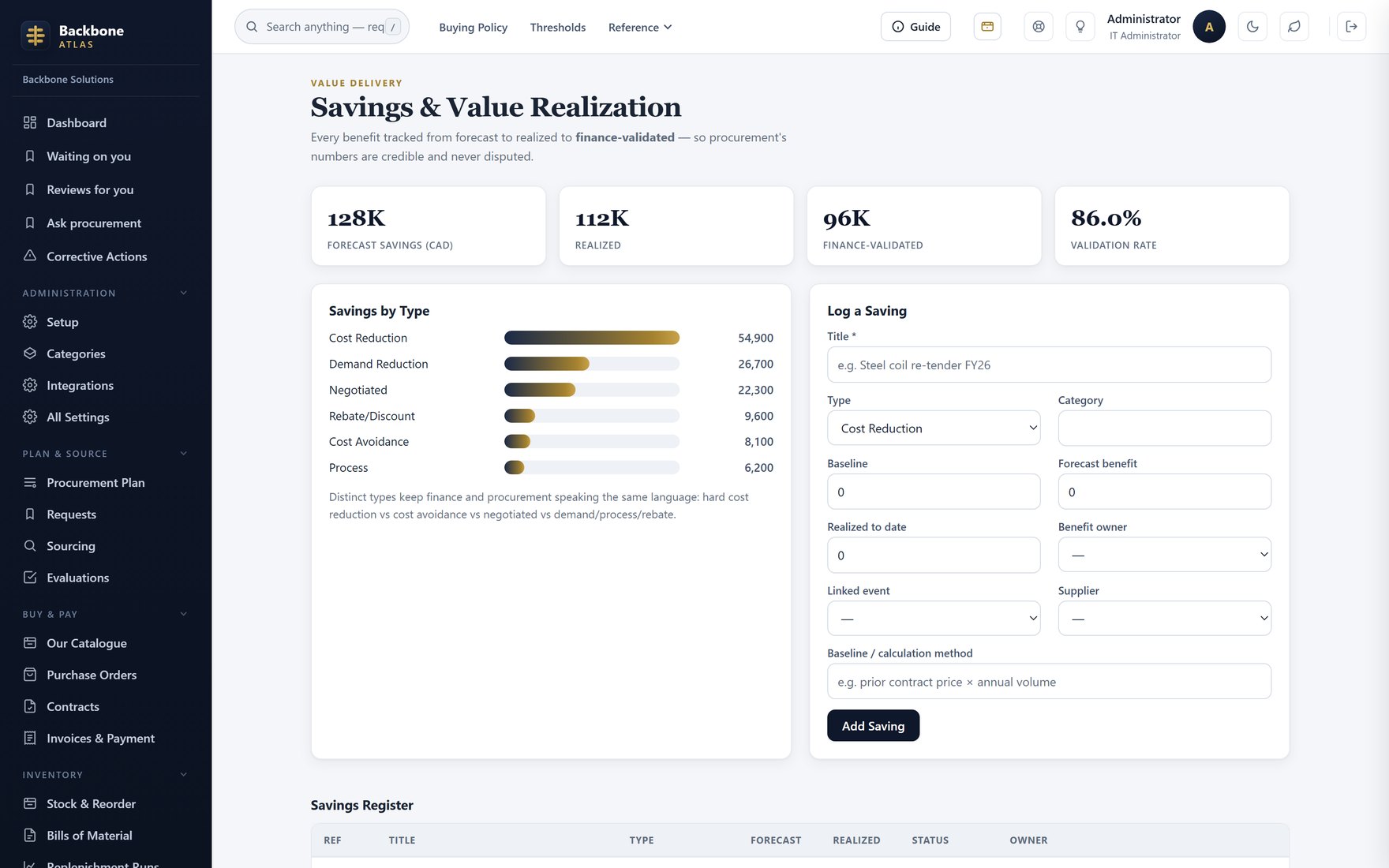
Savings & valueClaims by type and category, in three states.