Direct procurement & inventory
What production uses, ordered before it runs out.
Stock, bills of materials and reorder points sit right beside purchasing. Demand is calculated, not requested, and running out stops a line.
Stock and coverage
Know what you hold before you buy.
Each item shows what is held, what is on order and its reorder point.
- HoldsOn hand, on order and available, per item
- LevelsReorder point, safety stock and maximum suggested from usage and lead time. A person adopts them
- MovesEvery receipt, issue, adjustment and production run, logged against the item
- LinksEach item knows its supplier and contract price
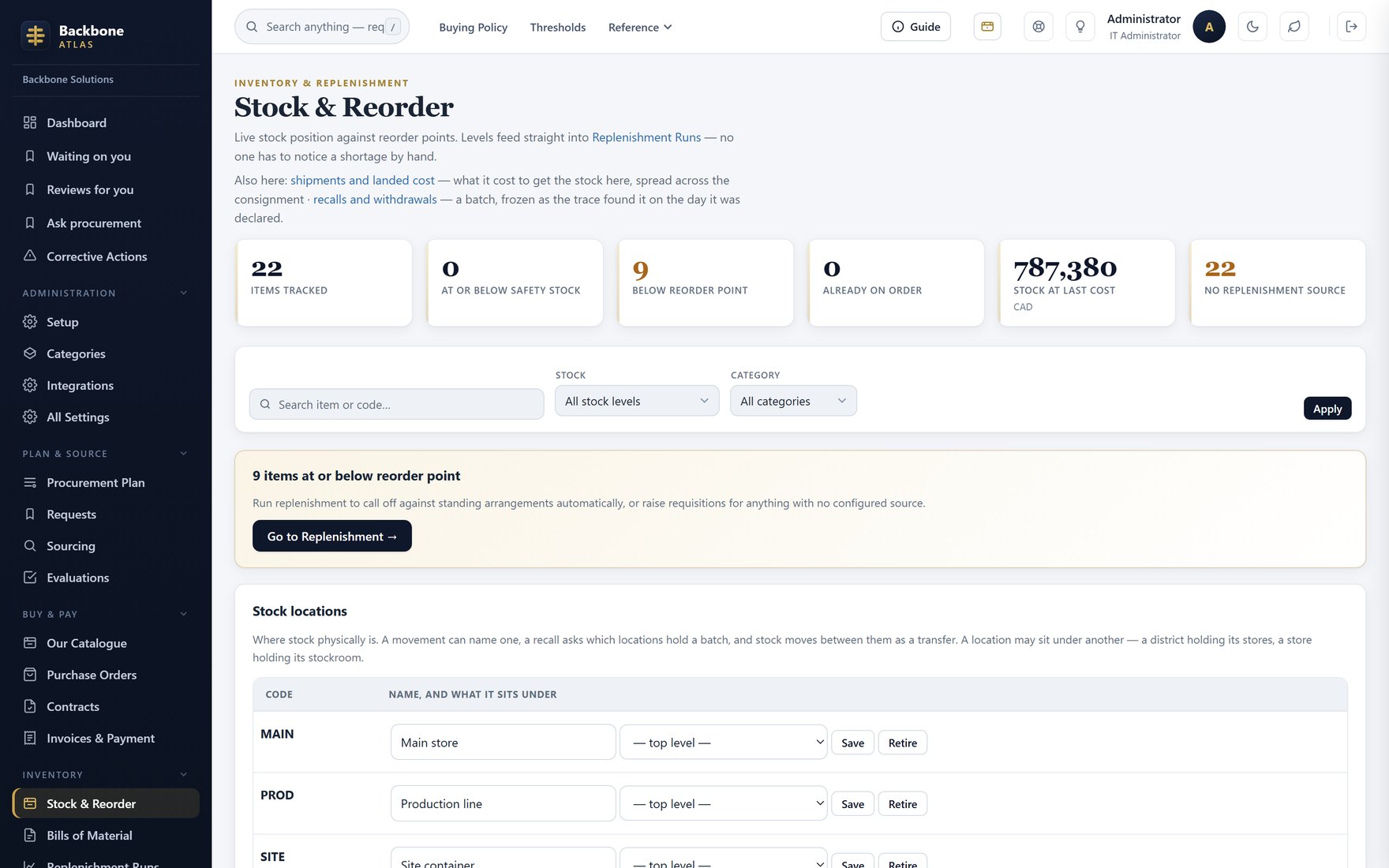
InventoryOn hand, on order and against reorder point.
For the planner
What a build uses, held as structure.
Producing against a bill of materials draws the components down automatically.
- SimpleList the components a build uses, and how many
- ThenProduce: components out, finished item in, in one step
- ThenSee shortfalls before the build, not during it
- ComplexKeep a separate bill for each product variant
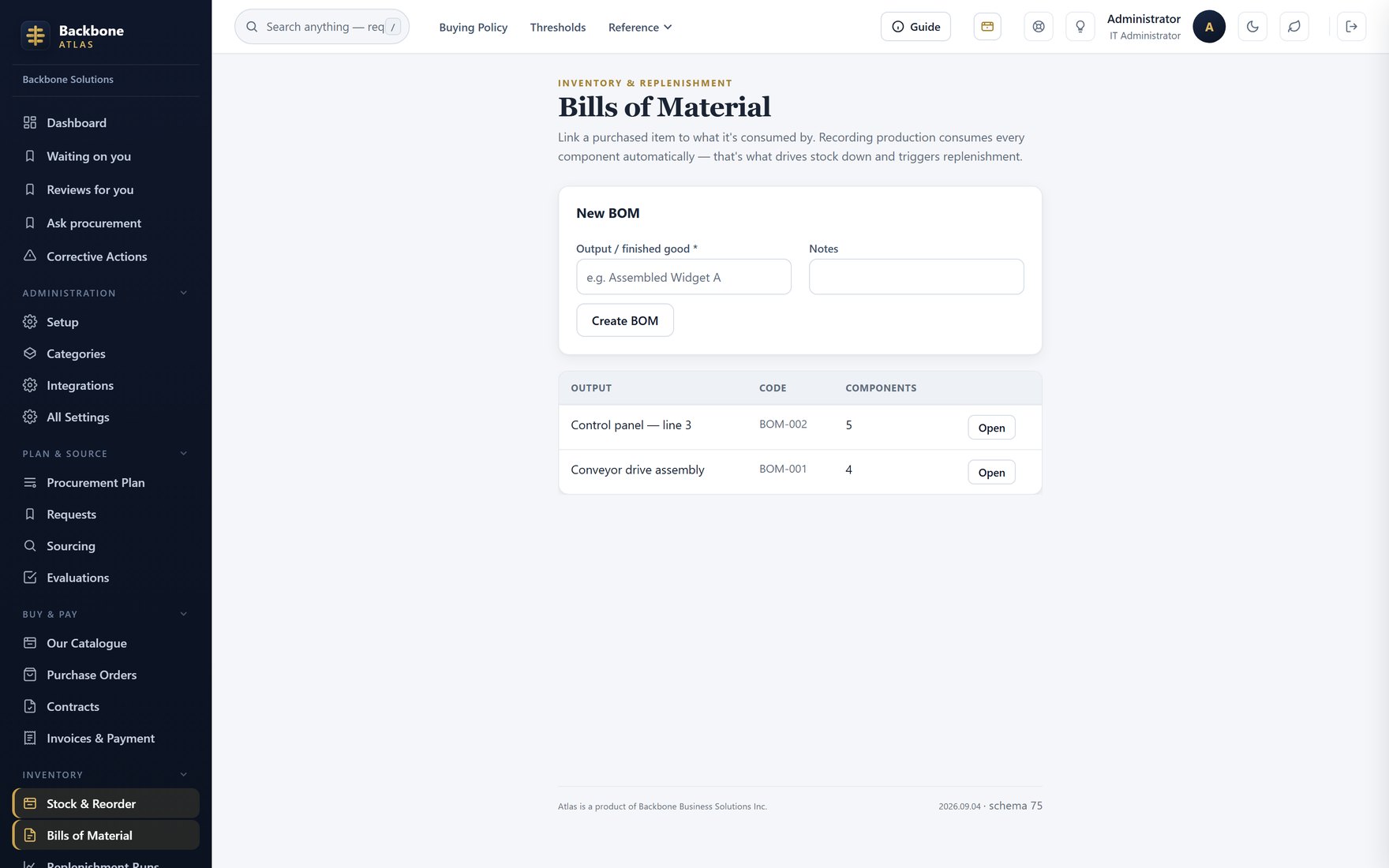
Bills of materialsWhat each build uses, and how much.
For the buyer
Replenishment proposes. The buyer decides.
Atlas proposes orders for items below their reorder point. It does not place them.
- SimpleRead the proposal: item, quantity, supplier, date
- ThenAdjust for a shutdown, a price break or a supplier minimum
- ThenOrder at the contract price, where there is one
- ComplexNo contract? Send it to sourcing, already specified and valued
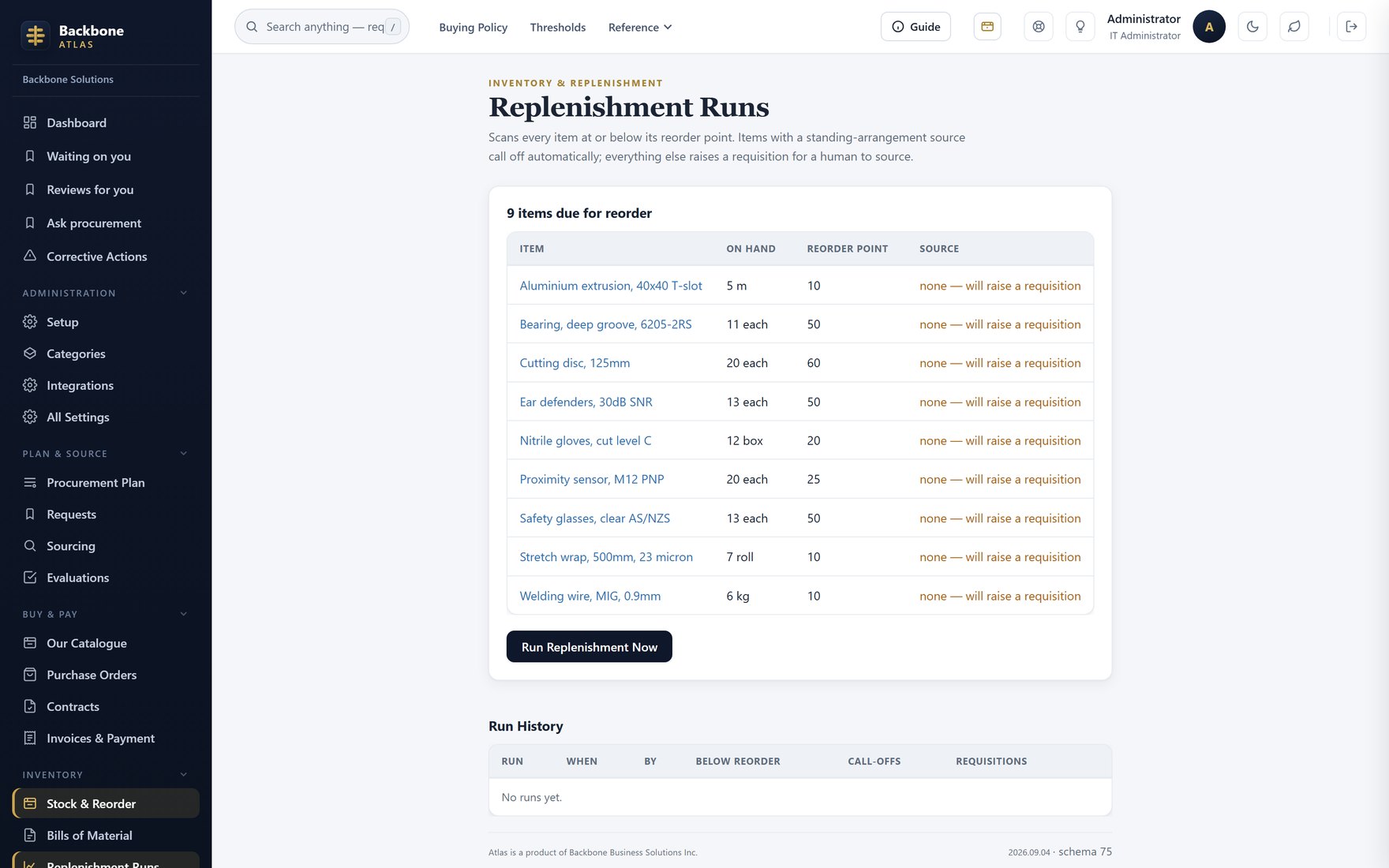
ReplenishmentWhat to buy, from whom, by when. Proposed, not placed.
For receiving
Receive into stock, not into a folder.
One receipt updates stock and completes the match.
- SimpleRecord what arrived against the order
- ThenRecord short and damaged deliveries as they are
- CostUnits of measure convert. Landed cost gives the true unit cost. Stock is held per location and moved by transfer. Rate schedules are on the industry pages
- EffectStock, the match and the supplier's delivery record update at once
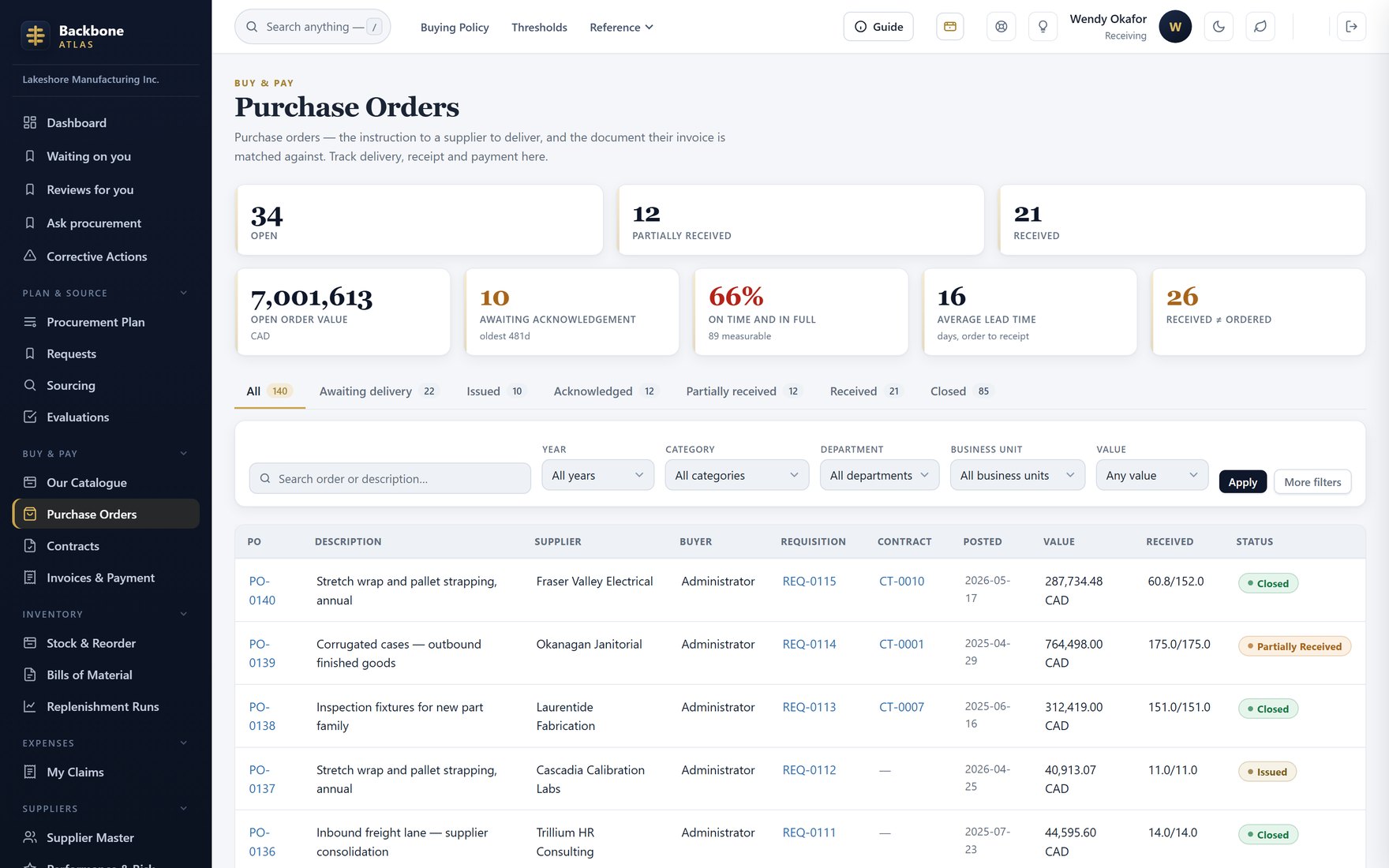
ReceivingOrders awaiting goods, and what has arrived.
For dated or traceable stock
Lot numbers, dates, and stock that arrives short.
Some materials arrive as dated batches. You must be able to say where each one went.
- BatchLot and serial numbers on each movement, traced to every place a batch reached
- DatedExpiry or best-before on the stock, with what to issue first. Advised, not enforced, on a ledger that cannot prove which batch left
- ShortMinimum remaining life measured at booking-in, against your recorded policy. No policy, no judgement
- WrongNon-conformance recorded on the batch, with a disposition and a reason. It moves no stock itself
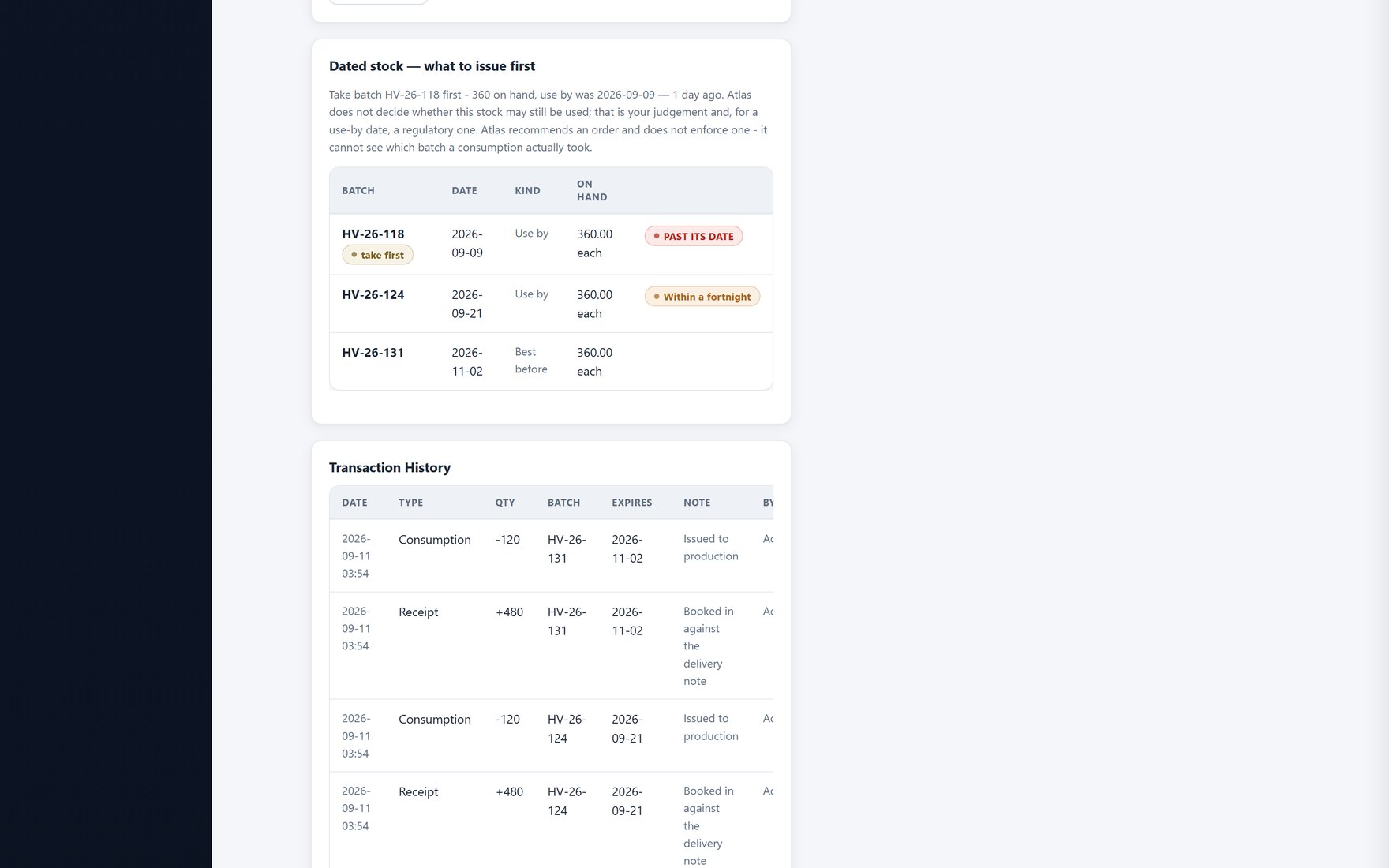
Dated stockWhat to issue first, and what Atlas will not claim to know.
For an operations director
Working capital, not just purchase prices.
The question is how much cash sits on a shelf, and whether the line will stop.
- SeesSpend by category, with direct lines split out
- SeesParts with no second source
- DoesAdopts levels suggested from actual usage. None without a stated service level, or for sporadic or uneven demand
- ProofEvery order traces to a requisition or a replenishment run
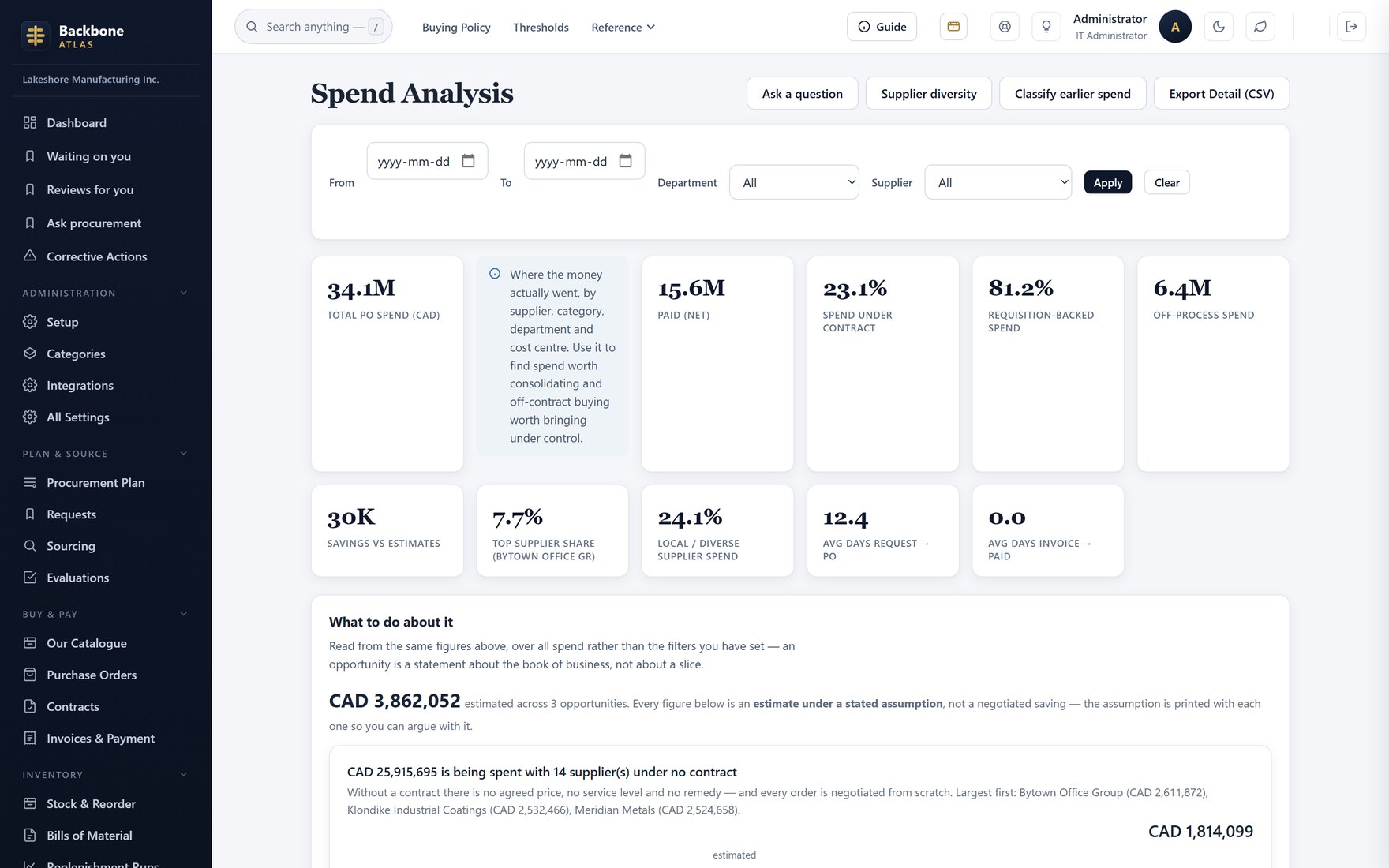
Spend analysisWhere the money goes.