Guidance built in
The system explains itself. No training needed.
Atlas writes its own manual from your live settings, one guide per role. Your real thresholds, screen by screen, in a drawer on the screen you are on.
Why it is generated
A manual written once is soon wrong.
These guides read the same settings the system enforces. A guide cannot say 75,000 while the system enforces 50,000.
- LiveEvery figure has one source. Guides, policy and rules cannot disagree
- YoursPublic and private buyers get different text. Each sees only what applies
- RegionalWords follow the region: grievance in the Gulf, challenge in Canada
- HonestEach page marks what is enforced and what is general practice to adapt
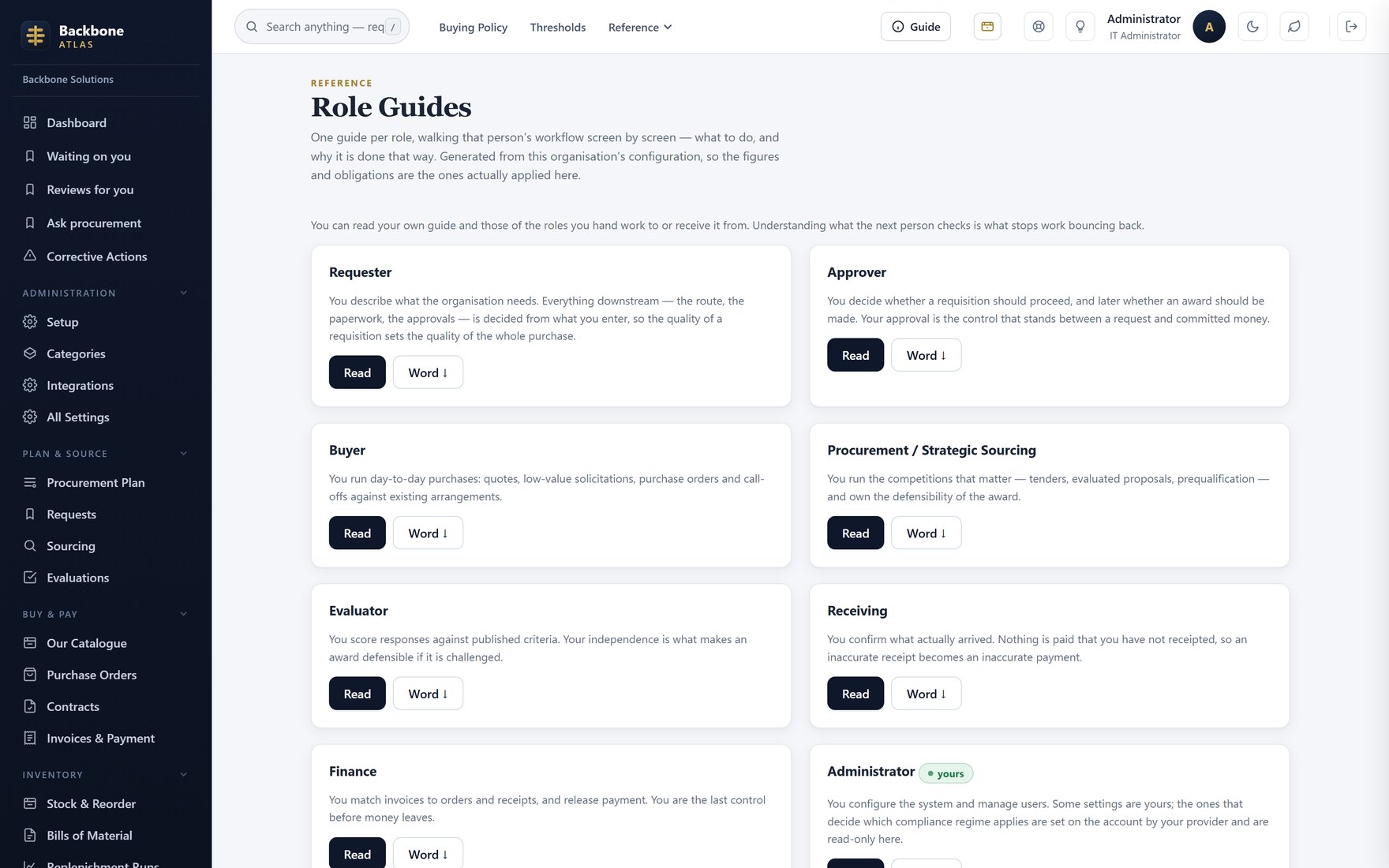
Role guidesOne guide per role, nine in all, each exportable to Word.
What do I do
Screen by screen, with the reason for each step.
Each step says what to do, why, and what people get wrong.
- WhatThe action, on its screen
- WhyWhy the control exists, so people follow it
- EdgeCommon mistakes. What a rejected request keeps. Why a submitted requisition cannot be edited. What an empty queue means
- ExportDownload any guide to Word and issue it as your own procedure
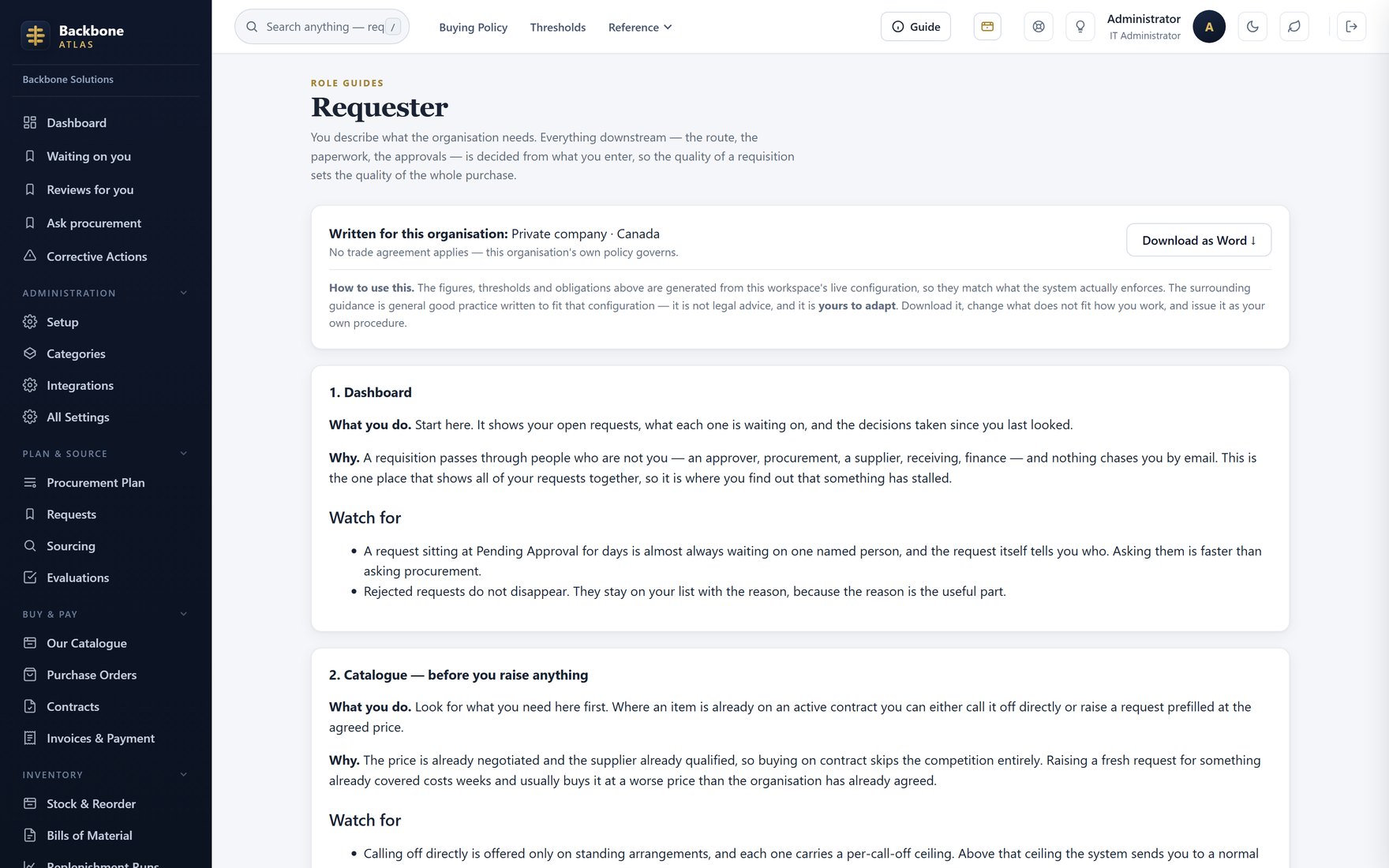
A role guideThe requester's guide: what to do, why, and common mistakes.
Where has this got to
Each process, across everyone it passes through.
A role guide cannot say why something is stuck. Eighteen process guides follow a purchase across every role. A route map, off by default, draws each path. Where a regime is not modelled, it says so.
- EighteenTwelve core guides, such as need to order and order to payment. Six more: construction, oil and gas, FMCG, manufacturing, retail, and units and landed cost
- DrawnEach guide opens with its flow. Handovers are marked: where work changes hands and often stalls. Drawn from the stages, so it cannot drift
- Each stageThe screen, the person, what happens, what the system does by itself
- Regime-awarePosting period and standstill show for public buyers only
- ExportableEvery flow downloads to Word, marked as generated and yours to adapt
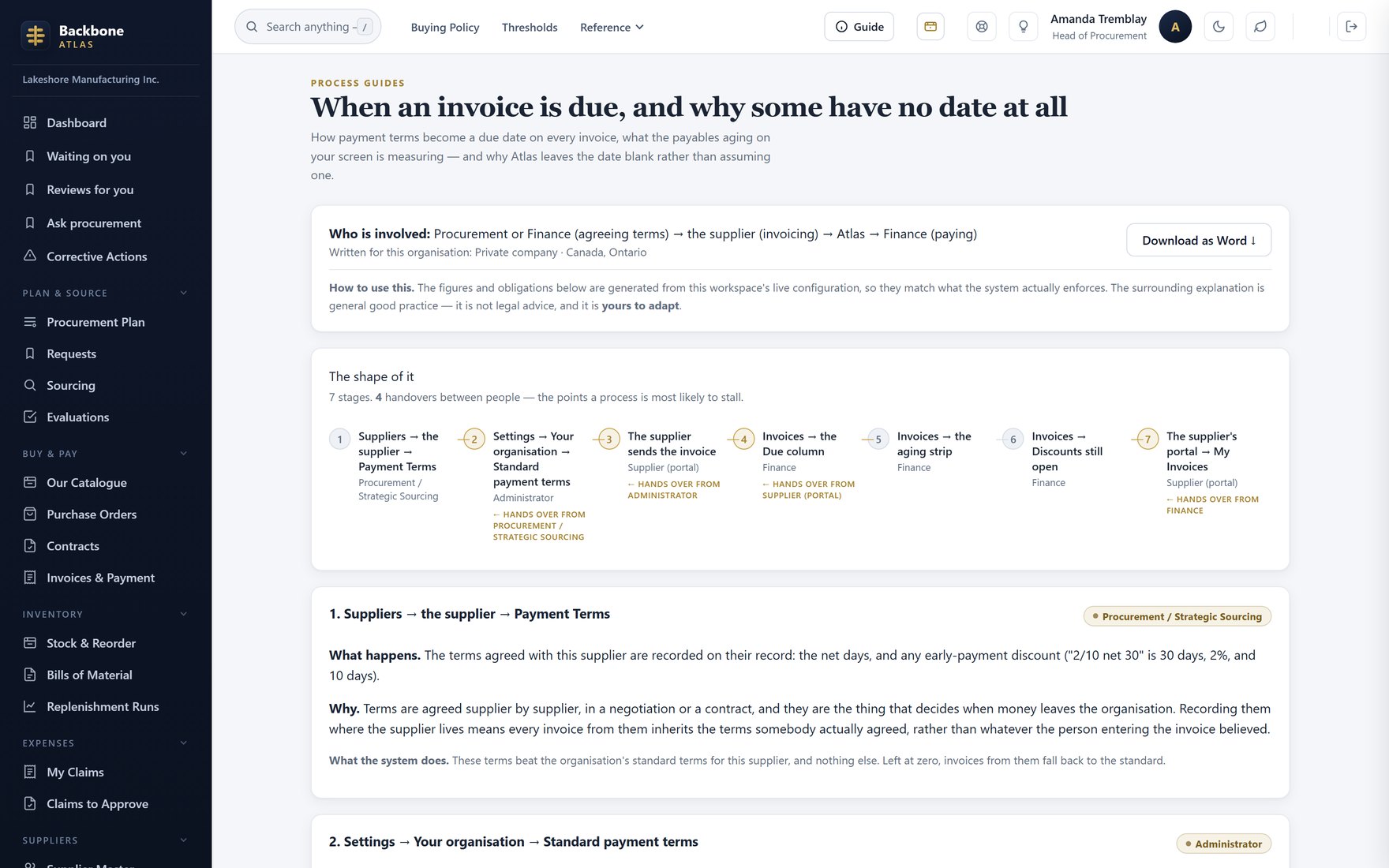
A process guideThe flow with handovers marked, above the stage notes.
Which way does this purchase go
Every route from request to paid invoice, drawn.
Each route is its own track, for your region and buyer type. Tracks meet only at the purchase order. Off until switched on for your workspace.
- GeneratedDrawn from the rules inside the product
- Read by shapeDiamond: a decision. D: a wait nobody may shorten. Cylinder: lasting evidence
- Region and buyerPick a region and buyer type. The United States and Australia: private buyers only, public rules not modelled
- Gaps hatchedA needed step Atlas lacks is drawn hatched and named
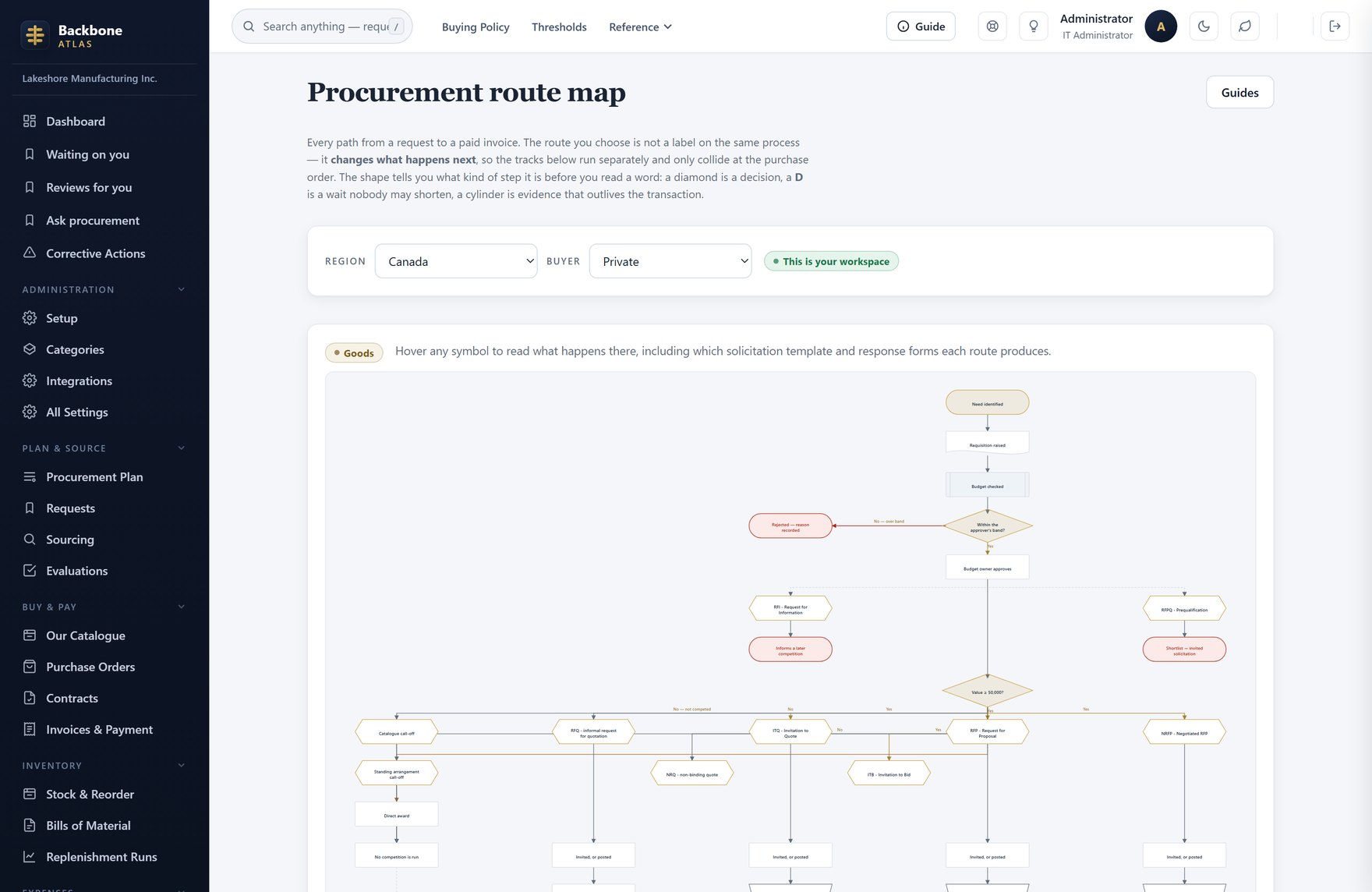
Procurement route mapA Canadian private buyer's goods routes, one track each.
What are the rules here
The purchasing policy nobody had to write.
Generated from what the system enforces, so policy and practice cannot drift.
- One pageWhat happens at what value, in plain language
- By purchaseWhat governs this type at this value
- Trade agreementsFor public buyers: coverage, minimum posting periods and standstill, stated as obligations. Each names its agreement
- Never guessedNo thresholds set? It says so, never implying no obligations
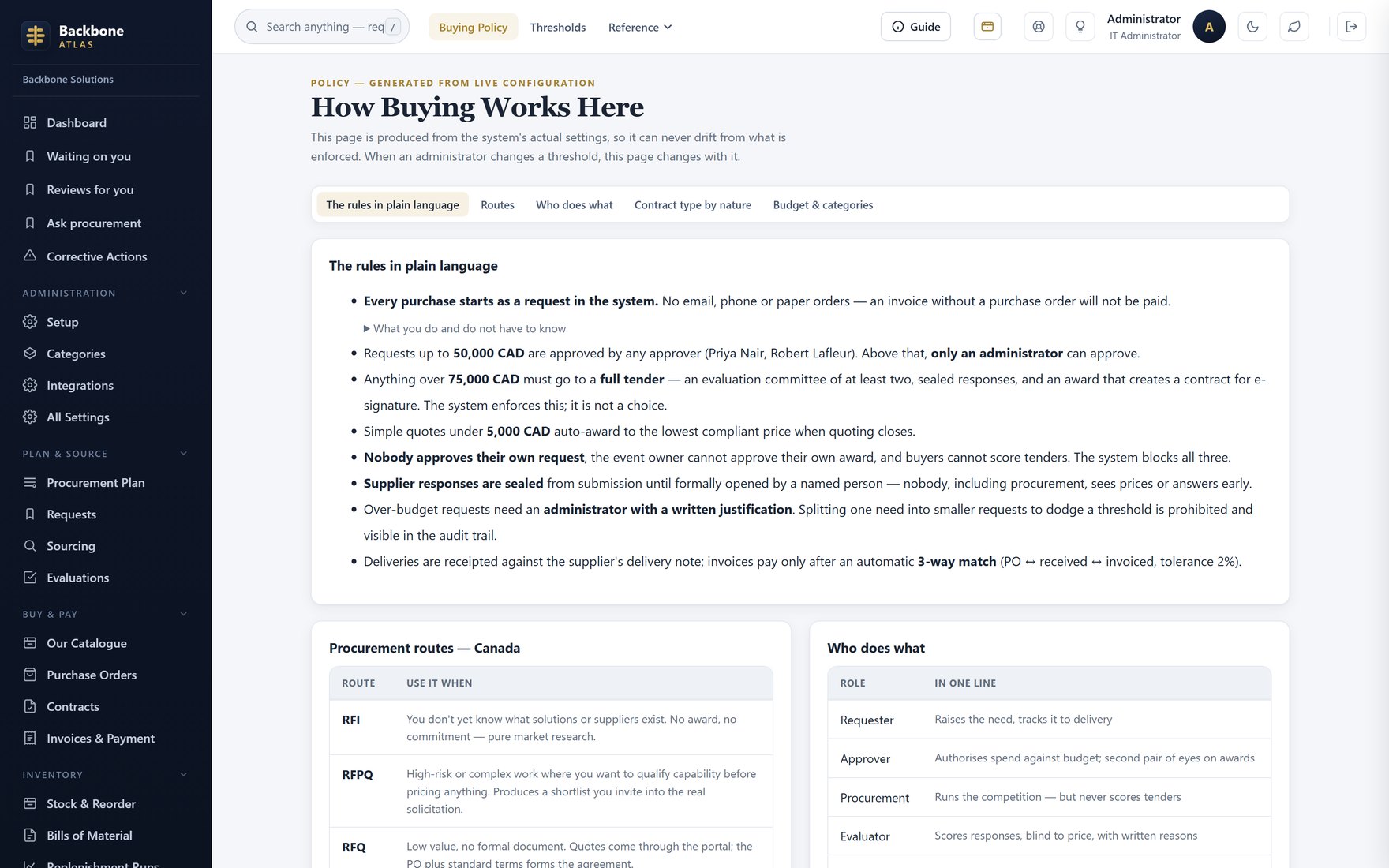
How buying worksThe purchasing policy, generated from live settings.