Spend, budgets & savings
Where the money went, what is left, what was saved.
Spend, budgets and savings come from the same records the buying runs on. They update the moment a purchase order is raised.
Spend analysis
Computed from the orders, not from exports.
No reconciliation step and no month-end lag.
- ShapeBy supplier, category and department, over real order volume
- QualityContracted, requisition-backed and off-process spend, as shares of the whole
- SpeedRequest-to-PO and invoice-to-payment cycle times
- OutPosted to the accounting system, or a one-click CSV and a live feed
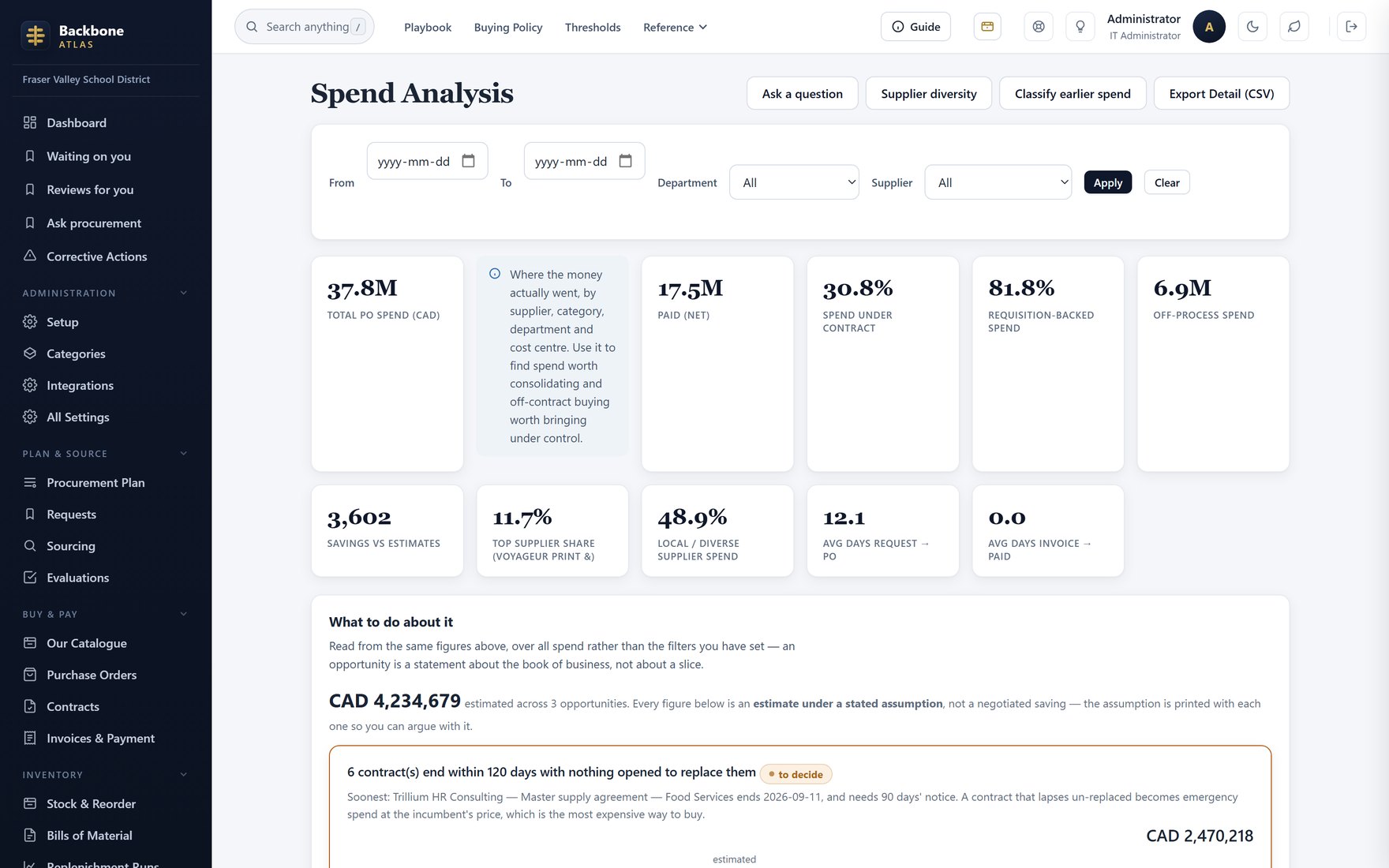
Spend analysisReal figures across live orders.
Opportunities
Analysis that ends in a recommendation.
Atlas flags what to act on. Contracts ending with no replacement opened. Spend split across suppliers that could be one arrangement. Repeat purchases just under a threshold.
- NamedEach says what it is, who it concerns and what to do next
- EstimatedAn estimate, not a negotiated saving, with its assumption printed beside it
- Whole bookReads all spend, not just the filtered view
- Not a savingCounts as a saving only once claimed, validated by someone other than the claimant, and realised
What to do about itEach with the assumption behind its figure.
For the budget holder
Commitment, not just invoices.
Budgets count what is ordered, not only what is invoiced.
- SimpleBudget by cost centre for the fiscal year
- ThenCommitment moves when an order is raised
- ThenPrior-year lines alongside
- ComplexAn over-budget request shows at approval, not at year end. Goods received but not yet billed can be accrued at month end
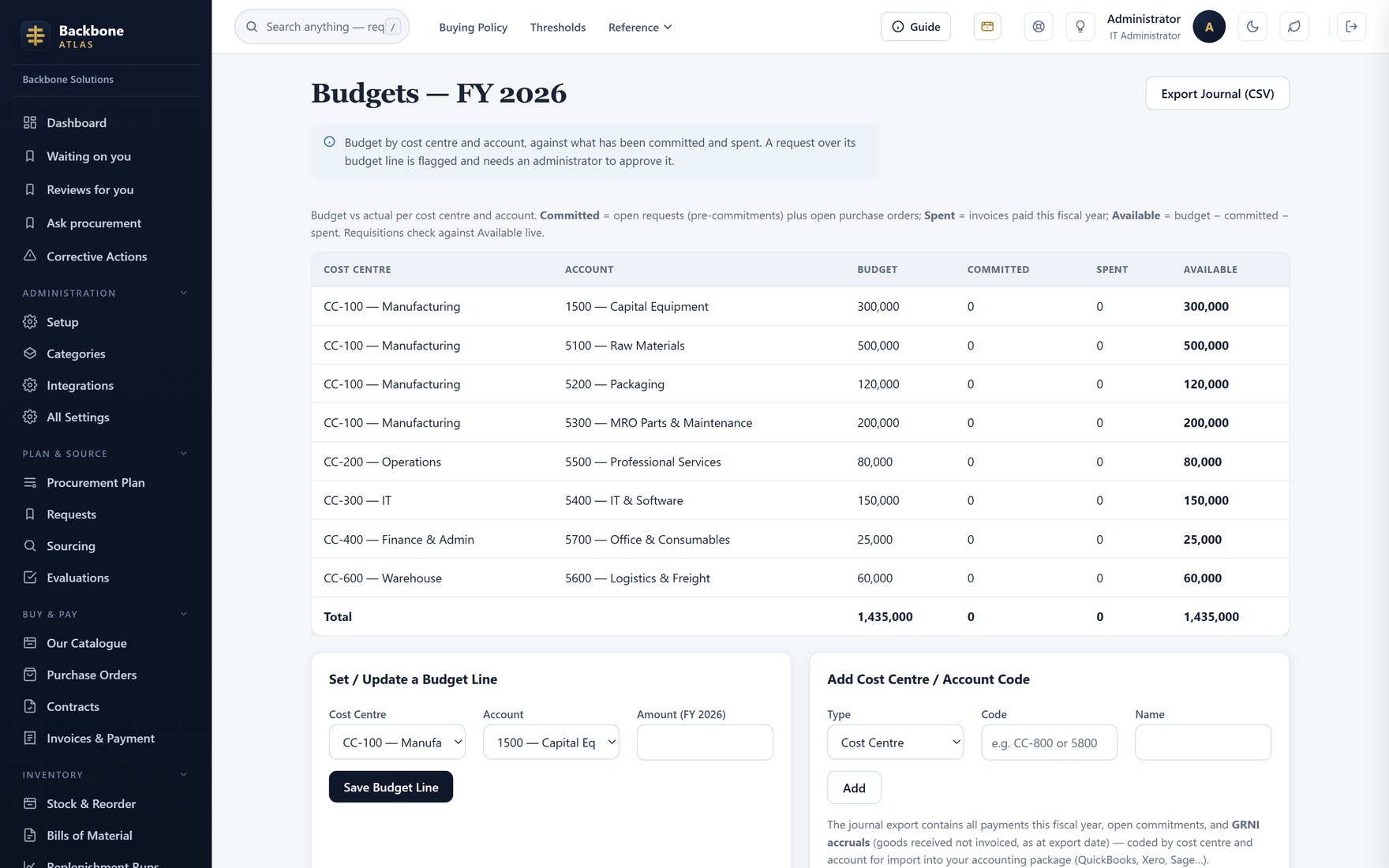
BudgetsBy cost centre, with live commitment.
For the buyer
Claim the saving, and defend it.
Record the baseline and method, so the claim holds up with finance.
- SimpleRecord the type: reduction, avoidance, negotiated, demand, process or rebate
- ThenRecord the baseline and how it was reached
- ThenMark it realised when the money moves
- ComplexSomeone else validates it. No saving counts twice, or counts without landing
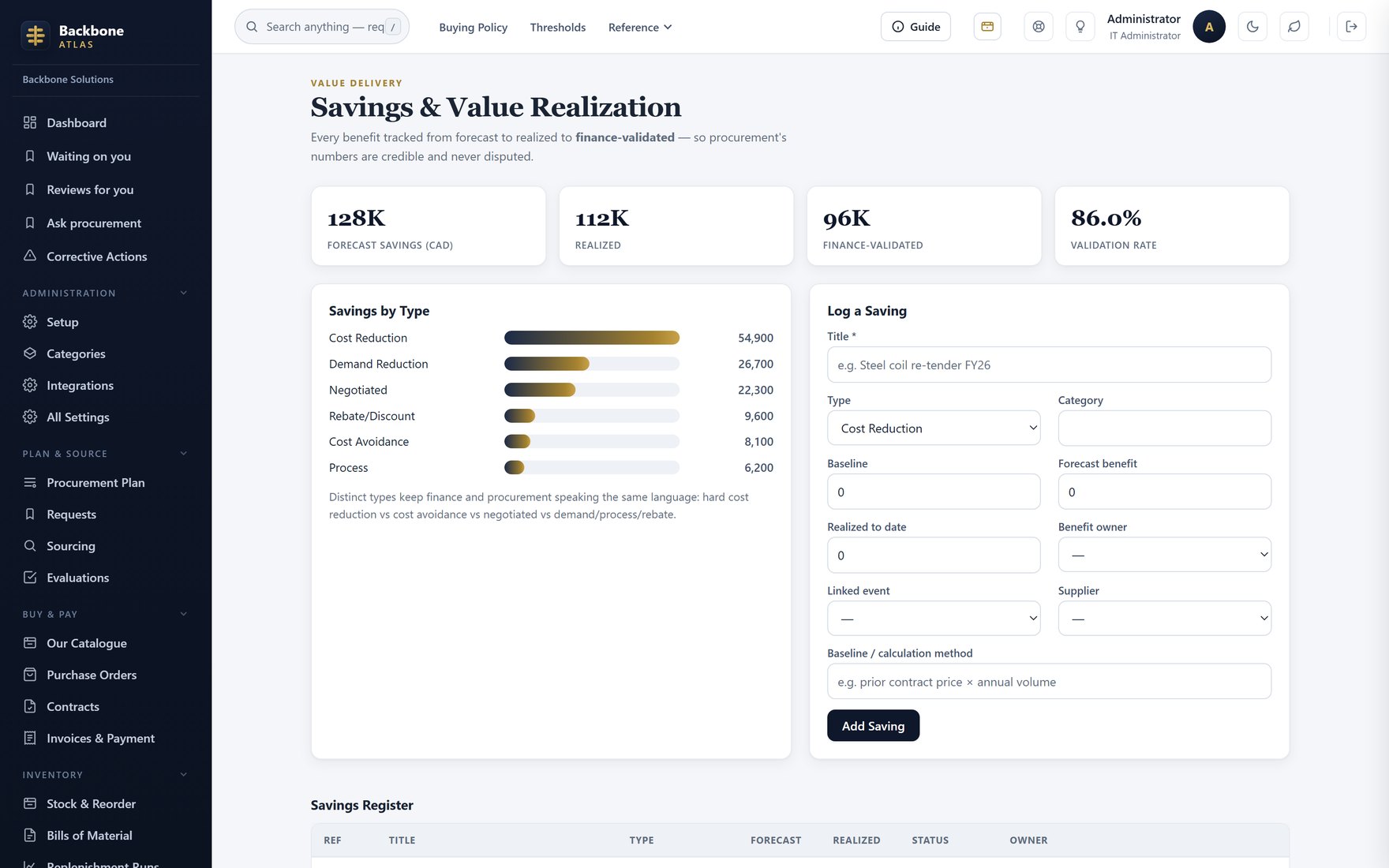
Savings & valueClaims in three states, by type and owner.
Trade spend and rebates
An agreed rebate is money owed back. Atlas works out how much.
Each agreement has one supplier, one threshold and one rate. It earns on spend above the threshold, or on all spend once it is met.
- AgreedCounted on what was received or invoiced, never on what was only ordered
- CumulativeWorked out over the whole agreement, so a rebate reaching back over earlier spend comes out right
- ReviewedHeld for review first. Other-currency purchases are skipped and counted, never converted
- PostedThen a journal to QuickBooks Online, Xero, Business Central, Sage Accounting, Sage Intacct or NetSuite. Off until an administrator switches it on. See Finance / ERP
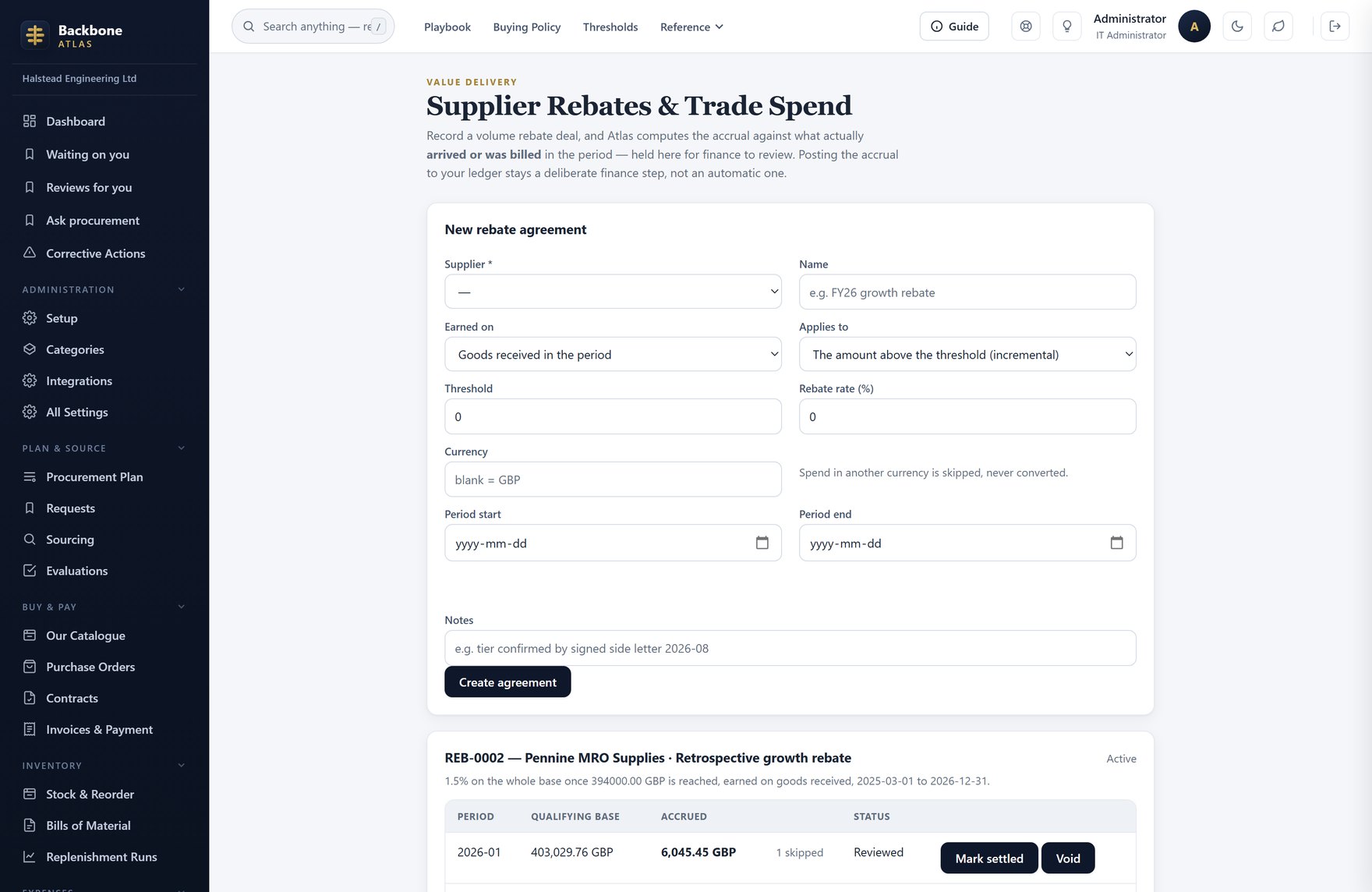
Supplier rebatesRebate as a saving type. Agreements and accruals have their own screen.
For a procurement director
One set of numbers, read by everyone.
One calculation, so nobody argues over whose numbers are right.
- SeesContracted, requisition-backed and off-process spend, side by side
- SeesCycle times, so a slow process shows as a number
- DoesTargets where off-process spend concentrates
- ProofImprovement shows in the measure that showed the problem
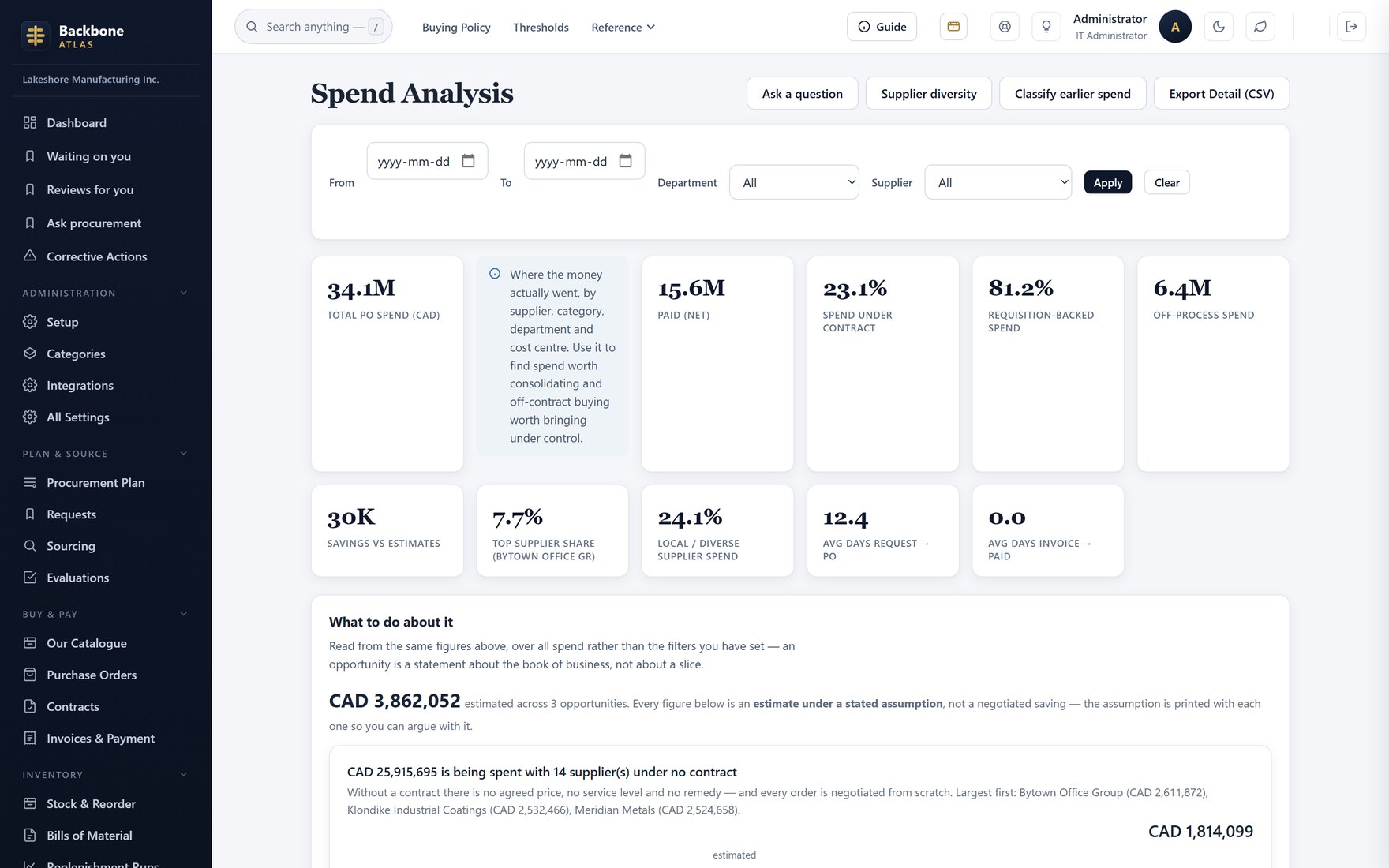
Spend analysisThe same analysis, private sector.
For a CPO
A number you can take to the board.
Value is what someone outside procurement agreed, not what procurement claims.
- SeesValidated savings, apart from claimed and realised
- SeesWho validated each one, and when
- DoesReports the validated figure, with the working behind it
- ProofAn audit trail under every number, so one question does not taint the whole report
Validated valueForecast, realised and validated, kept apart.