Divisions, branches & regions
One company, three provinces. Or three companies, one division.
Atlas keeps your legal structure and your management structure apart. The legal one sets tax, thresholds and templates. The management one sets who may spend what.
The legal layer
Each branch buys under its own province's rules.
A unit can have its own country or province, tax, floors and templates. Spend still rolls up into one set of figures.
- Set onceA requisition takes the raiser's unit, and keeps its tax, thresholds and templates through to the invoice
- Never re-derivedMoving someone changes only their future requisitions. Live paperwork keeps its original tax.
- YoursPick a unit's province and it gets the right thresholds and tax
- OursYour provider sets a unit's country and public or private status. These decide currency, bidder templates, and whether trade-agreement rules apply.
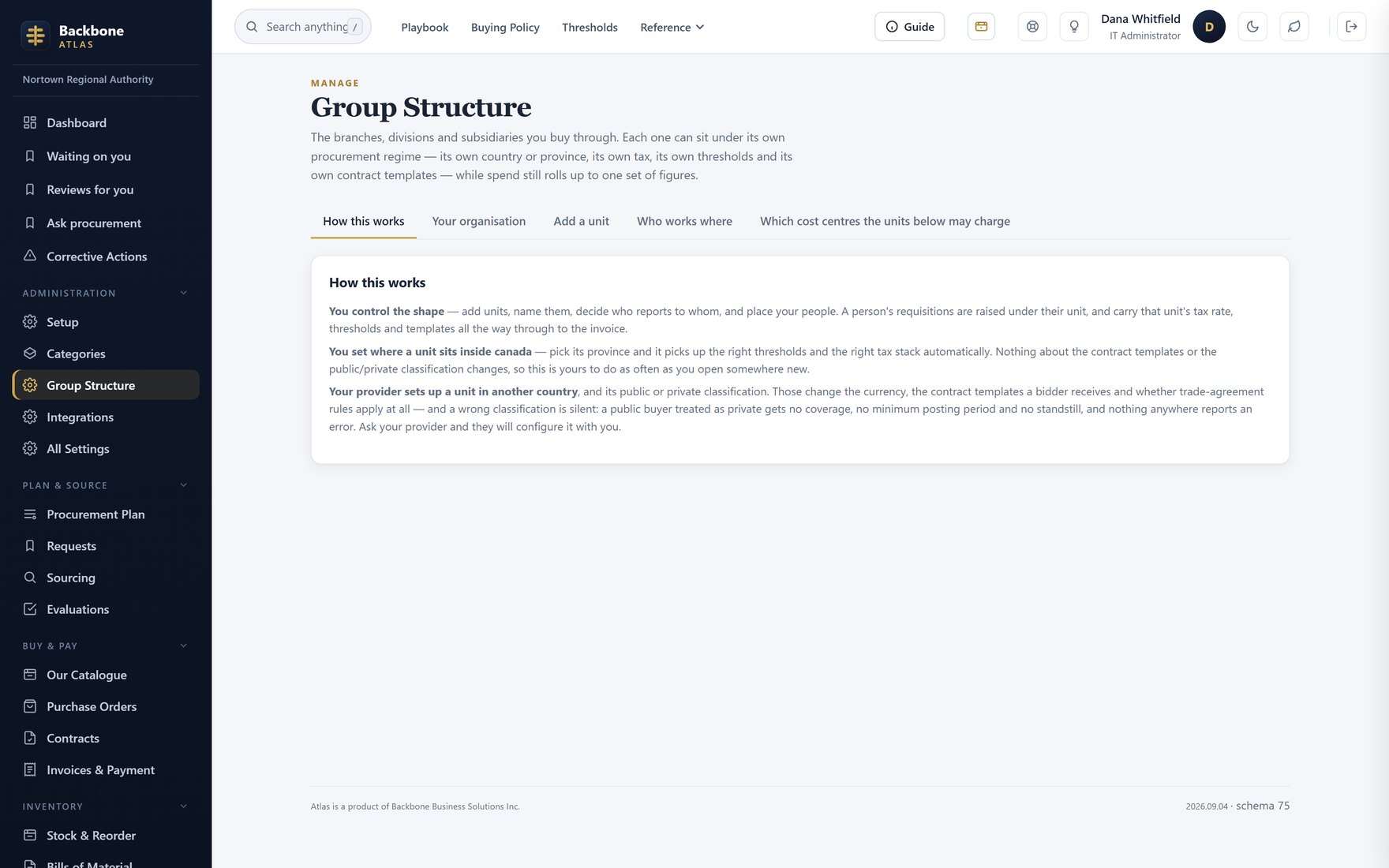
Group structureOne workspace: Ontario on 13% HST, British Columbia on GST + PST, Quebec on 14.975% GST + QST. Each has its own floors.
The management layer
Any department can sit under any division.
Divisions are for management, and can cut across companies. One Operations division can hold Facilities in two companies. A department set to none reports straight to the company.
- ShapeAdd divisions and departments, and name each head, on one screen
- ReversibleRetiring a department disables it, never deletes it. Add the name back and it returns intact.
- Every companyEvery organisation has departments, so a single company uses this too
- BudgetsEach cost centre owner is asked to sign first on its spend
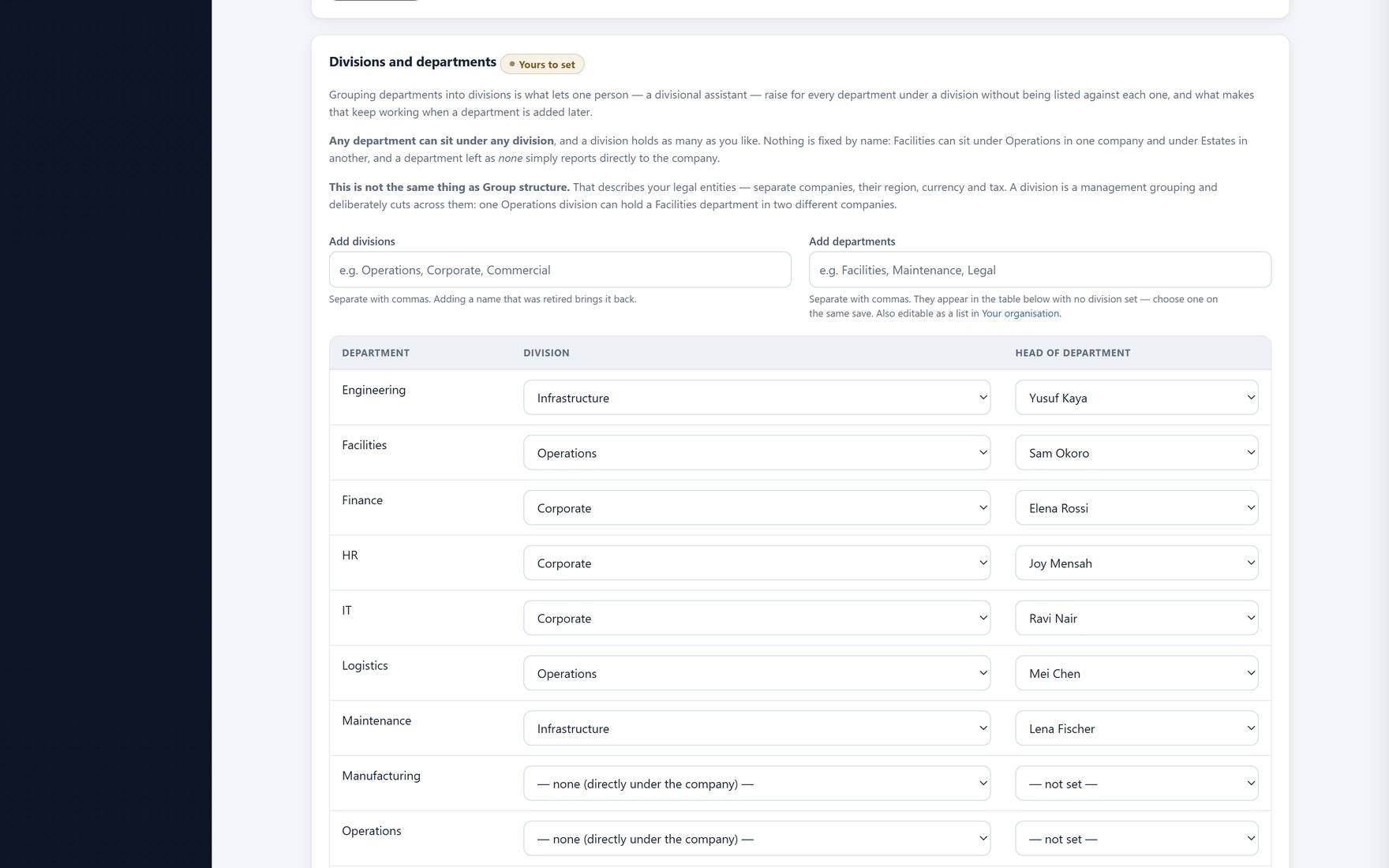
Divisions and departmentsEight departments in three divisions, each with the head who signs.
For the requester
Raise for your own department, or a whole division.
The picker offers only what that person may raise for. The picker and the check use one rule, so they cannot drift apart.
- OwnThe default: your own department
- DivisionA divisional administrator covers every department in the division, even new ones
- Named listAn assistant covering two departments in different divisions
- AnyProcurement buys for everyone, so it raises for anyone
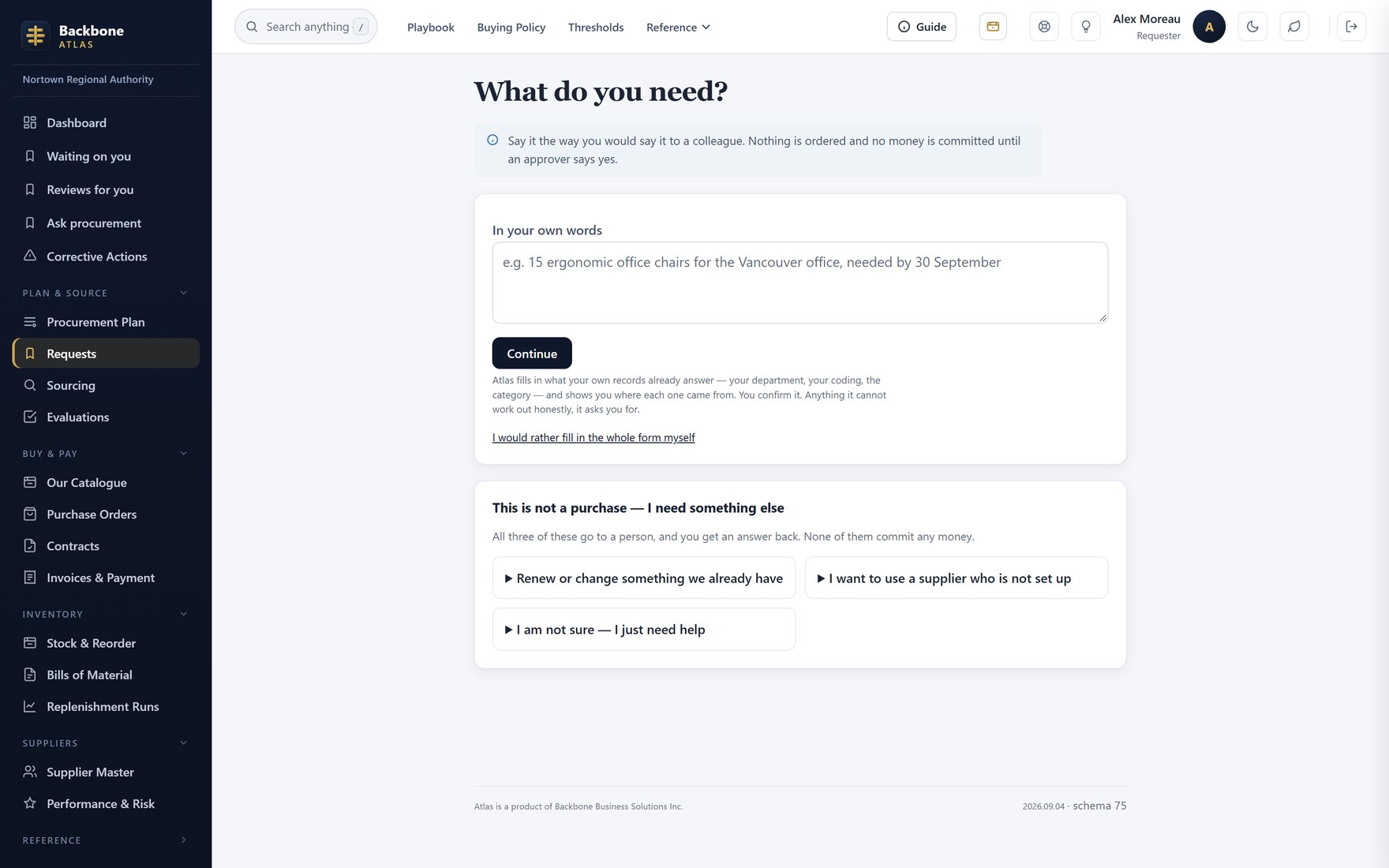
Raising a requestA divisional assistant's picker: every Operations department, nothing else.
For the administrator
Set up the whole organisation in one upload.
One CSV, one row per person. The columns set divisions, departments and approval titles.
- PreviewUpload shows what WOULD change, and every problem, but writes nothing
- ProvableWhat is applied is exactly what was shown
- SafePeople missing from the file are disabled, never deleted. A file with no administrator, or missing its uploader, is stopped.
- RepeatableMatched on email, so re-upload a fixed file as often as needed
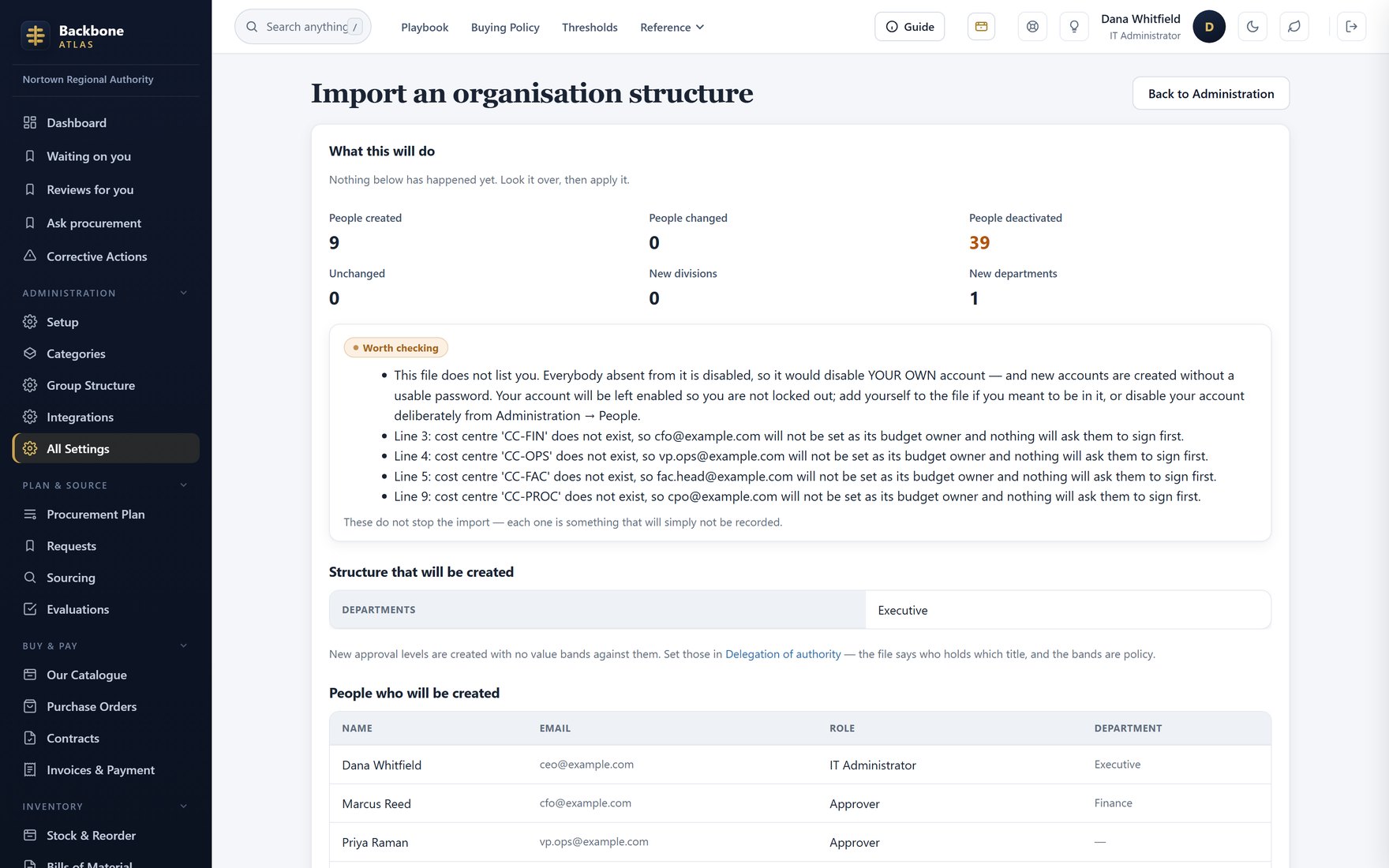
Structure importThe dry run: what would be created, changed and disabled.