Supplier management
Know who you are paying before you commit.
Each supplier record holds status, risk, certifications, performance and the documents behind them. The status is enforced, not advisory.
The register
A status that actually stops things.
A suspended or debarred supplier cannot be invited, quote or be awarded. The attempt is recorded.
- LifecycleProspective, Approved, Preferred, On Hold, Suspended, Debarred. The last three block
- RiskRisk rating, segment and single-source flag
- DocumentsInsurance, certifications and clearances, chased before they expire
- Bank detailsChanged under control, not on a stranger's email
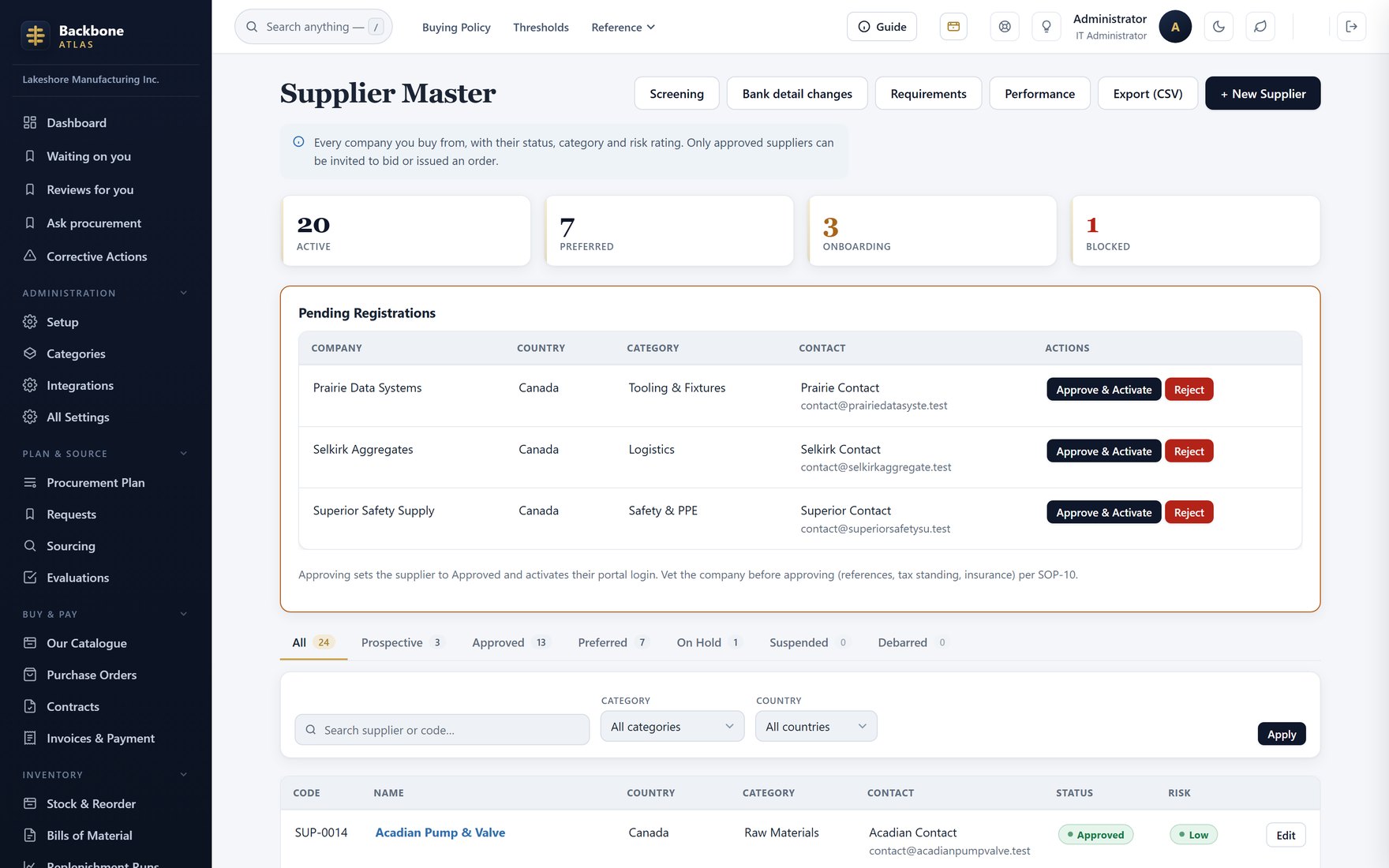
Supplier masterStatus, risk and segment.
For the buyer
Performance from facts, not opinion.
Scorecards use the delivery and invoice history already in Atlas.
- SimpleRead on-time delivery, invoice accuracy and complaints
- ThenApprove vetted suppliers, and raise status where earned
- ThenBring the evidence to renewal
- ComplexPut a failing supplier On Hold. Every route to an award closes at once
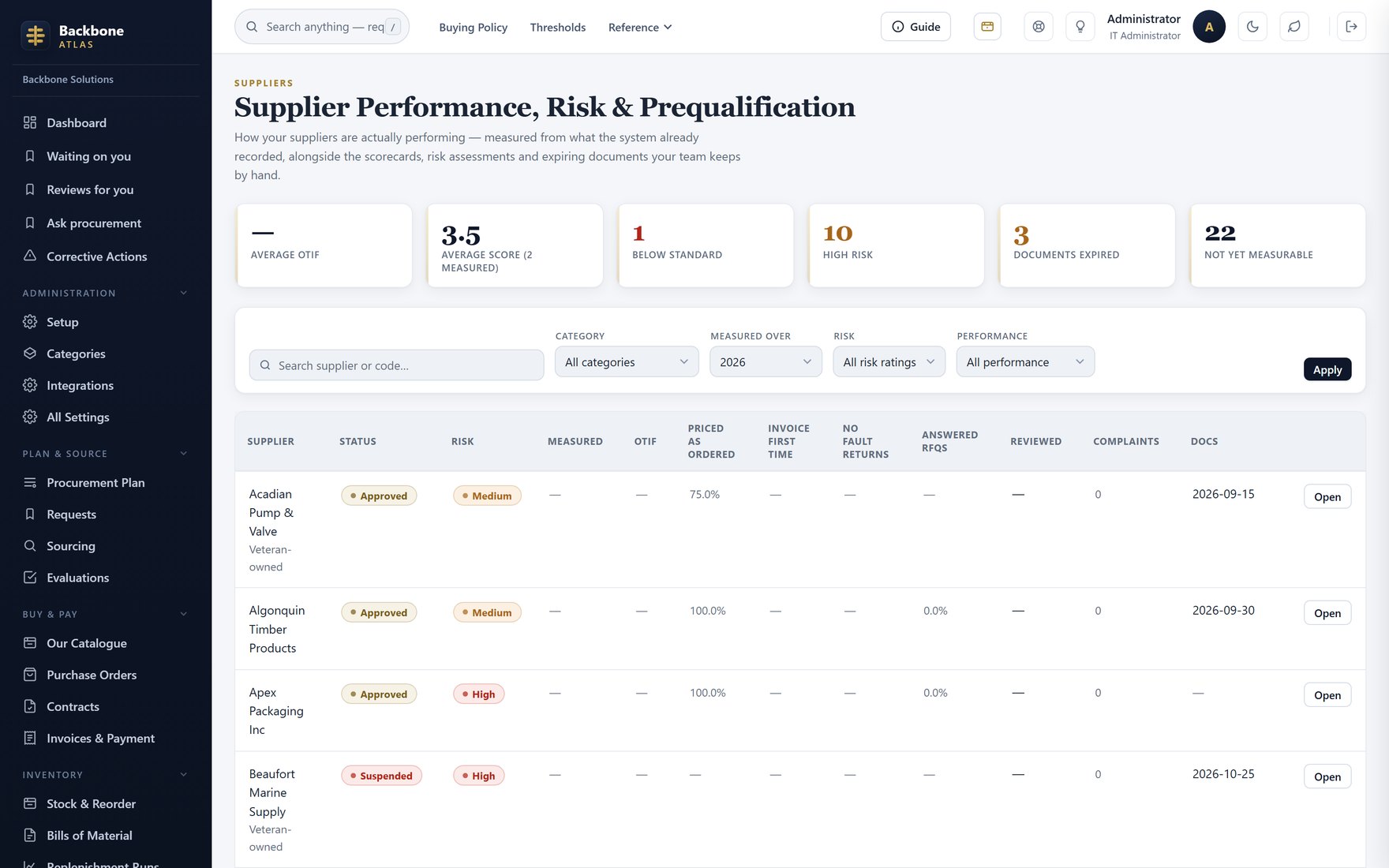
Performance & riskPerformance from real delivery and invoice history.
For the supplier
Suppliers keep their own record current.
Suppliers get the screen and the reminders, so their data stays current.
- SimpleRegister, fill in the profile and upload documents
- ThenGet a reminder before a certification lapses
- ThenKeep categories current, for the right invitations
- ComplexRaise a complaint. It is answered in writing and visible to governance
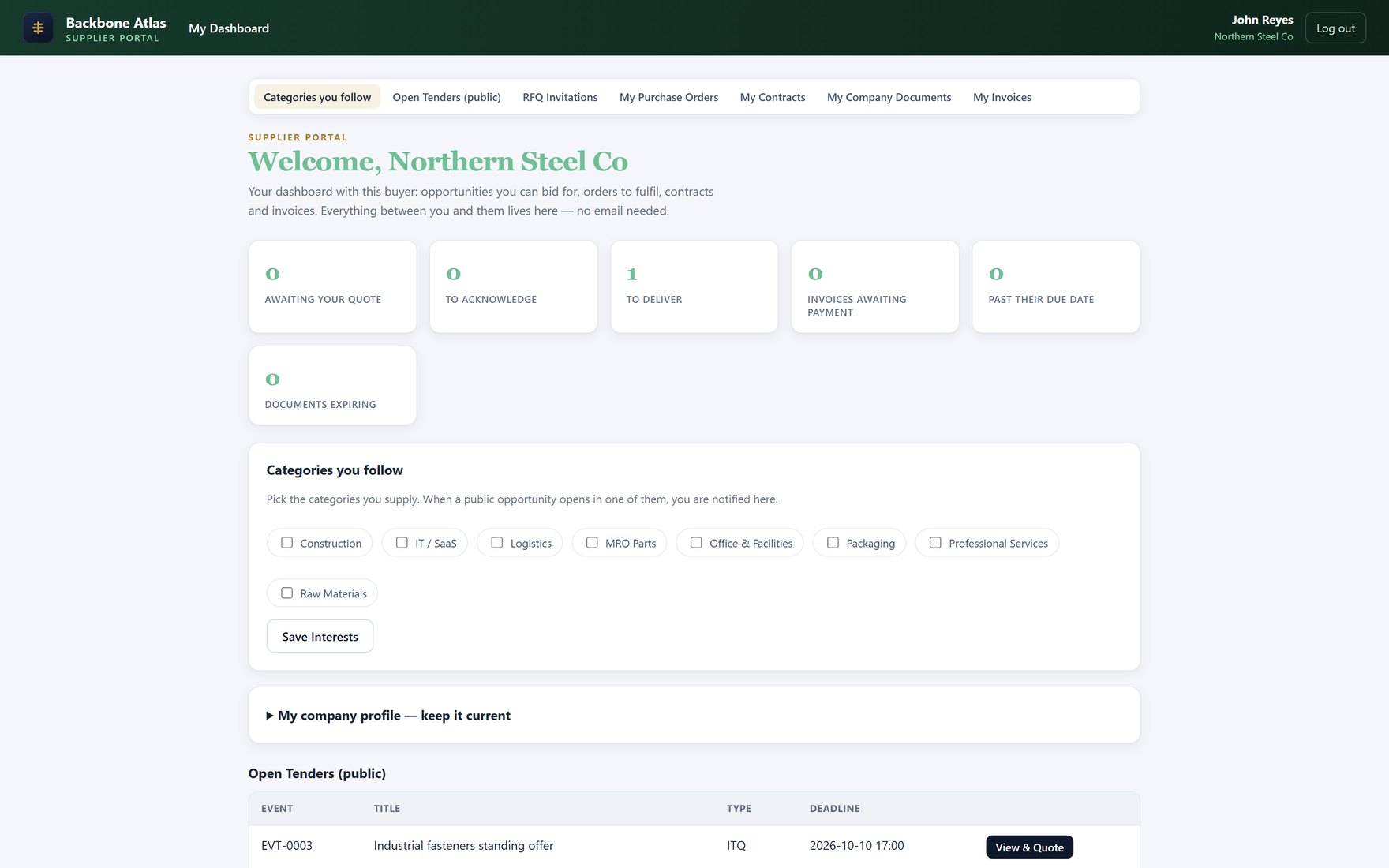
Supplier portalKept current by the supplier.
For governance
Complaints answered in writing, and kept.
A complaint is an early warning of a challenge. Answering it is cheap insurance.
- RecordedPortal complaints land on the event they concern
- AnsweredResolved with a written response, kept on record
- VisibleShown on the supplier and on the event
- ProofA pattern about one buyer or category shows before an outsider spots it
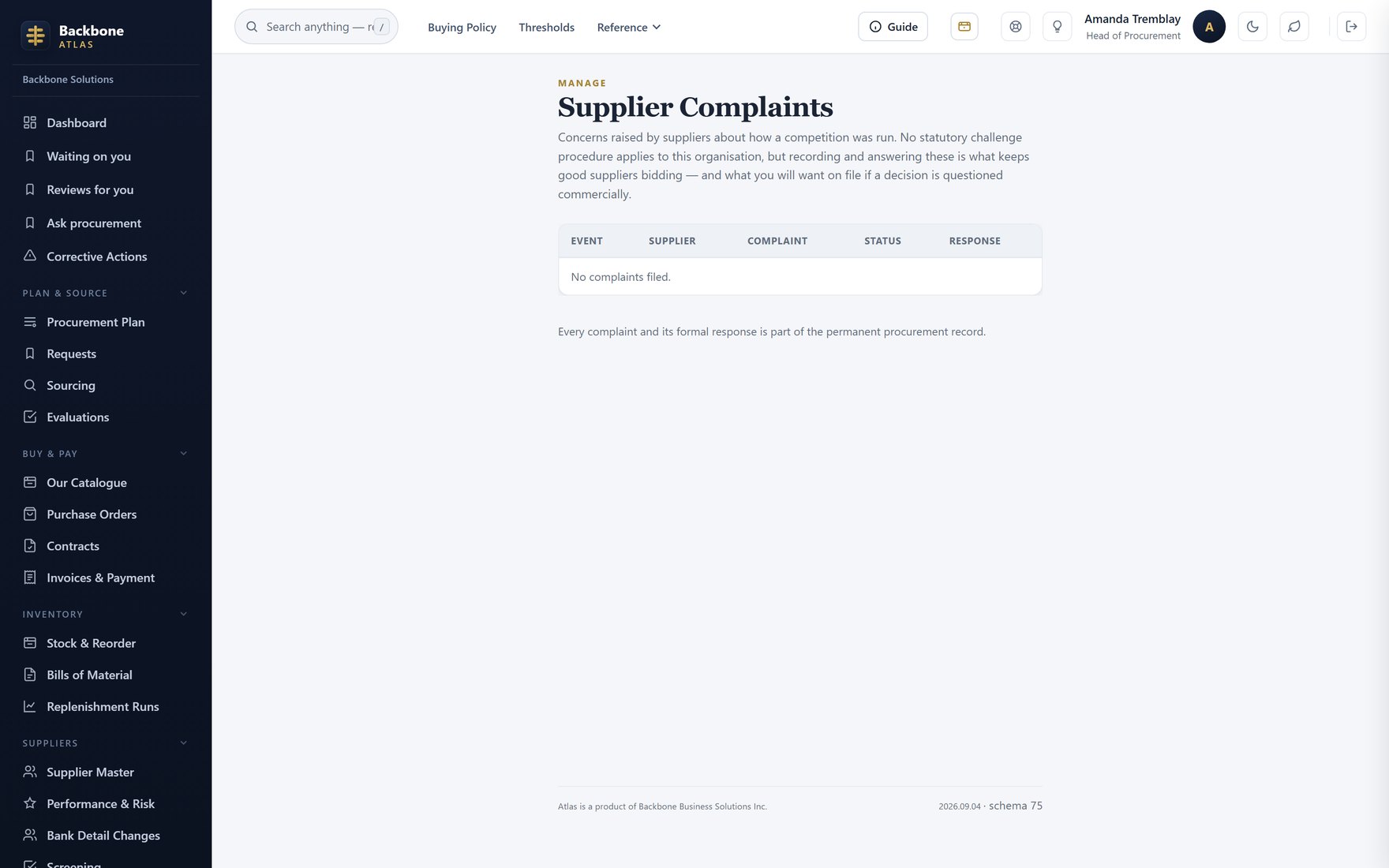
ComplaintsComplaints, and the written answer to each.
For a procurement director
See concentration risk, so you can manage it.
Boards ask about dependency and exposure.
- SeesHow much spend sits with how few suppliers
- SeesSingle-source dependencies, flagged
- SeesDiverse and local supplier share, measured, not estimated
- DoesTargets categories where a second source would reduce risk
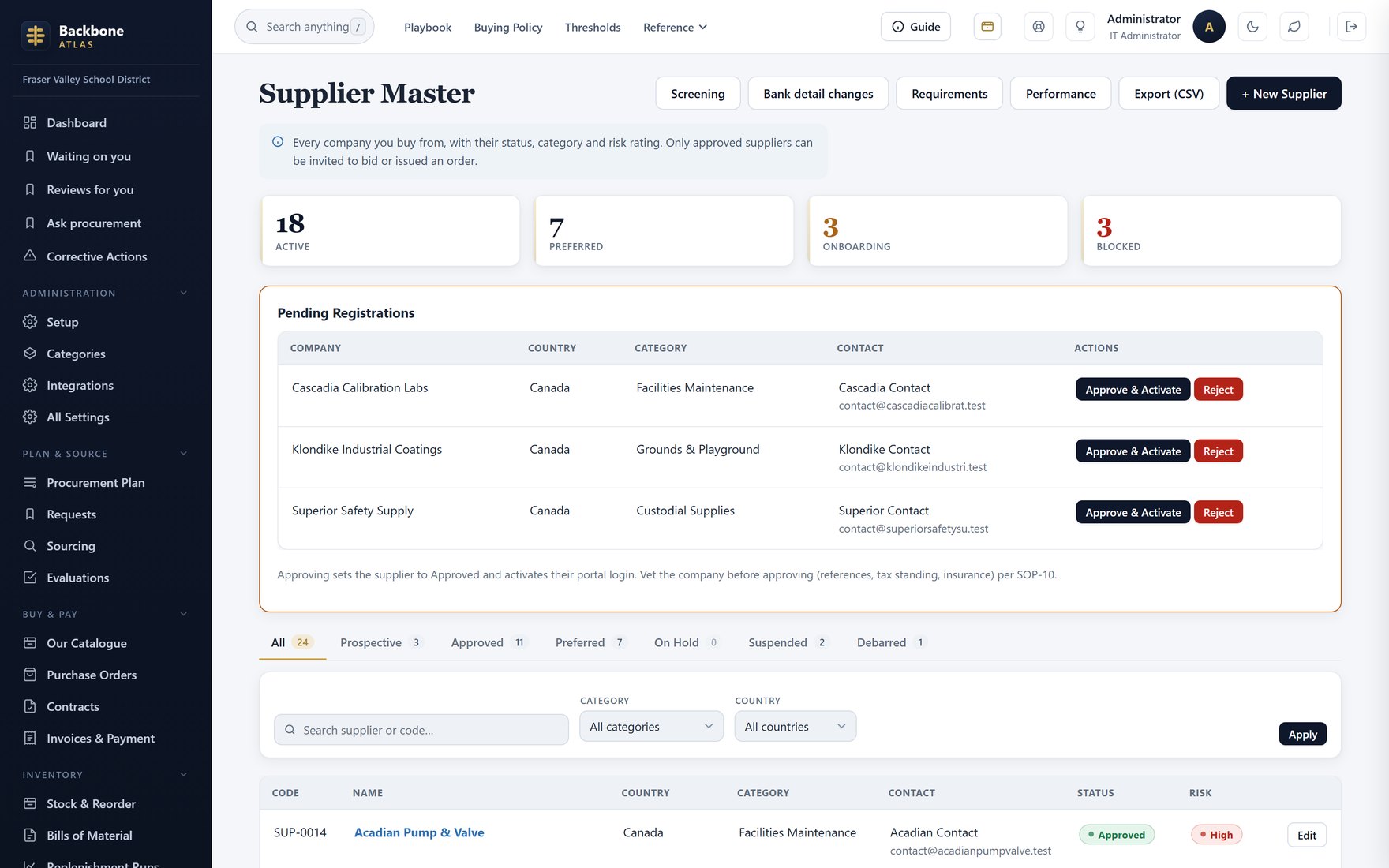
Supplier masterThe public-buyer view, with the same controls.