Governance & audit
Proof that your controls fire.
Every blocked attempt is recorded: who, what and when. Auditors ask who tried to get round a control, and what happened.
Controls, with evidence
Every refusal is a record, not just a red message.
Self-approval. Acting above authority. Scoring without a declaration. Awarding to a supplier with lapsed documents. Each refusal is logged.
- BlockedWhat was refused, who tried, when, and on which record
- PatternsOdd evaluator scores flagged before award. A prompt to ask, not an accusation.
- DeclaredWho on a live panel has declared. Pending means they have not opened their scoring page.
- SegregatedNobody certifies their own milestone or approves their own award.
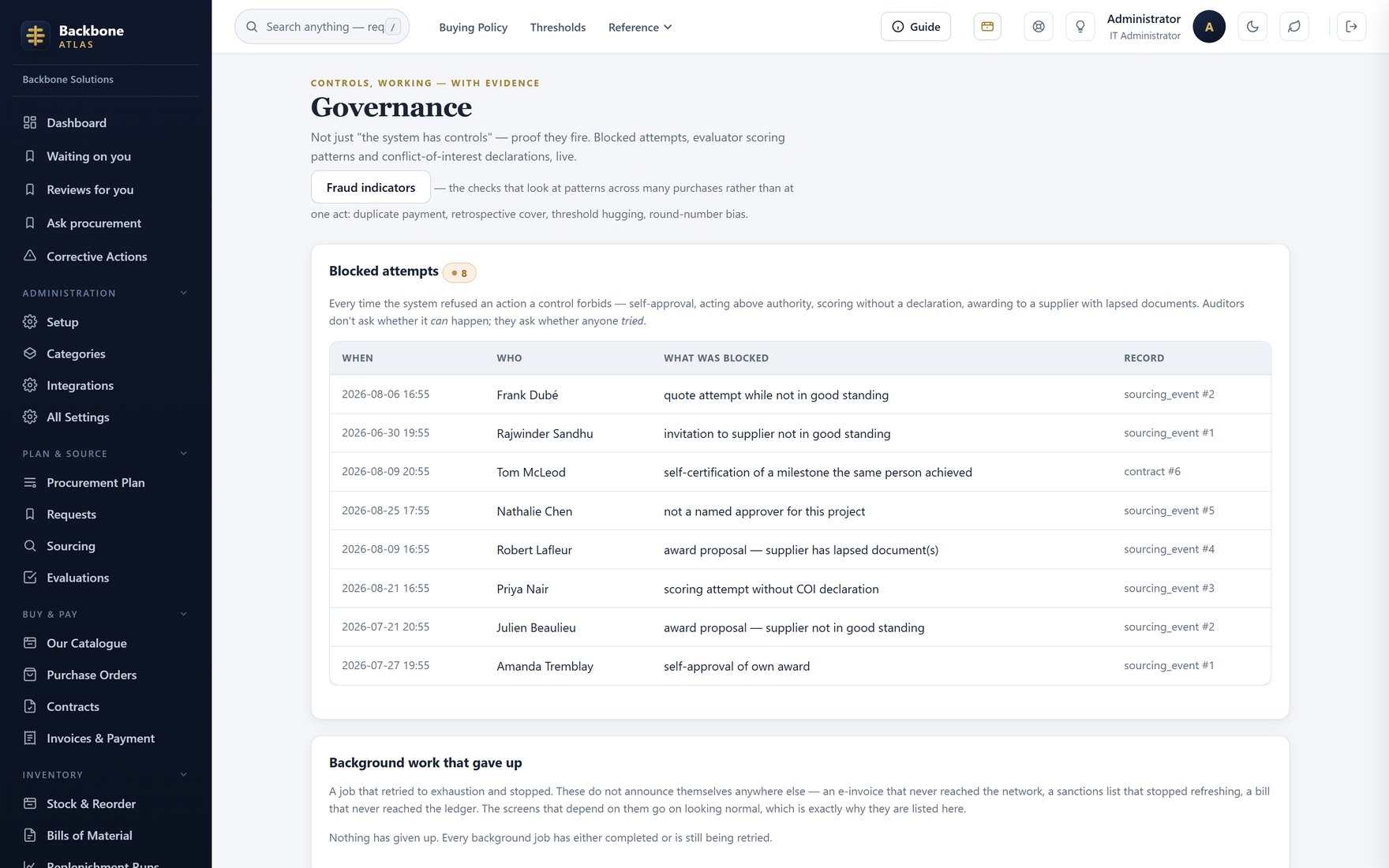
GovernanceBlocked attempts, scoring patterns and declarations, live.
For the buyer
The controls back you up.
Under pressure to rush? “The system will not let me” is a full answer.
- GateAt least two declared evaluators before any scoring
- GateA public buyer cannot propose an award until the consensus meeting is recorded
- GateA non-competitive purchase needs a written reason. Its author cannot approve it.
- ResultThe process does not bend, and the attempt is on record.
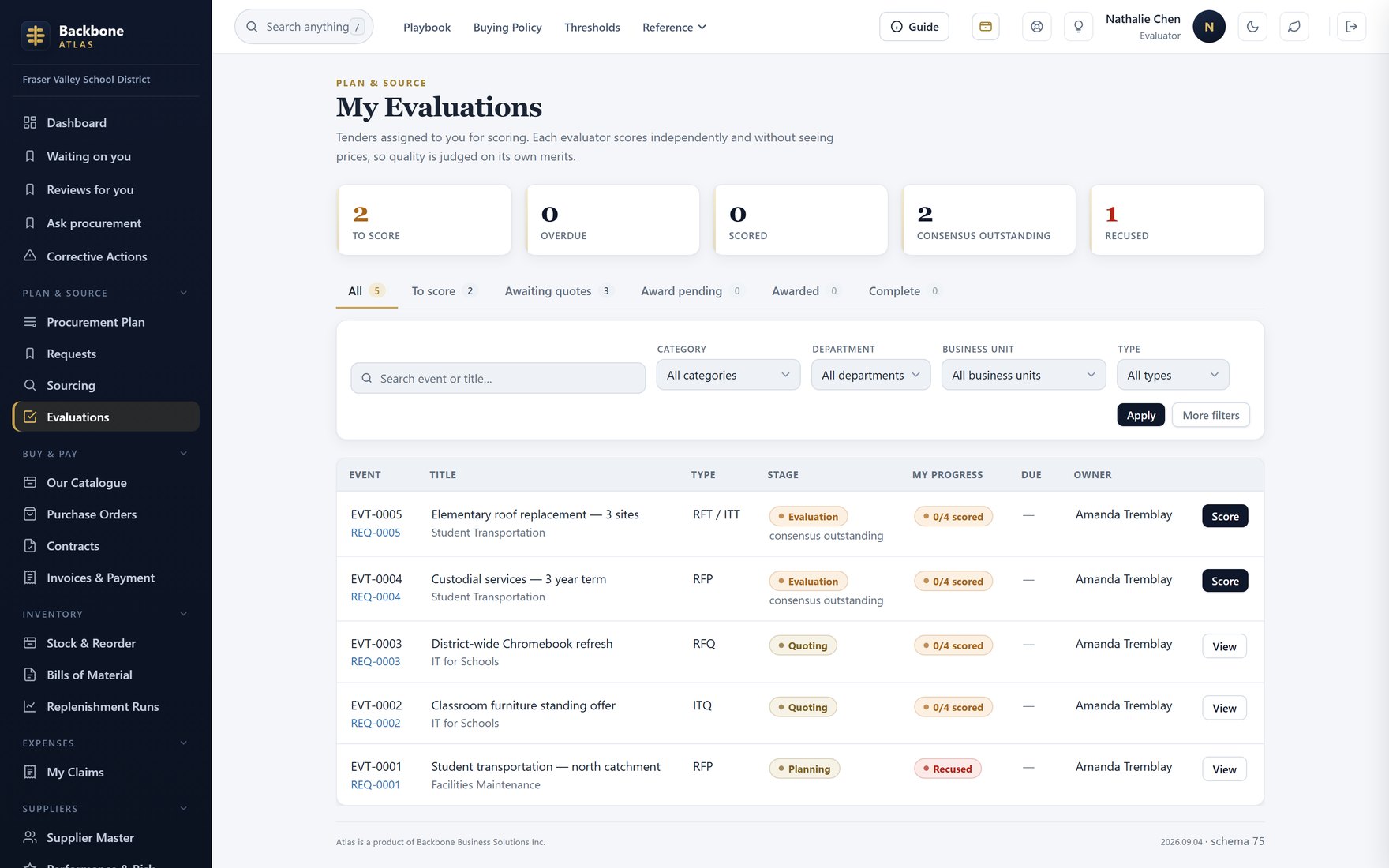
Evaluation controlsDeclare first, then score. The gate is the screen itself.
For an auditor
The trail is complete and already there.
Nothing is assembled for an audit. It is the live record, in date order.
- SimpleRead the activity log: who did what, to which record, and when
- ThenTrace any purchase order back to the requisition that authorised it
- ThenRead the evidence binder for an awarded competition
- ComplexTest a control by trying it. Your attempt joins the same log.
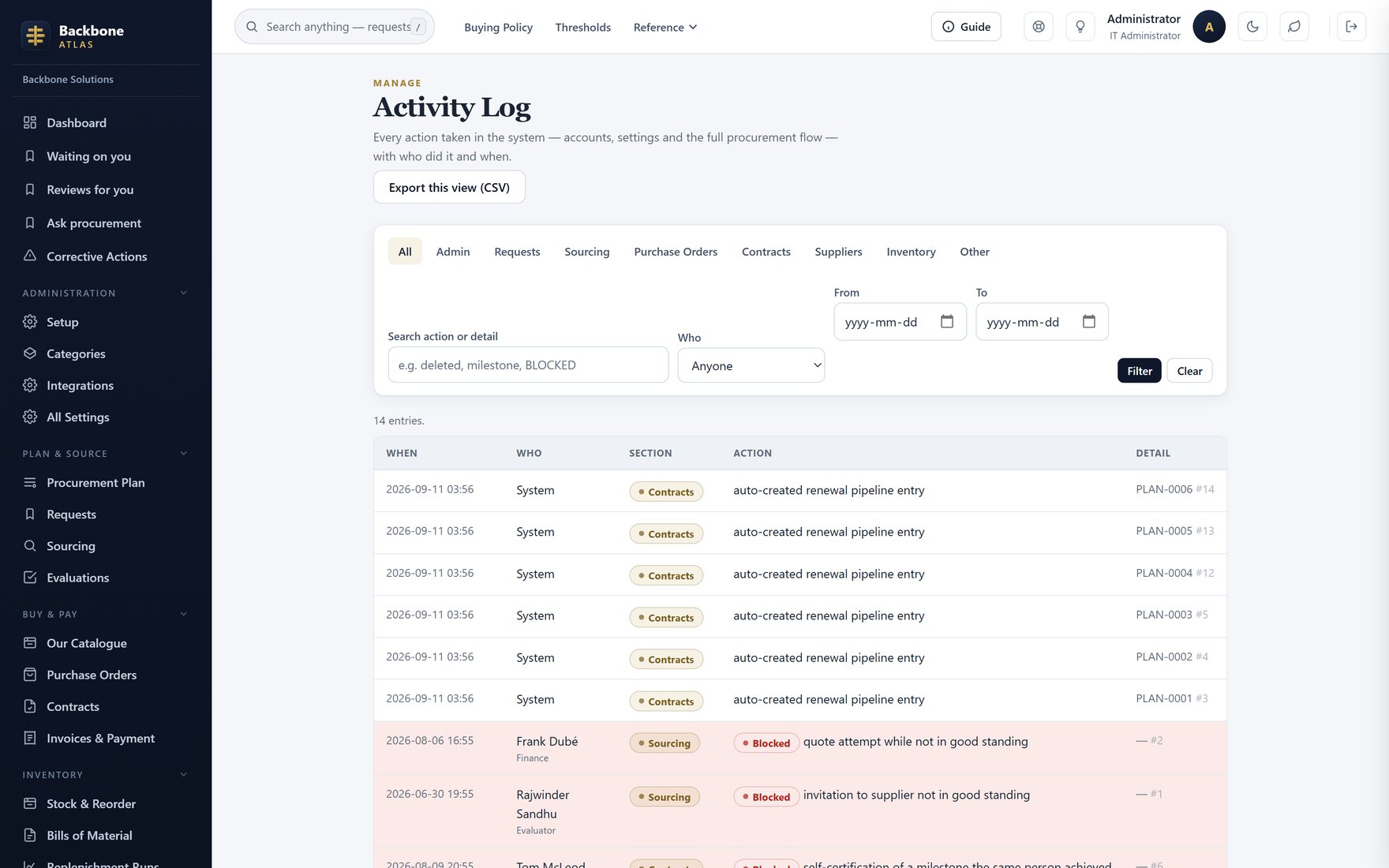
Activity logWho did what, to which record, and when.
For the administrator
The policy document cannot drift from the system.
It is generated from your live settings.
- GeneratedBuilt from your own thresholds, routes and approval bands
- CurrentChange a threshold and the document changes. No second copy.
- ExportableOn screen, or as a Word document
- HonestIt marks which figures are enforced and which text is general practice to adapt
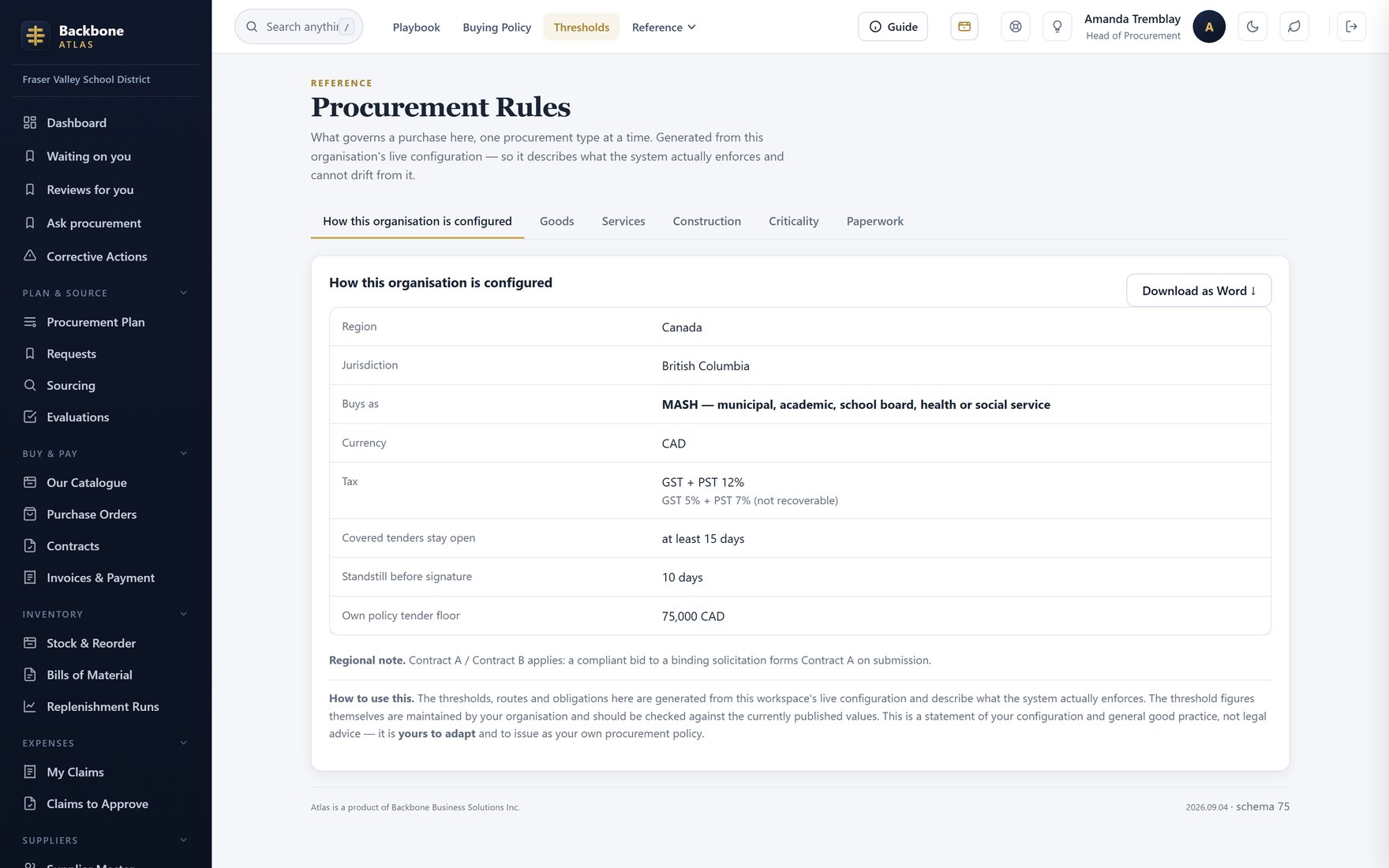
Procurement rulesThe policy document, generated from live settings.
For a CPO
“Can you show me this was run properly?”
There is one good answer. It is not a promise to look into it.
- SeesWhether anyone has tried to get round a control, and who
- SeesDeclarations outstanding on live competitions
- DoesActs on a scoring pattern before award, not after a challenge
- ProofThe evidence already exists. Nobody has to collect it.
GovernanceThe three panels a review asks about.