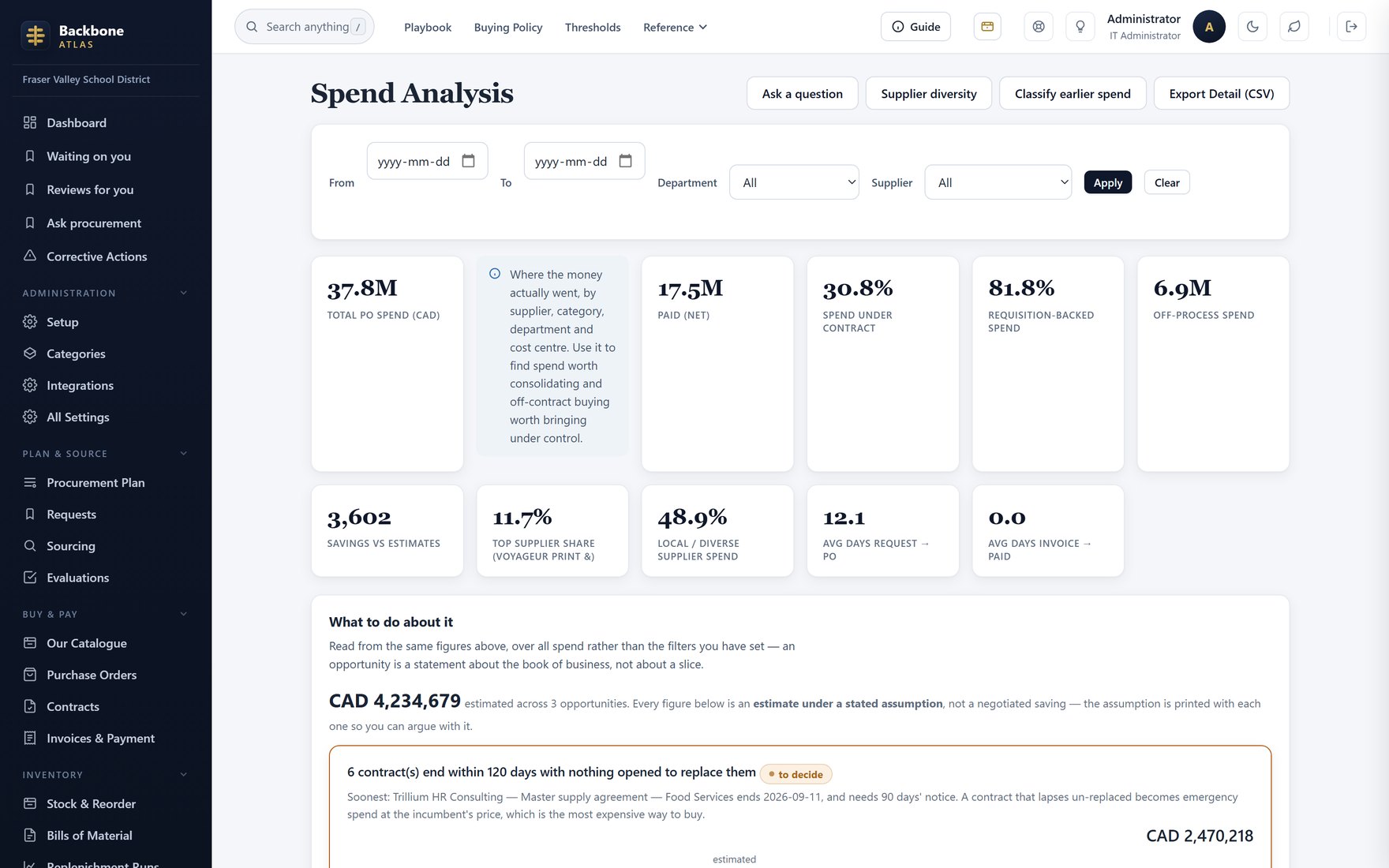
Connects to your accounting system, both ways.
Atlas sends your ledger clean, coded, approved invoices, and reads back what has been paid. Eleven systems connect directly, with no middleware. Four are proven against live ledgers. The other seven are proven against your own ledger during onboarding.
Eleven ledgers, swept every 15 minutes.
Proven against live ledgers: QuickBooks Online, Xero, Business Central, Sage Accounting. The other seven are built: NetSuite, Oracle Fusion, SAP S/4HANA, Sage Intacct, Sage 300, Sage X3, BILL. Each is proven against your ledger during onboarding.
- InChart of accounts, cost-centre dimensions and the supplier master
- OutCoded bills to all eleven, purchase orders to eight, credit notes to ten. GRNI and rebate accrual journals to six, each off until switched on
- BackPayment status only. Atlas never pushes a payment.
- Never twiceEach bill gets a unique key before the call, so a dropped connection cannot create a second bill.
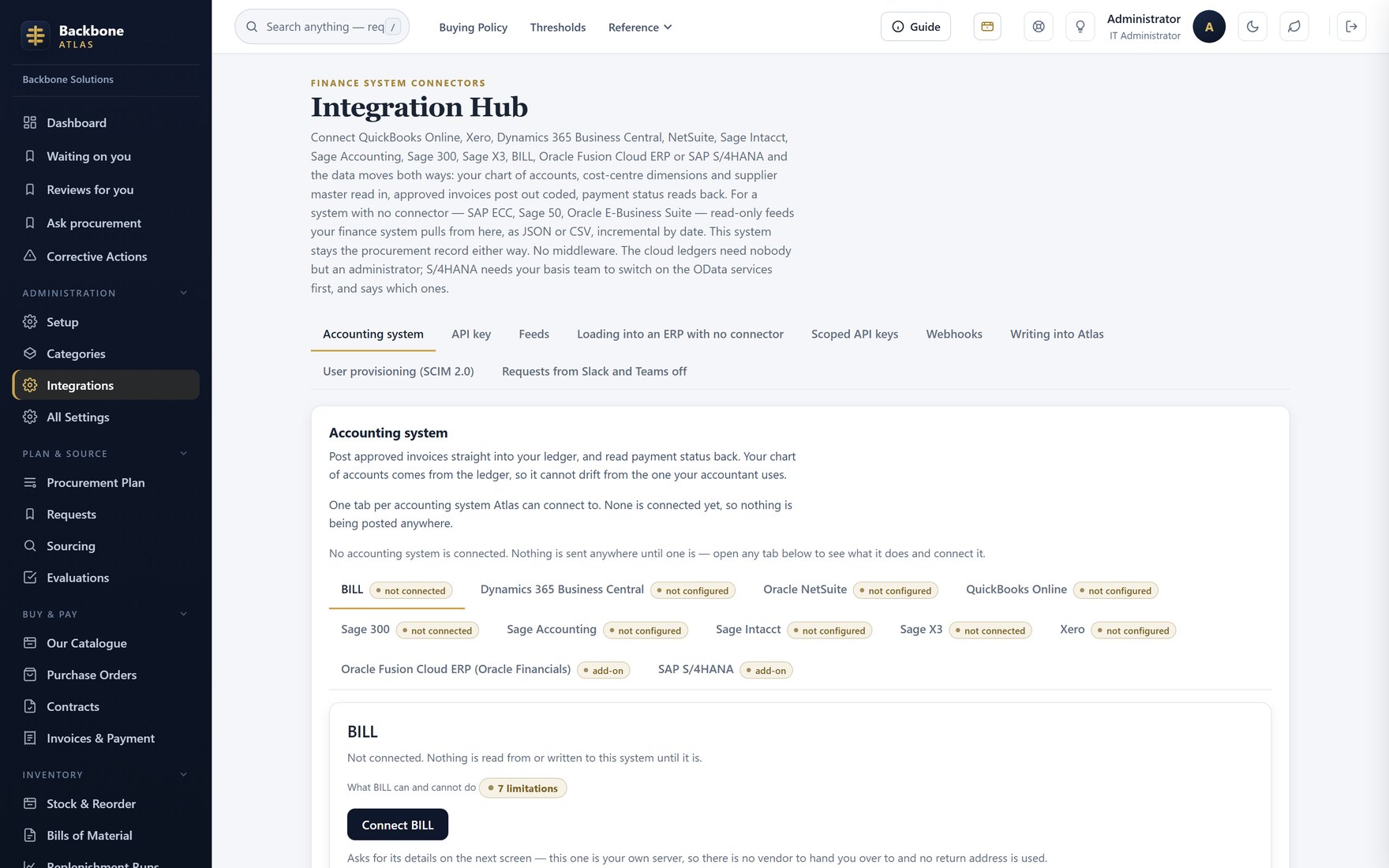
Every ledger has gaps. We name them.
One package has no purchase order. Another takes no journal entry. Several cannot close an open order. When you connect, Atlas lists what your ledger cannot do, and why.
- WhyOtherwise a feature list fits the best connector, not yours
- ExampleSage 50 cannot be connected. It has no network interface, only a desktop toolkit.
- ExampleIf a ledger cannot safely create a supplier, Atlas asks you to create and map it.
- NeverA guessed posting. An honest gap beats a wrong entry.
What reaches the ledger has already been matched.
Everything sent has passed approval, receipt and a three-way match. Peppol purchase orders are built. Sending on the Peppol network uses an accredited access point, contracted before first use. In the UAE, e-invoices come from your own ASP: see UAE e-invoicing.
- SimpleInvoices arrive against an order, including Peppol UBL and UAE PINT AE invoices and credit notes, with sums checked
- ThenThe match runs itself. Only exceptions need a person.
- ThenApprove for payment, and record the payment reference
- ComplexTax is checked against the order, so the entry is right first time
Not on the list? It pulls a feed.
A drawing of what crosses, in what shape, and who sets the timing.
- OutPurchase orders, invoices, suppliers, contracts and ledger entries
- HowJSON or CSV over HTTPS, pulled by your system on its own schedule, by date
- KeyOne API key, issued and rotated by your administrator
- Read-onlyThis route changes nothing in Atlas, so a fault cannot corrupt a procurement record
The four proven ledgers: set up in an afternoon.
No integration project. Cloud ledgers: sign in and map. Sage 300, Sage X3, SAP S/4HANA and Oracle Fusion: a form with your address and an integration account. The other seven are proven on your ledger at onboarding. Anything else: a key, an endpoint, a schedule.
- SimpleSign in to connect. Accounts and cost-centre dimensions come back by themselves.
- ThenConfirm the mapping. Atlas's own matches never count as confirmed, and a sync never undoes yours.
- ThenPosting stays OFF until you turn it on. An unmapped push fills a suspense account, and looks like it worked.
- ComplexNo connector? Issue an API key, point their job at the feed, and rotate the key when someone leaves.
Commitment visible before the invoice.
Overruns start between approving a purchase and seeing it in the ledger.
- SeesCommitment against budget as orders are raised
- SeesInvoice-to-payment cycle time, measured, not estimated
- DoesCloses the period on figures already reconciled
- ProofEvery ledger entry traces back to invoice, receipt, order and requisition