Procurement rules engine
Your procurement rules, written from your settings.
Atlas writes your procurement rules from the thresholds, regime and region you set. The rules page, clauses and controls read the same settings, so they never drift apart.
Generated, not typed
Your rules, written from your settings.
Buyers, approvers and auditors read this page to see the rules. Change a threshold and the page changes.
- From the settingsWritten from your value bands, regime, region and sector.
- Not a promiseIt says what the system will do. Page and controls share one source.
- Below and above thresholdDuties below each threshold, procedure above it, in your figures.
- Same page for allRequester and auditor read the same page.
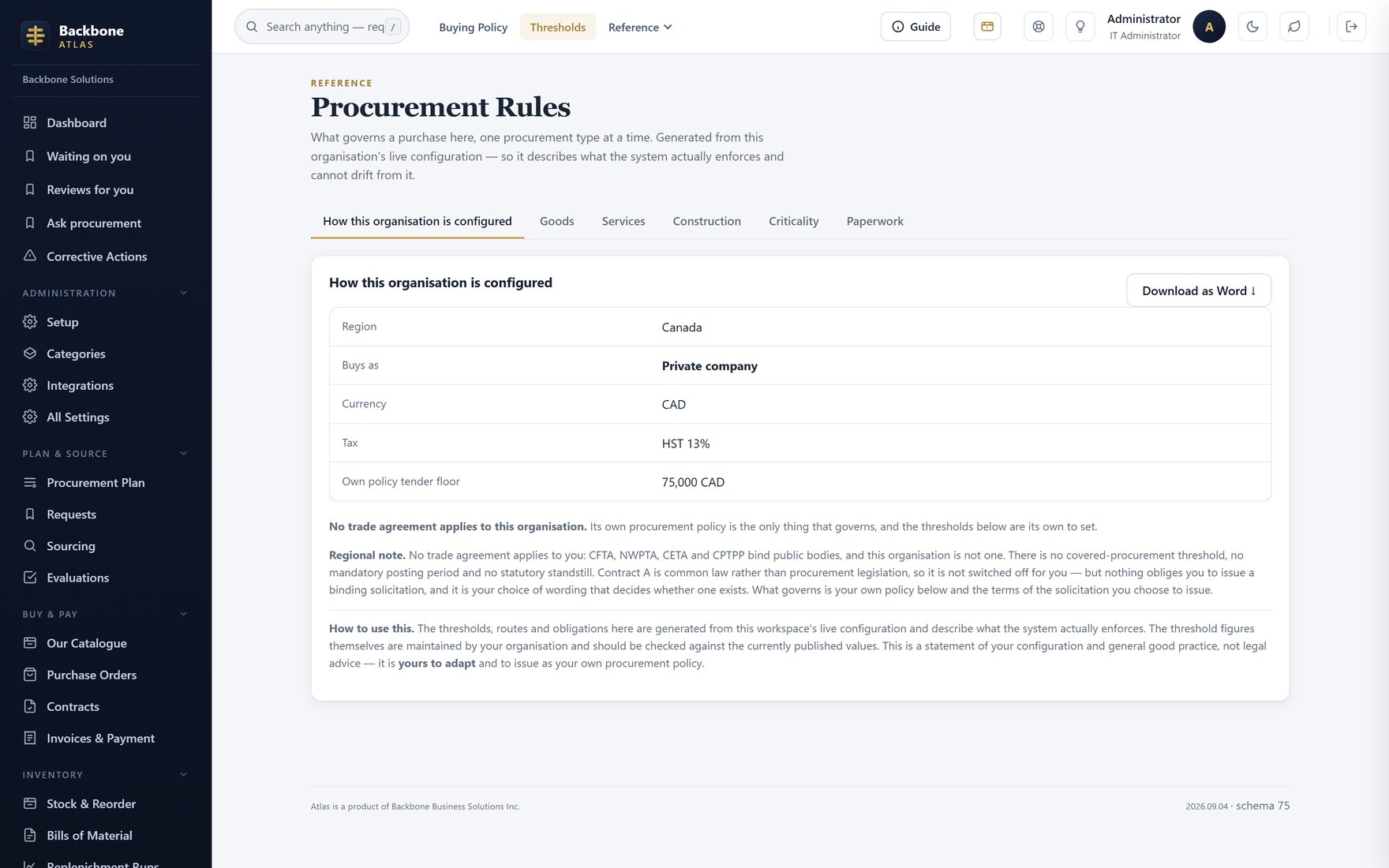
Procurement RulesThe rules page, built from this workspace's thresholds and regime.
One switch, a whole regime
Set the region and the rules change, not just currency and tax.
Canada has Contract A/B. The UK has the Procurement Act 2023. The EU has Directive 2014/24. The GCC has PDPL residency. The region setting picks the whole set.
- The threshold matrixThresholds load for the region, by entity type. For example NWPTA/CFTA, the Act's bands, the Directive's.
- The doctrineDoes a tender form a binding process contract? The rules answer in the region's own terms.
- SwitchableChange region in settings. Nothing else to reconfigure.
- Named in writingThe page names the region. Residency reviews get a one-line answer.
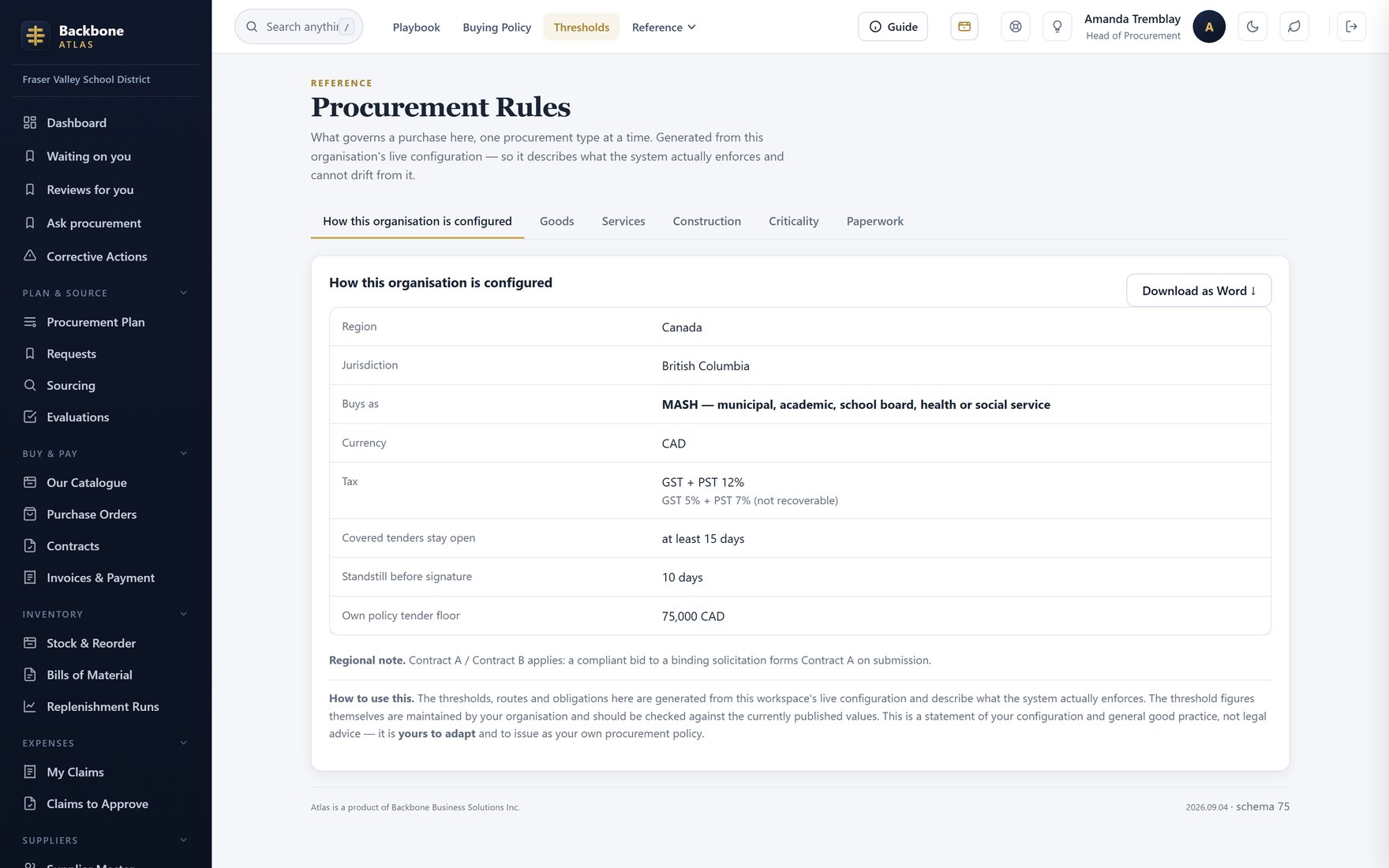
Regional rulesThe same page under the Canadian public-sector regime, Contract A included.
Set the figures once
A few settings drive the whole page.
No policy document to keep in sync. Set region, value bands and sector. The rest follows.
- Region & currencyOne profile sets currency, tax and thresholds.
- Your bandsValue ladder and delegation of authority, in the group's reporting currency.
- Public or privateChanges which duties apply and which documents are offered.
- Off until setAn unset control shows no rule. The page never claims what the system won't do.
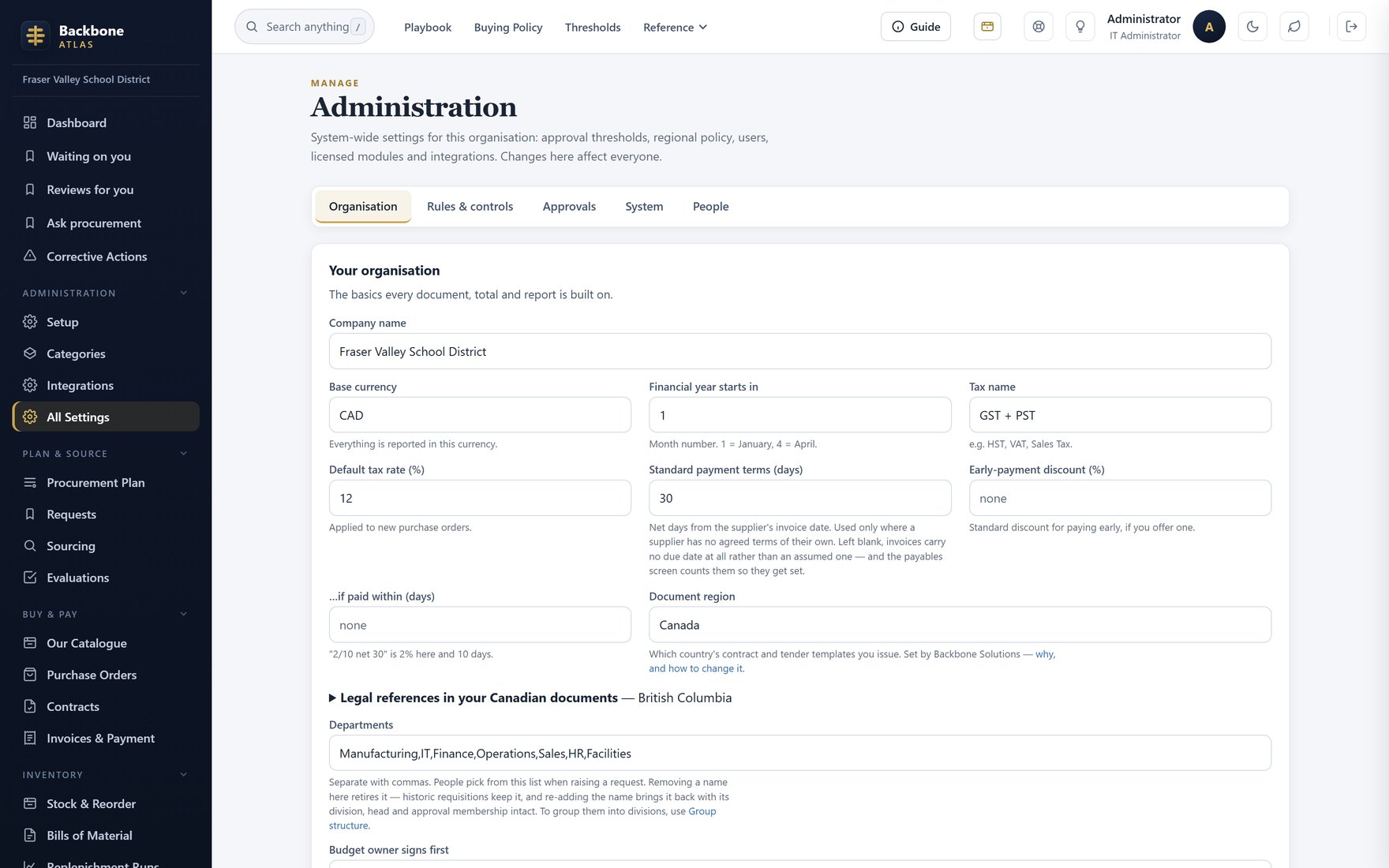
Region & thresholdsThe settings behind the rules page. Change them and it rewrites.
Paperwork that matches the process
Clauses and templates generated for your regime.
The clause library is generated for your region and sector. The tender a supplier gets says what the rules page says.
- Generated per regimeMaster documents and response forms, built for region and sector.
- Refuses the wrong clauseNo Contract A in the region? No process-contract term.
- One trailDocument, rule and event are one record. The paperwork is evidence.
- Branded, not rewrittenYour name and logo on top. The wording stays as generated.
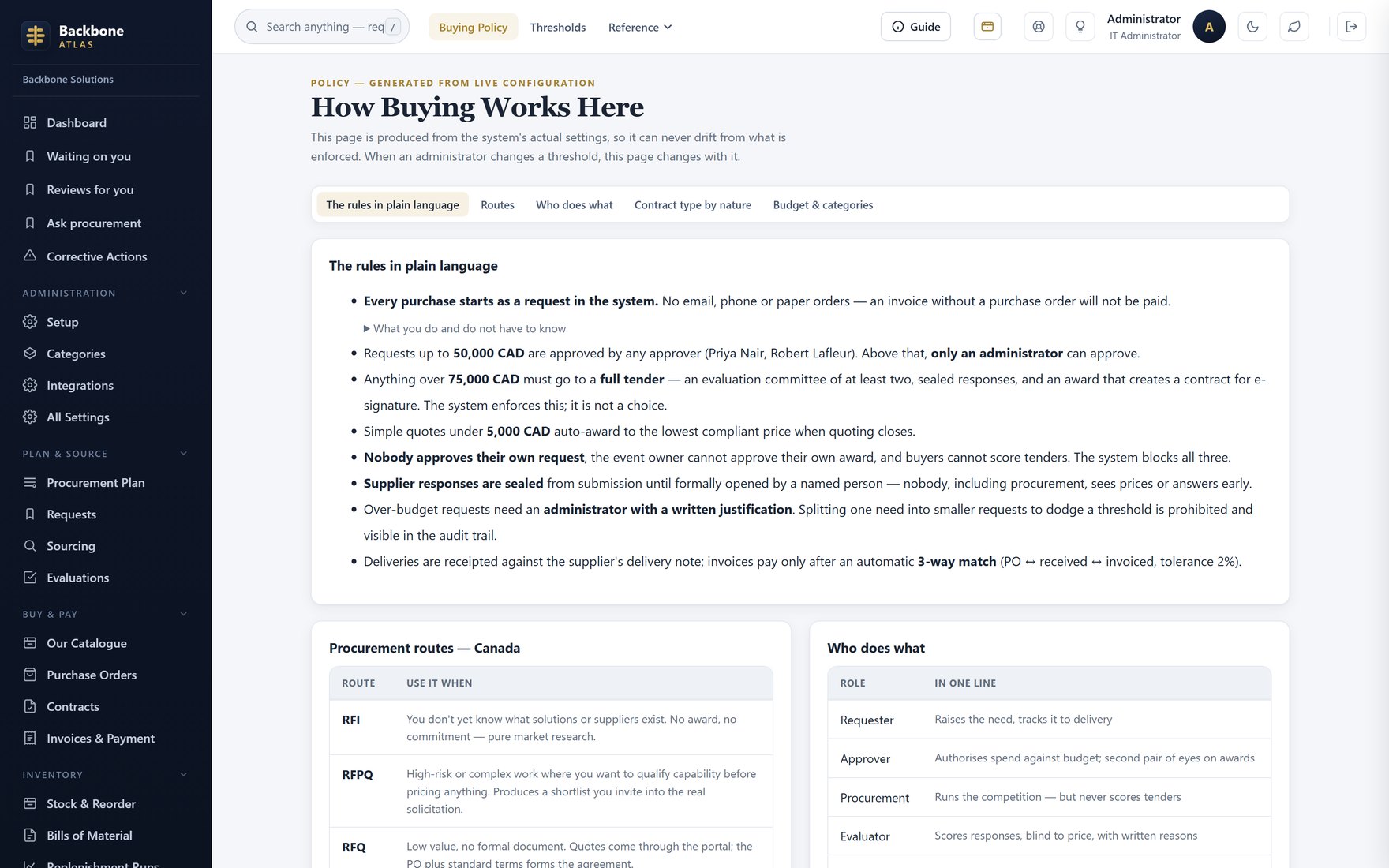
Methodology playbookThe clause library, generated for this workspace's region and sector.