For pharmaceutical manufacturers and distributors: stock received into quarantine and released only by a second person, certificate results judged against a specification, the temperature at the dock, approved and licensed sources per item, serial numbers captured at receipt, and controlled stock kept in restricted locations with a witness on every move.
A general system treats goods on the dock as stock, a certificate on file as a pass, and a supplier on the list as approved for anything. For a regulated material, each of those is a different fact, and Atlas keeps them apart.
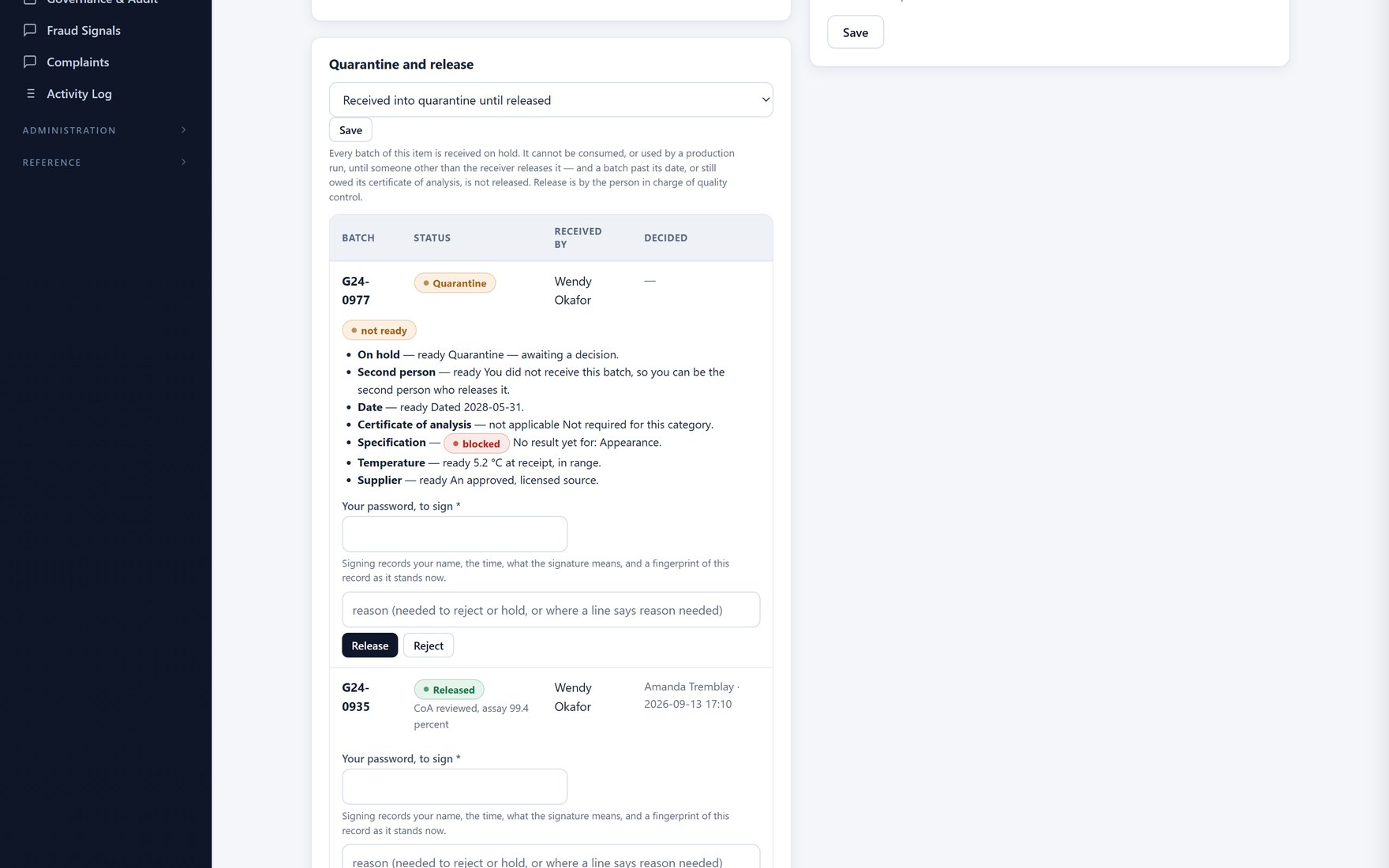
An item can be set to arrive into quarantine. Its stock cannot be used until somebody other than the person who received it releases the batch, and the release can ask for that person's password again at the moment of signing, recorded with what the signature means and a fingerprint of the record signed.
The results on a certificate of analysis are recorded against the item's specification, test by test. A batch that fails a test, or has no result for a test the specification requires, is not released. An item with no specification says so on its page. It is never shown as a pass.
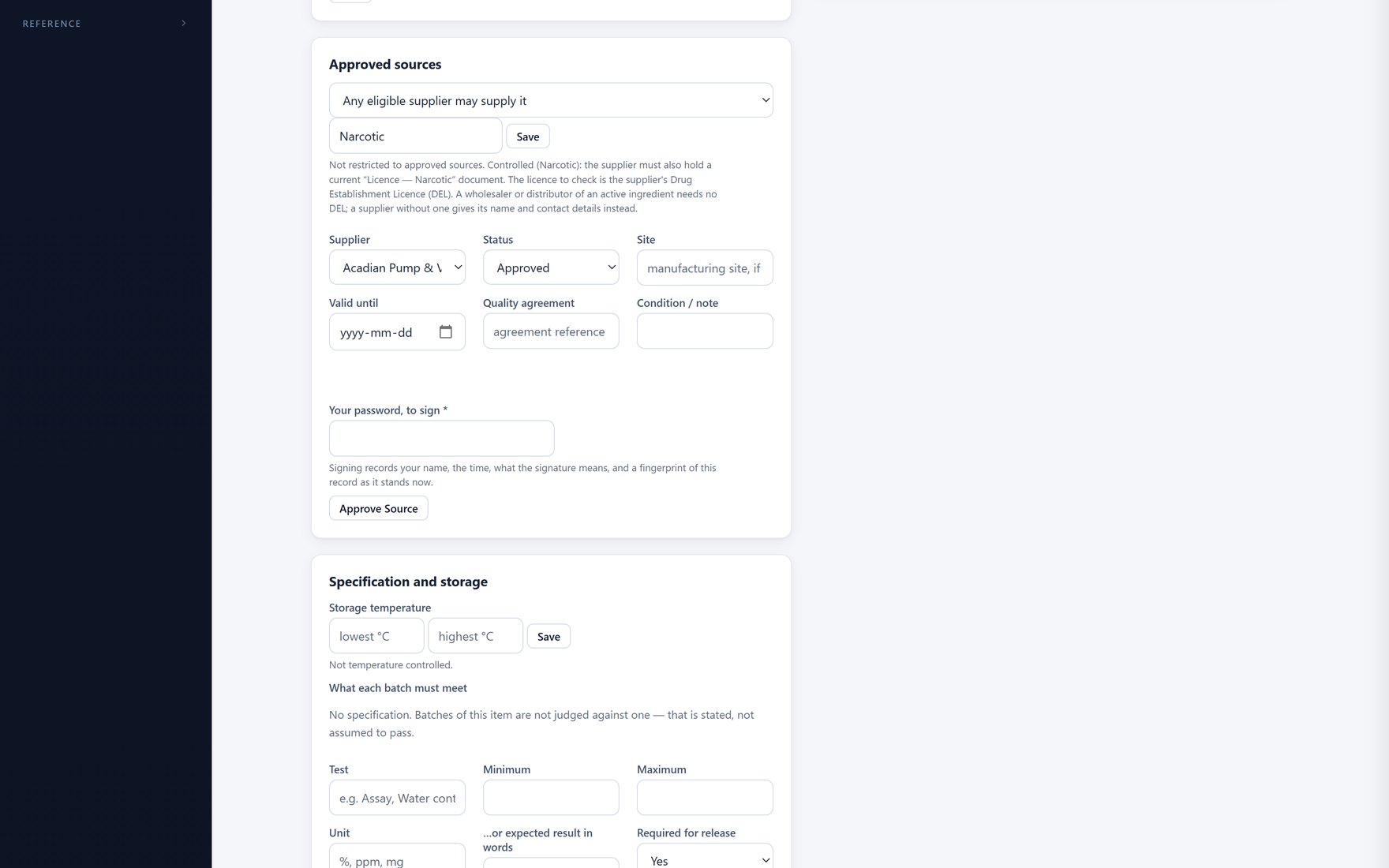
Approval is recorded per item, with a status and an end date. An order for that material goes only to a source approved for it and still in date, and a controlled item also needs the supplier's current licence for its class, held as a document on the supplier's record.
The release readiness checklist reads every control and gives each one's answer for the batch: the hold, the second person, the date, the certificate, the specification, the temperature and the supplier. It decides nothing the controls do not already decide, and the release itself refuses for the same reasons, so the list cannot say ready while the release says no.
An item can be restricted to approved sources. The approval names the supplier, a status and an end date, and the check runs in the one place every order already passes through on its way to a supplier, so there is no second route around it.
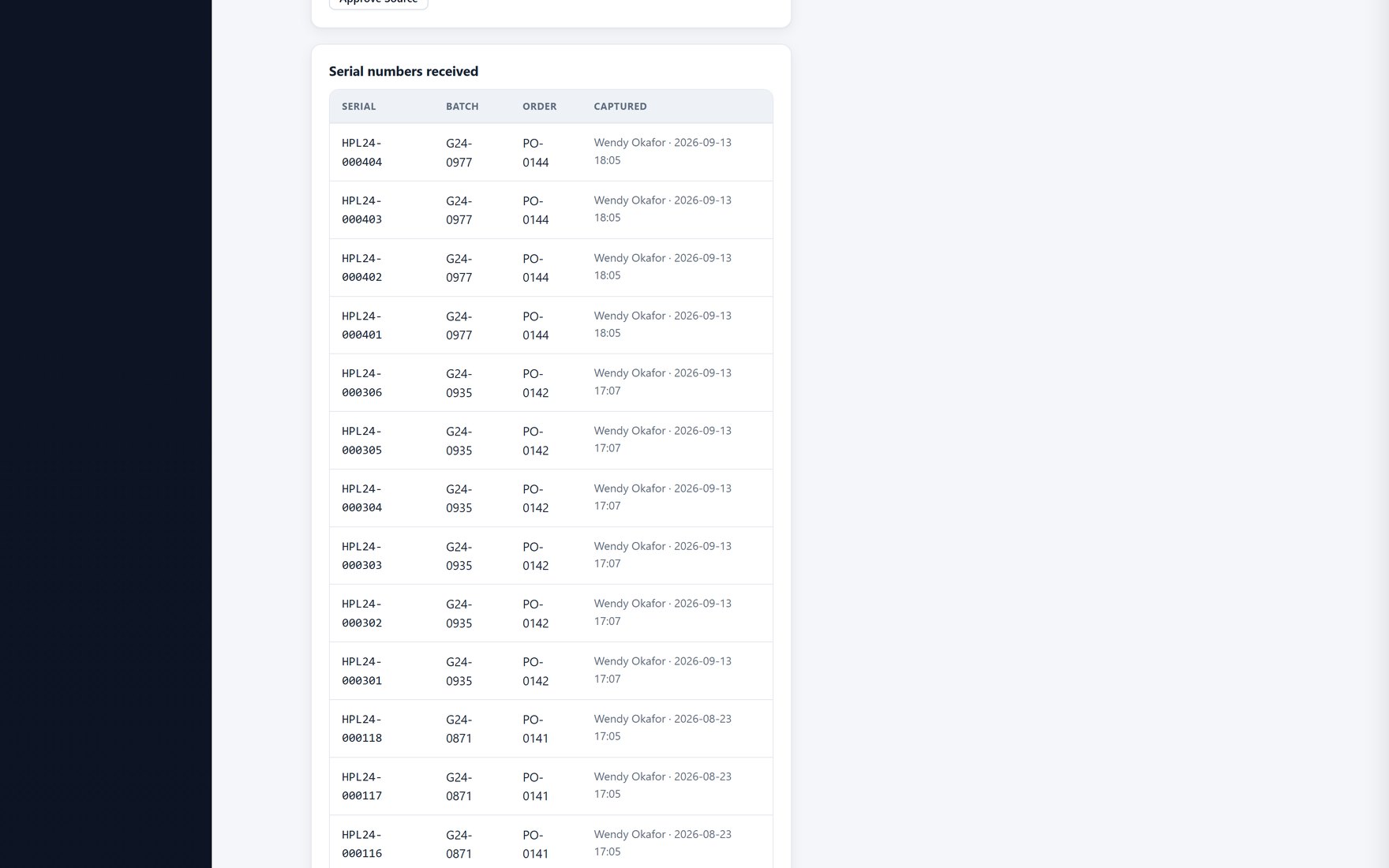
The receiver enters the serial numbers on the delivery. Atlas records each one against the receipt, the item and the batch, and refuses the entries that cannot be true. It does not check them against any national verification system.
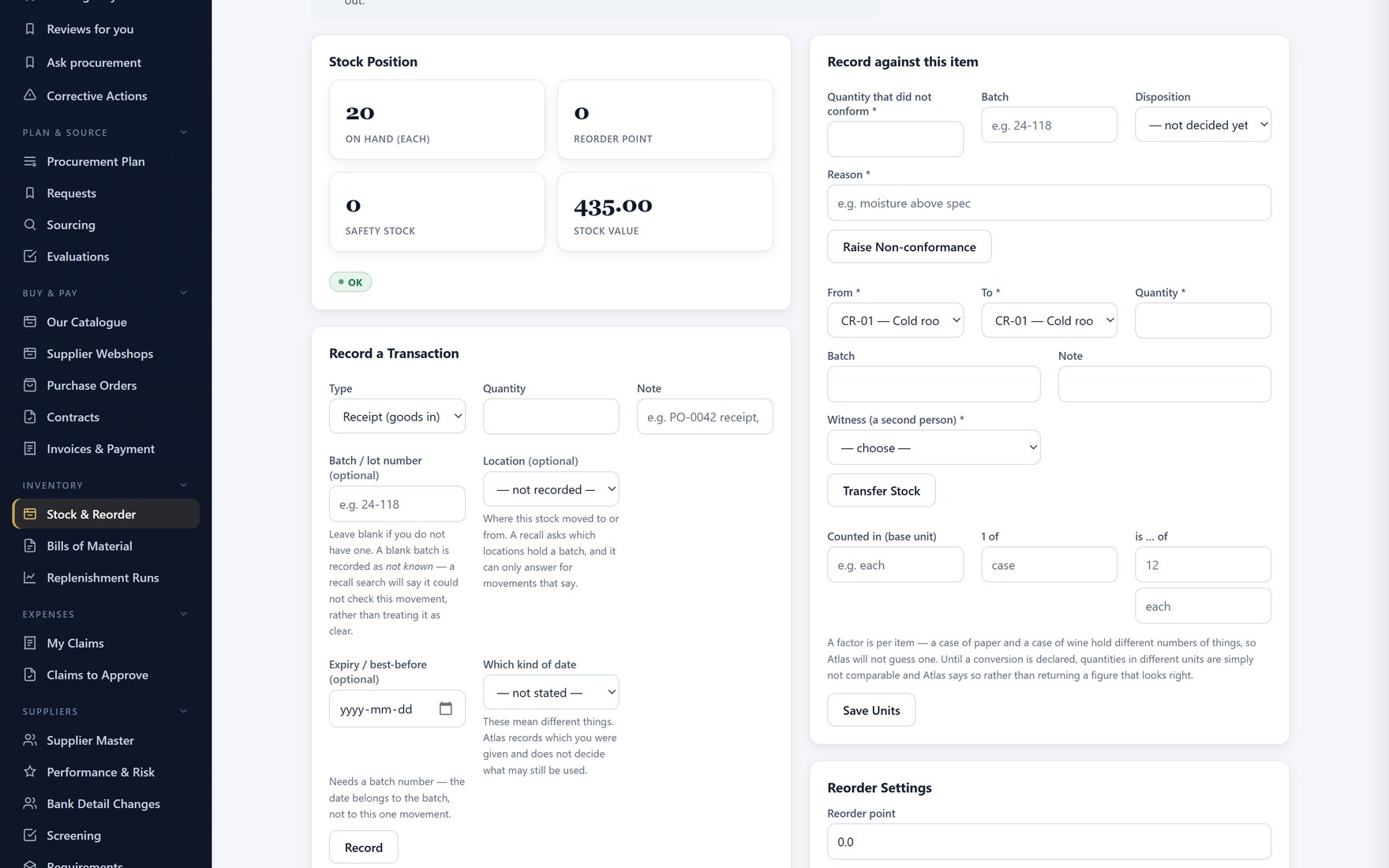
An item with a control class, a narcotic for example, is received and moved only into a location marked restricted, such as a cage or a vault. Every move names a second person as witness, and the activity log records the move and the witness.
The controls work the same way everywhere. What changes is what the screens call things, and Atlas uses a regulator's own words only where they were taken from that regulator's published text.
Atlas refuses a lot here, on purpose, and every refusal carries its reason on the screen. These are the ones this industry meets, in the words the screen actually uses — so that meeting one is a thirty-second fix rather than a support call.
Every one of these is also written into the guidance drawer on the screen it happens on, and into the process guides your own workspace generates — so a person who meets it at four o’clock on a Friday does not need us, or you.
Named so you can decide with them in view. Two are not built, one is a customer this pack is not for, and two are judgements Atlas will not make for you.
A short demo on your own items: a delivery received into quarantine, the release refused to the person who received it, a result that fails its specification, and controlled stock moved into a vault with a witness. The pharma pack is an optional add-on at US$10,000 a year for each country that uses it; the rest of Atlas, end to end, is included in the licence.
Book a demo