Intake & requisitions
Every purchase starts as a request on the record.
Every request records its value, category, cost centre and criticality. Trace it to the order, quote, tender or contract it becomes.
The request itself
One form collects what every later step needs.
The form asks for the facts once, in plain words, and says why each matters.
- WhatDescription, quantity and unit. Any unit, not just a dropdown.
- How muchEstimated whole-life value. It sets the route and approval band.
- How criticalRoutine, Important or Critical. It counts alongside value, so a cheap but critical buy is not treated as trivial.
- Where it landsDepartment, category and cost centre. Spend and budgets are right, with no re-keying.
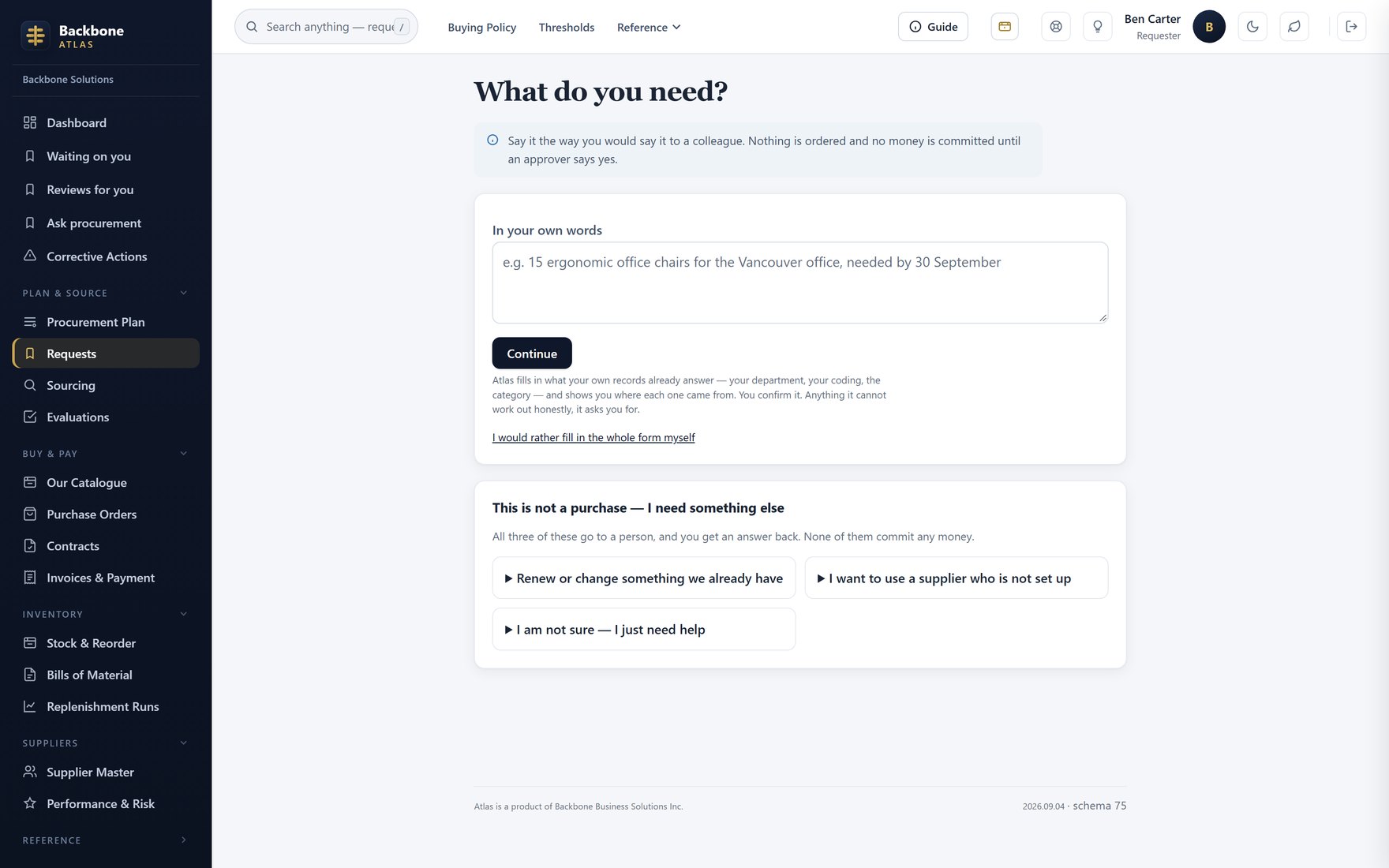
New requestThe intake form, with the guidance panel above.
For the requester
No training. No guessing what happens next.
Rules are explained when they matter. You can see where your request is.
- SimpleCatalogue first. Items on active arrangements are ordered at agreed prices, with no buyer.
- ThenSee what happens at each value before writing anything.
- ThenFill in the form. If the assistant is switched on, it drafts the fields from one sentence, for you to edit.
- ComplexTrack it on the same screen: its stage and what is holding it.
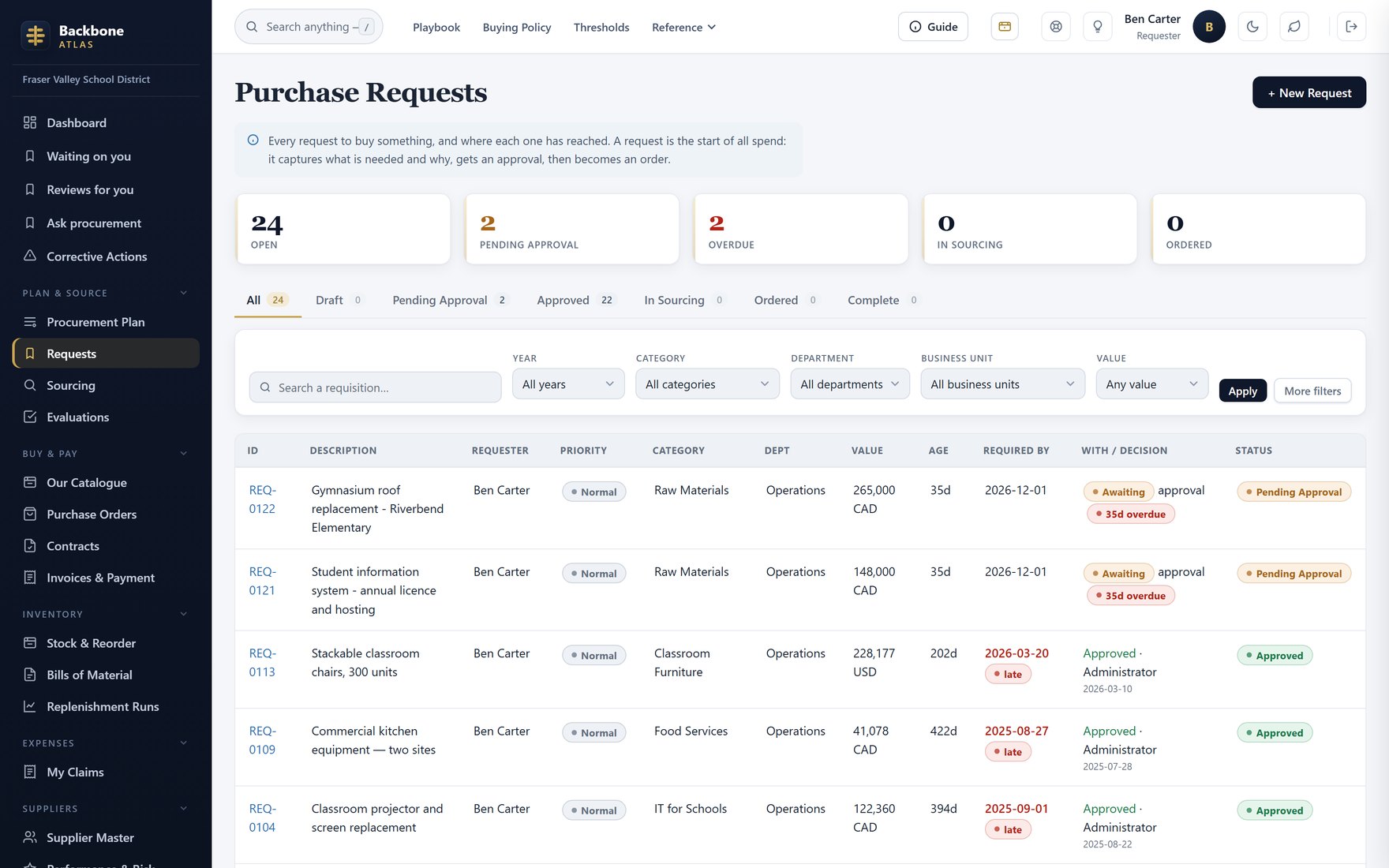
My requestsYour own list: what is open and what each one waits on.
For the buyer
Demand arrives structured, not as an email.
Every request is valued, categorised and coded before a buyer sees it.
- SimpleWork the queue by value and need-by date.
- ThenRead the system's brief: purpose, value, criticality and flags.
- ThenSend it down the route its value and category need. No purchase order can exist without a requisition.
- ComplexGroup related requests into one sourcing project, not four small ones.
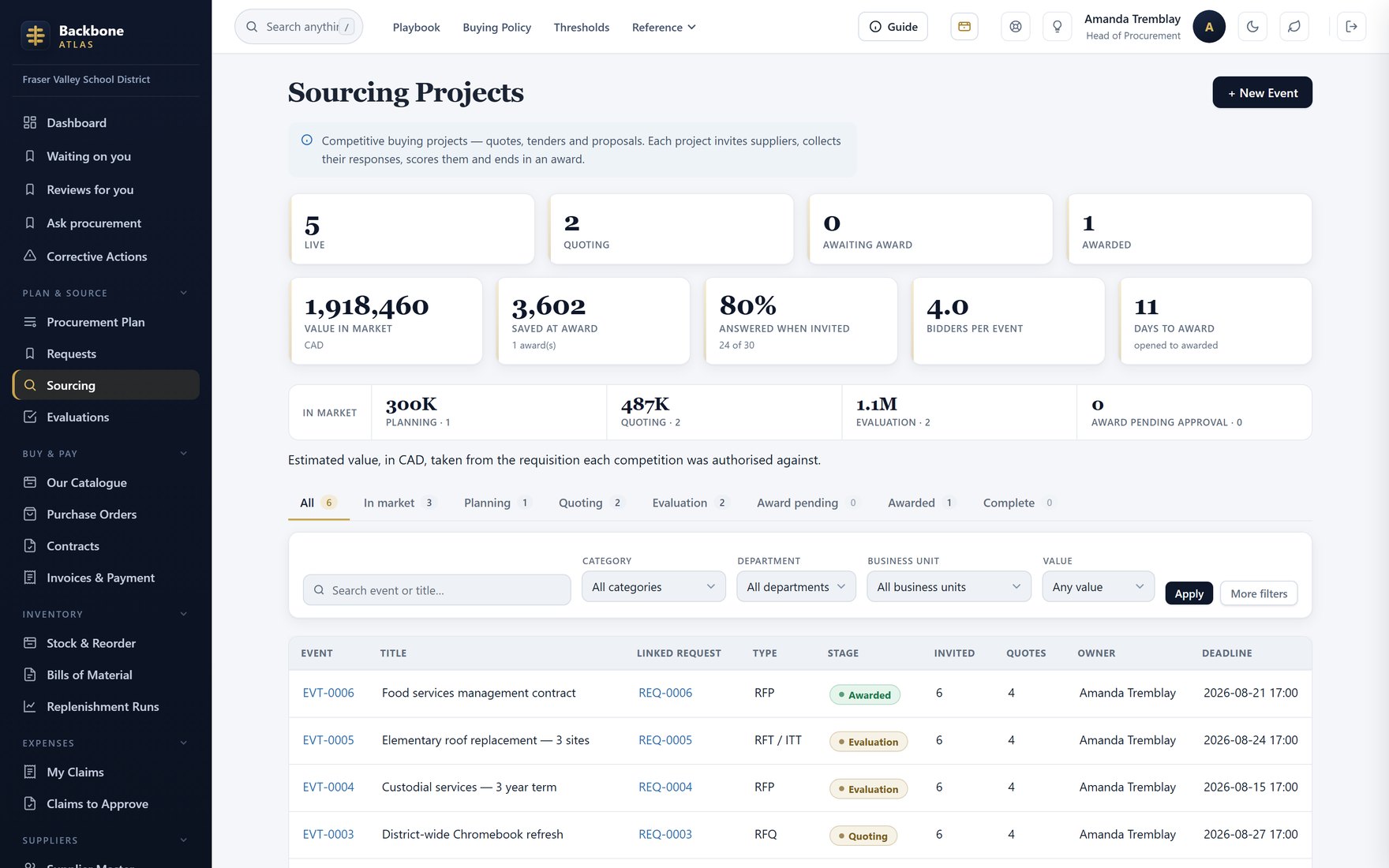
Sourcing pipelineWhere requests become competitions, route already decided.
The other question
Approval asks who may spend. Reviews ask if it may be bought.
A few questions when the request is raised bring in the right specialist automatically. It turns on what is bought, not what it costs.
- RaisedPrivacy, security, accessibility, health and safety, legal. Each shows the question that triggered it.
- ParallelReviews run alongside approval, not behind it.
- BlockingA blocking review stops sourcing and ordering until decided. An advisory one never does.
- WaivedA waiver is a decision. It records a name, a reason and a time.
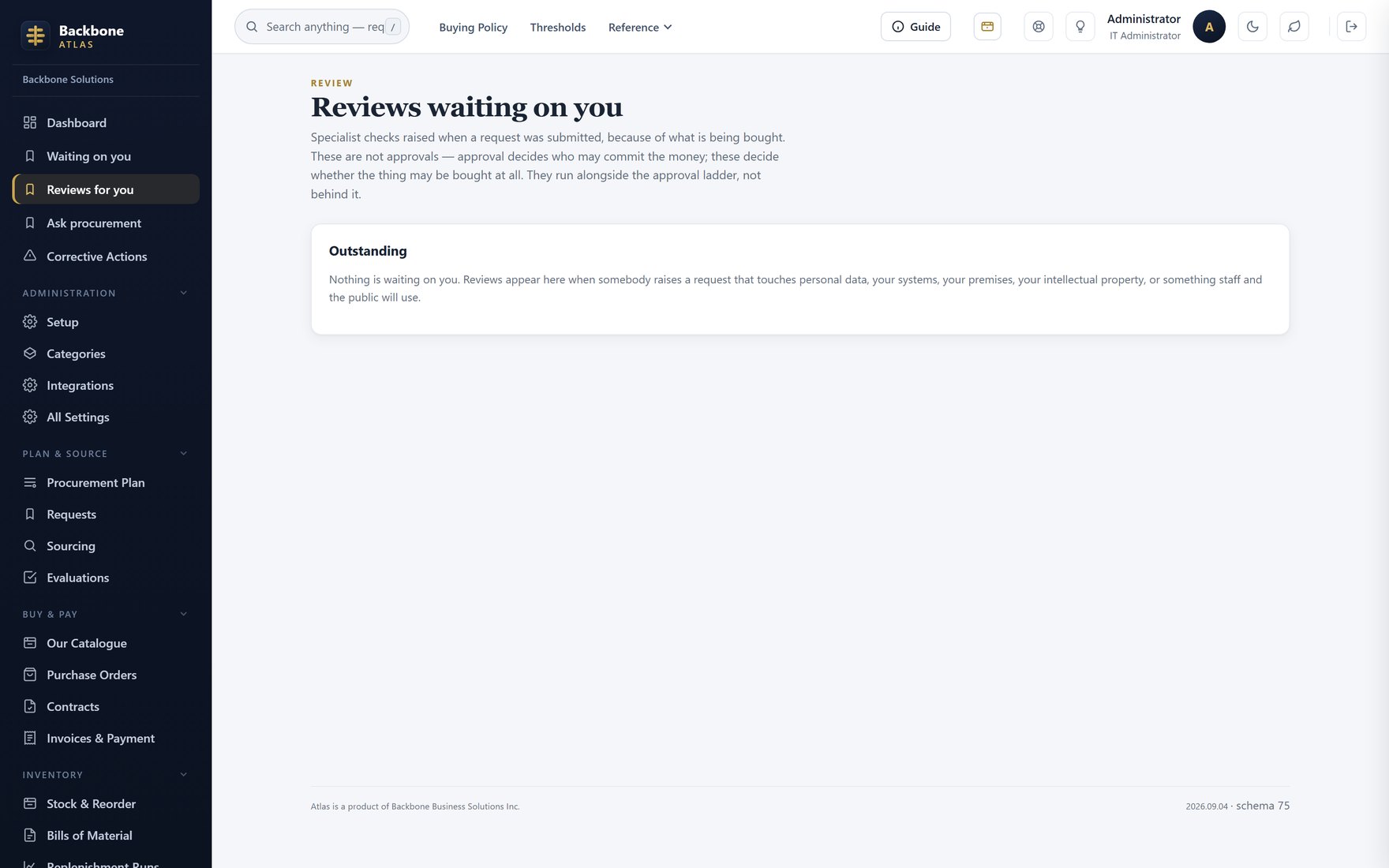
Reviews waiting on youReal reviews, why each was asked, and what clears them.
For the approver
Decide on the facts, in the queue, in seconds.
No forwarded emails. You decide against a brief the system built, on the record.
- SimpleThe dashboard shows only requests and awards waiting on you.
- ThenRead the brief: purpose, who asked, value and every flag.
- ThenApprove, or reject saying what would make it approvable.
- ComplexBefore leave, delegate to a named colleague. It is recorded, and they are told.
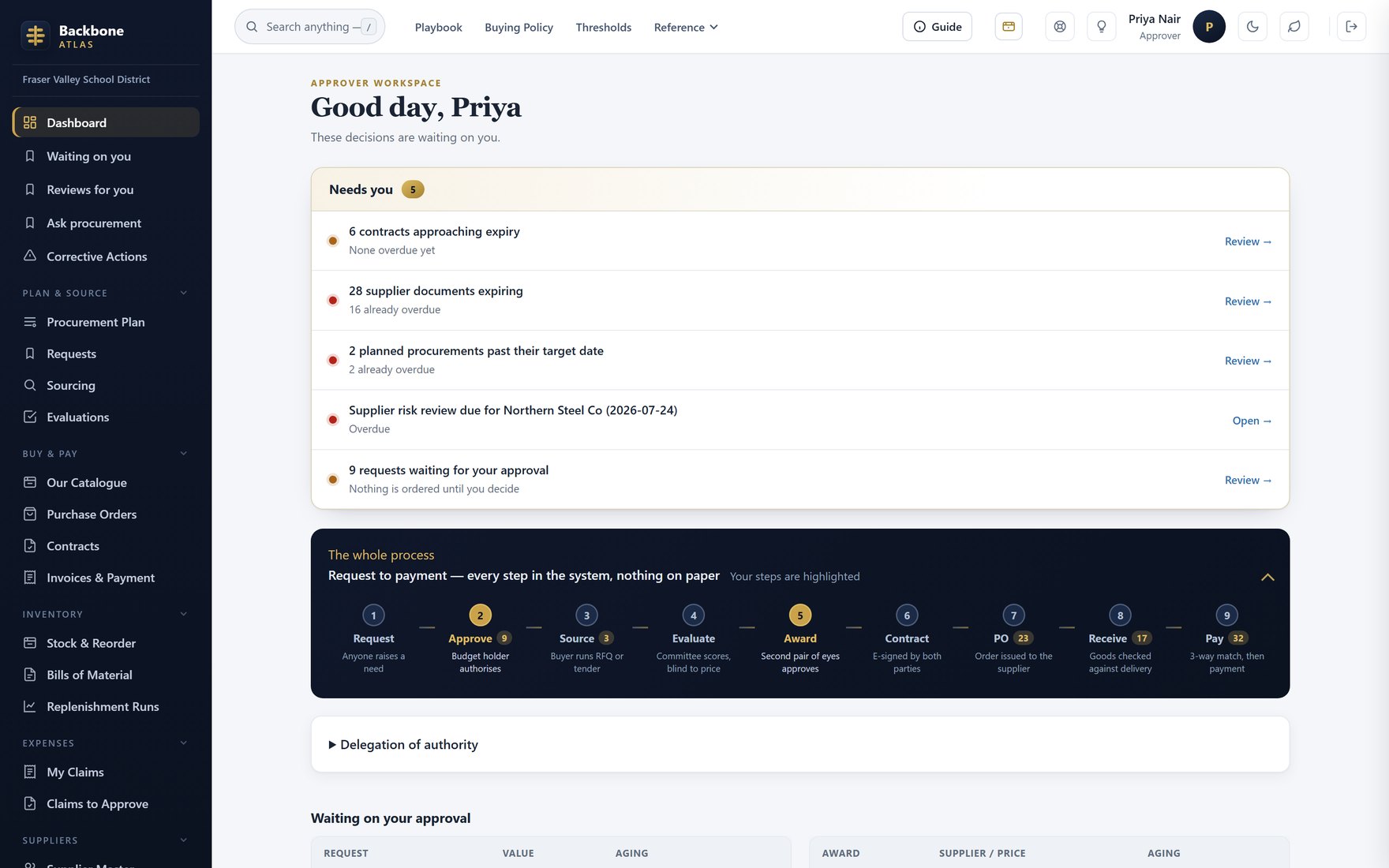
Approver's queueThe approver's first screen, most urgent first.
For a procurement director
A forward plan built from demand, not memory.
Requests become the plan of what goes to market, and when.
- SeesWhat goes out, roughly when, whose it is and at what value.
- SeesWhere demand concentrates. Where one category is bought repeatedly in pieces small enough to avoid competition.
- DoesPulls work forward or groups it, before a deadline forces single-sourcing.
- ProofEvery purchase order traces to a requisition. No sampling needed.
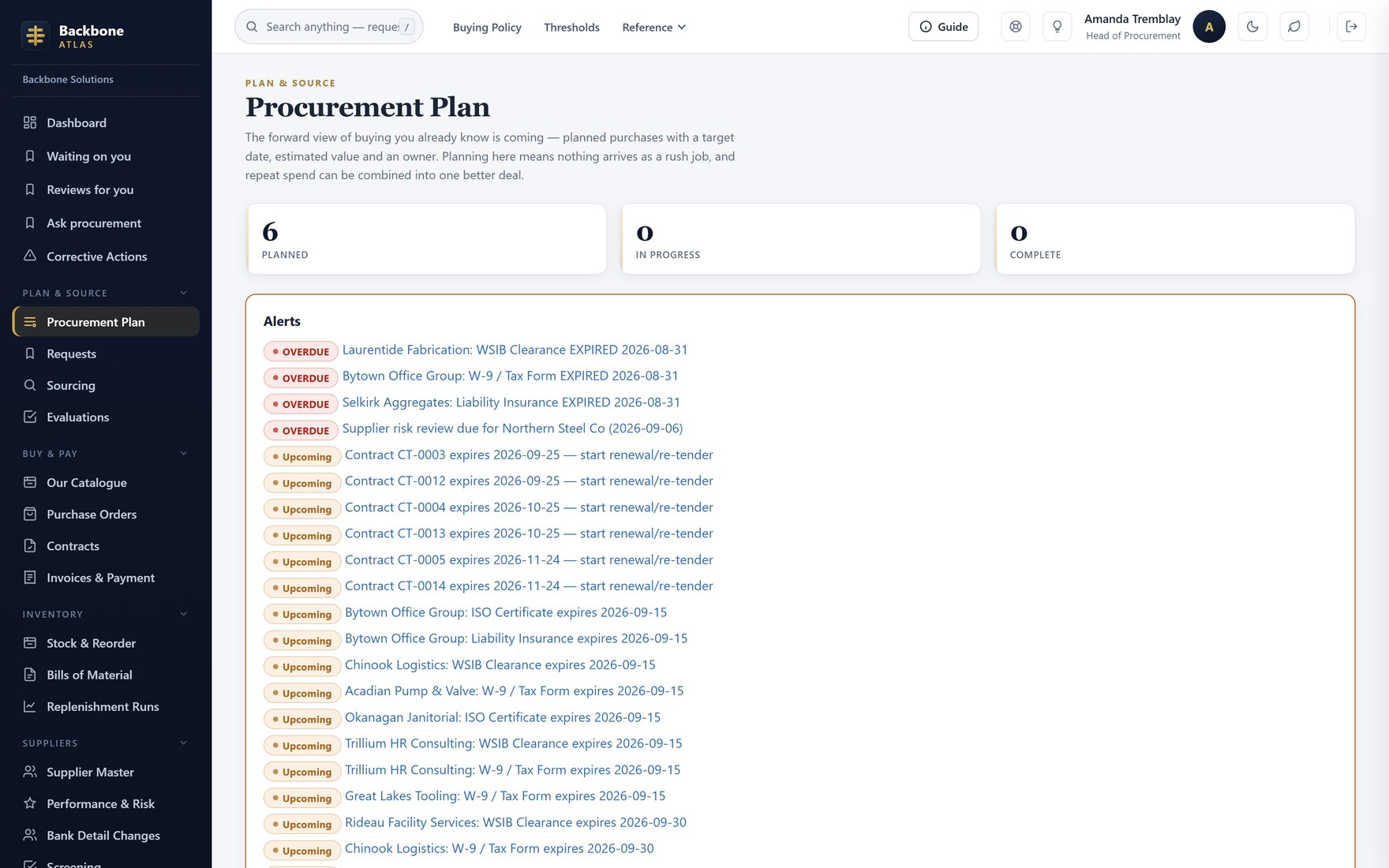
Procurement planWhat is coming, when, and at what value.