Indirect procurement
The long tail, with no buyer touching most of it.
Most purchases are small, repetitive and not worth a competition. Buy them quickly at agreed prices, on the record and within budget.
The catalogue
Buy what is agreed, at the agreed price.
Items on an active arrangement need no sourcing. The request becomes a call-off at contracted prices.
- FastEach catalogue line carries its own price, supplier and contract.
- ControlledIt still needs approval by value and authority.
- CodedCategory, cost centre and account code come from the catalogue line.
- MeasuredAnything bought outside this route shows as off-process spend.
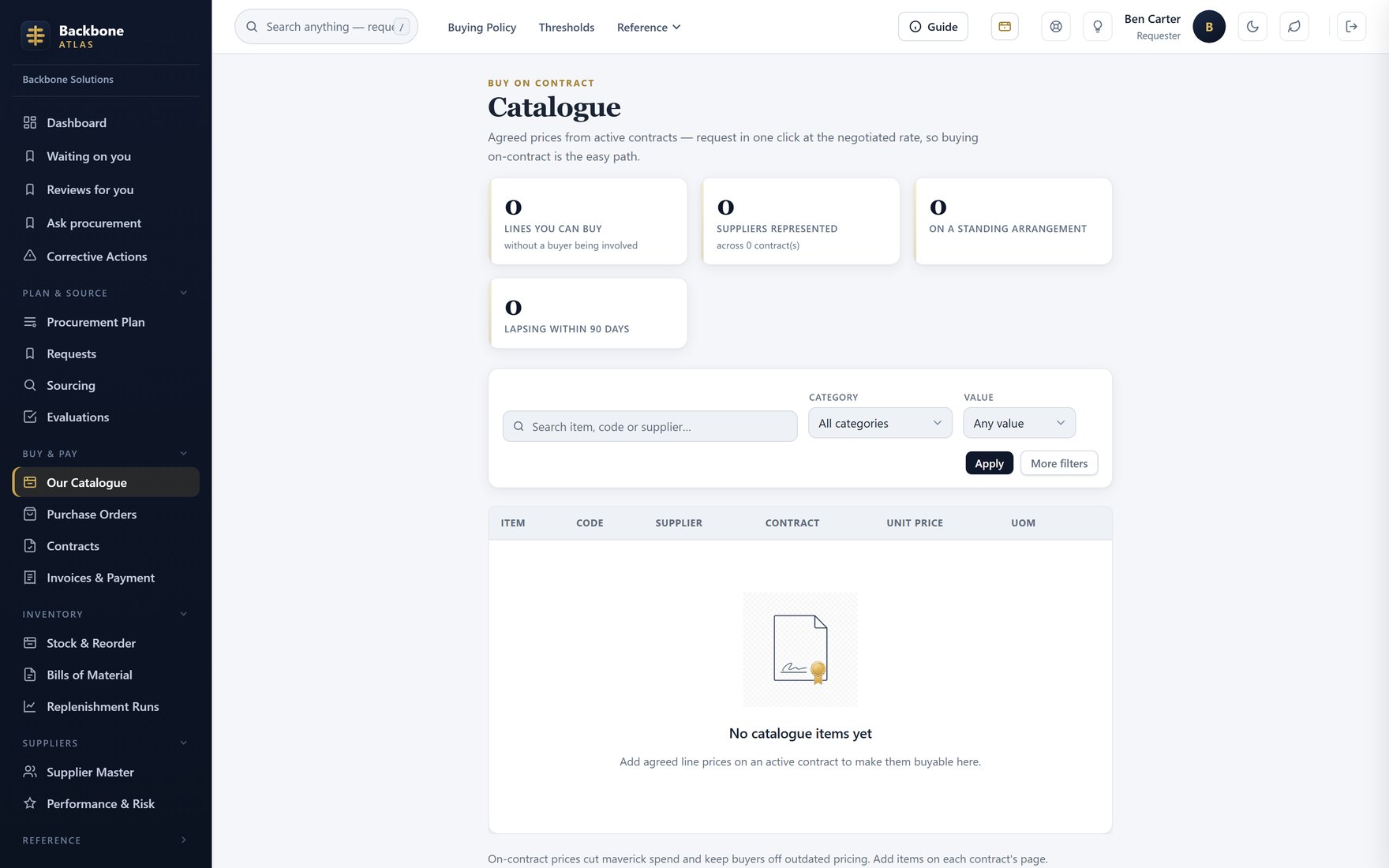
CatalogueItems on active arrangements, at contracted prices.
For the requester
Two minutes, and it is somebody's job by lunchtime.
If buying is slower than an email, people send the email.
- SimpleSearch the catalogue, add what you need, submit.
- ThenNot listed? Describe it. The guidance panel says what happens at that value.
- ThenWatch it move: approved, ordered, received, paid, on one screen.
- ComplexWhere receiving is devolved, receipt your own order, so the match can complete without a warehouse.
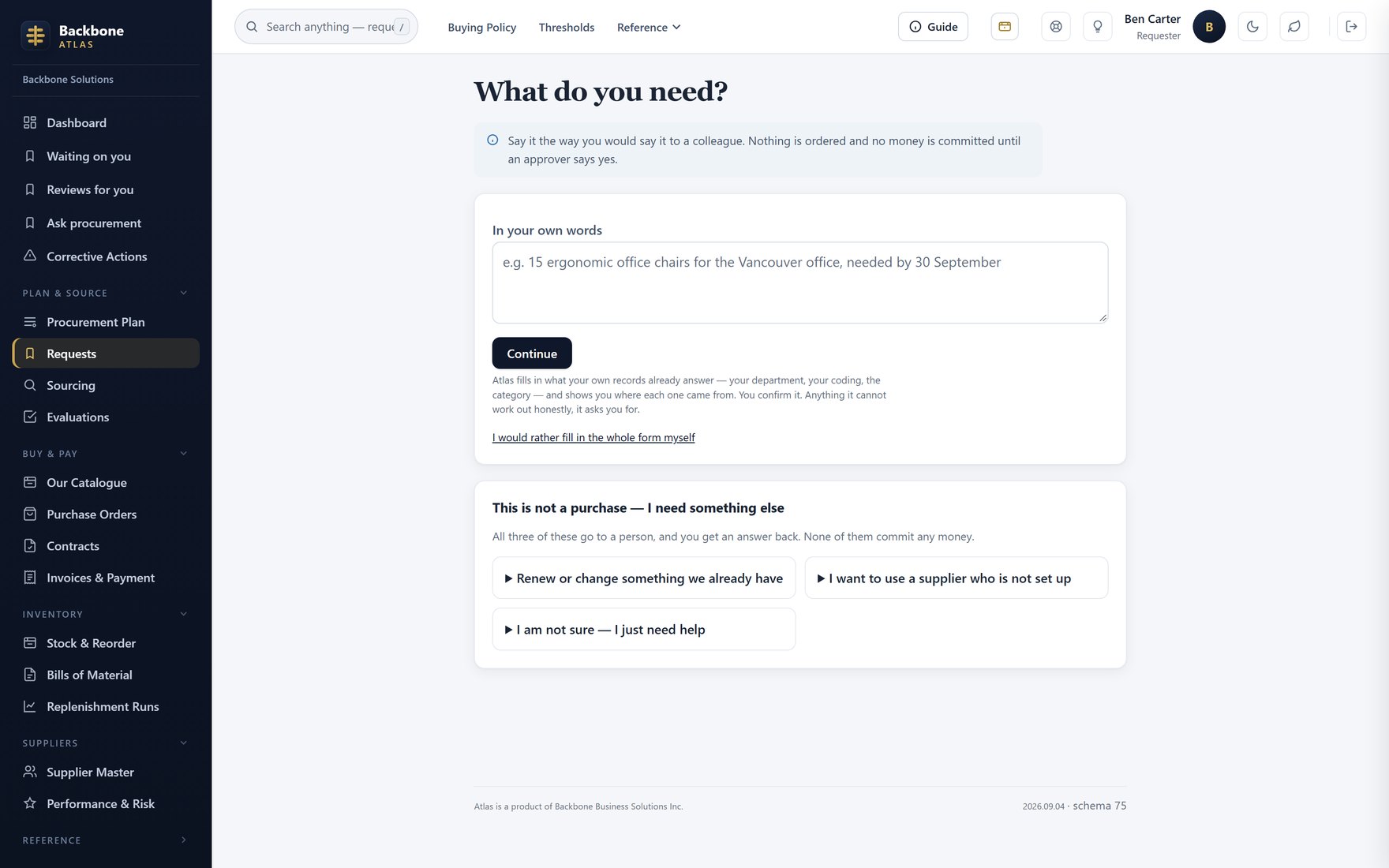
New requestThe same intake form, catalogue item or not.
For receiving
Say what turned up, and the invoice can settle itself.
Receiving is kept to the smallest possible task.
- SimpleOpen the order, record what arrived and the delivery reference.
- ThenRecord a short or damaged delivery, instead of accepting in full.
- ThenRaise a return. Approved as a replacement, it issues a zero-cost order.
- EffectA matched invoice needs no human decision. Only exceptions reach finance.
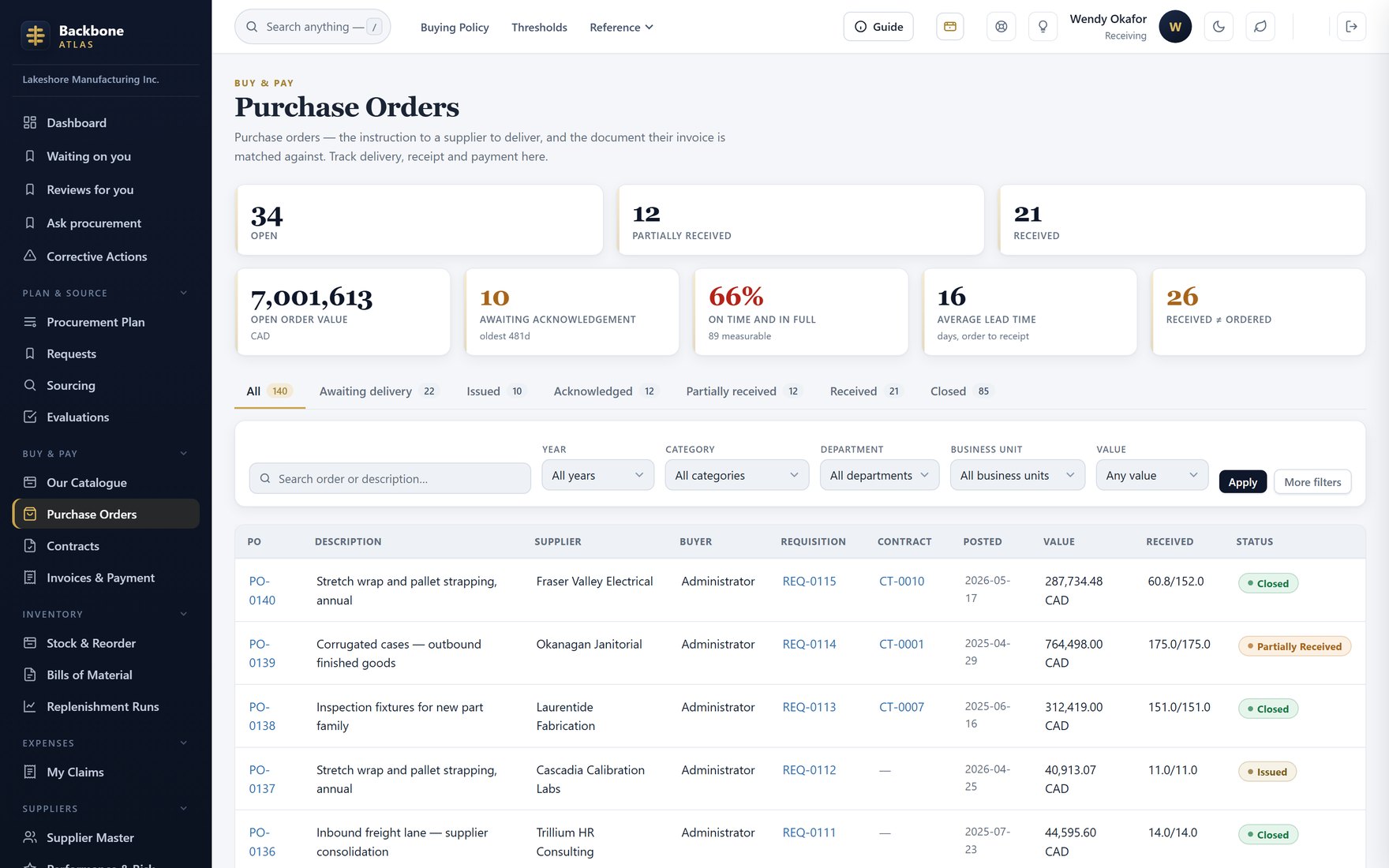
Purchase ordersOrders awaiting goods, and what has been received.
For finance
Only the exceptions need a person.
The match runs automatically when the invoice arrives. Only failed invoices reach a desk, with the reason.
- SimpleApprove matched invoices. Decide the exceptions.
- ThenSee whether price, quantity or receipt failed. No reconciling by hand.
- ThenRe-run the match after a late receipt or a change order.
- ComplexDispute a wrong invoice with the supplier, from the record.
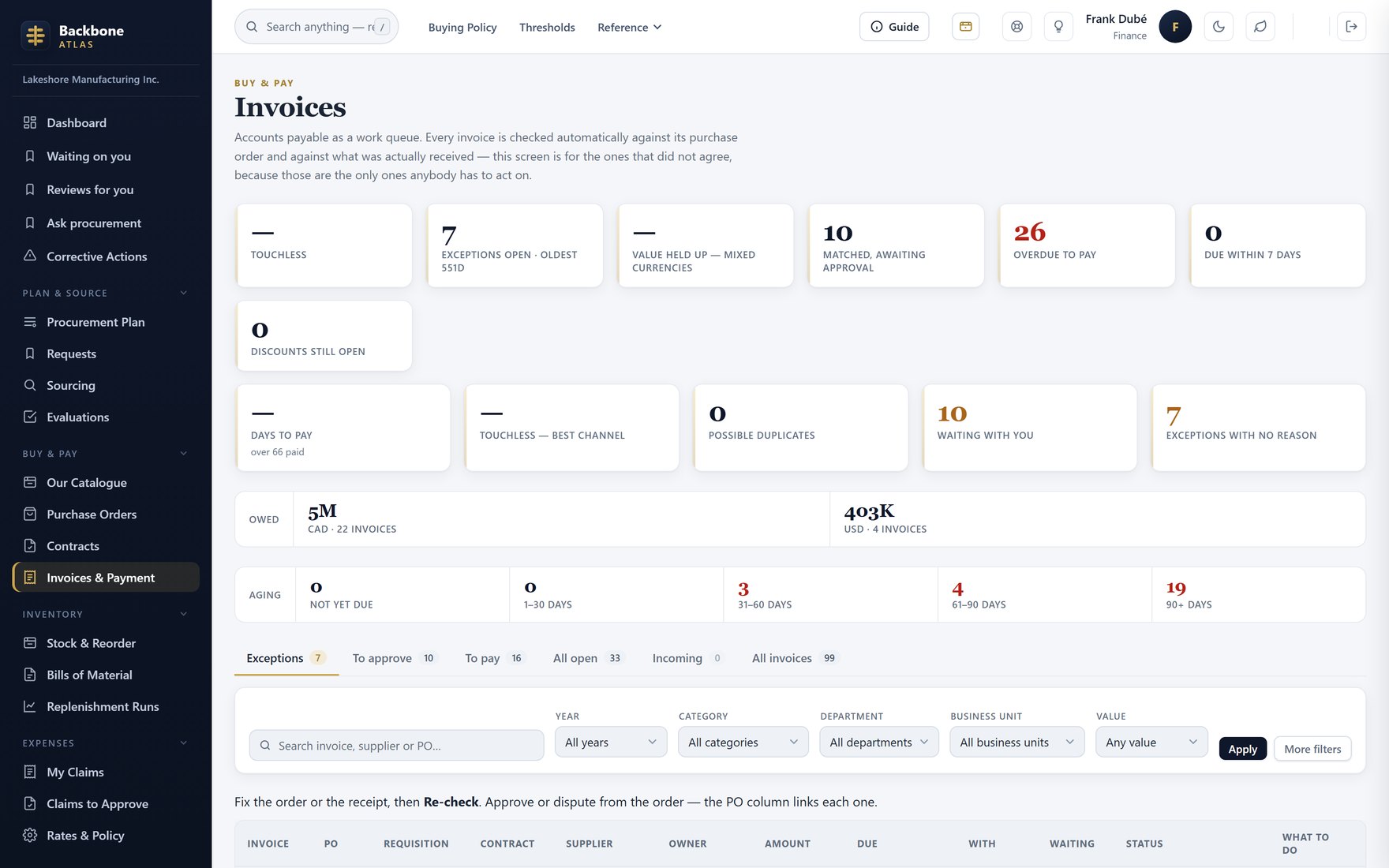
InvoicesThe three-way match, and exceptions needing a decision.
For a procurement director
The tail is where money leaks. Now it is visible.
Indirect spend is often the part nobody can describe. Atlas measures it.
- SeesOff-process spend as a share of the whole, by category and department.
- SeesSuppliers used again and again with no contract behind them.
- DoesMoves recurring lines onto a standing arrangement, so they become catalogue buys.
- ProofThe share of spend under contract moves, and the cause can be traced.
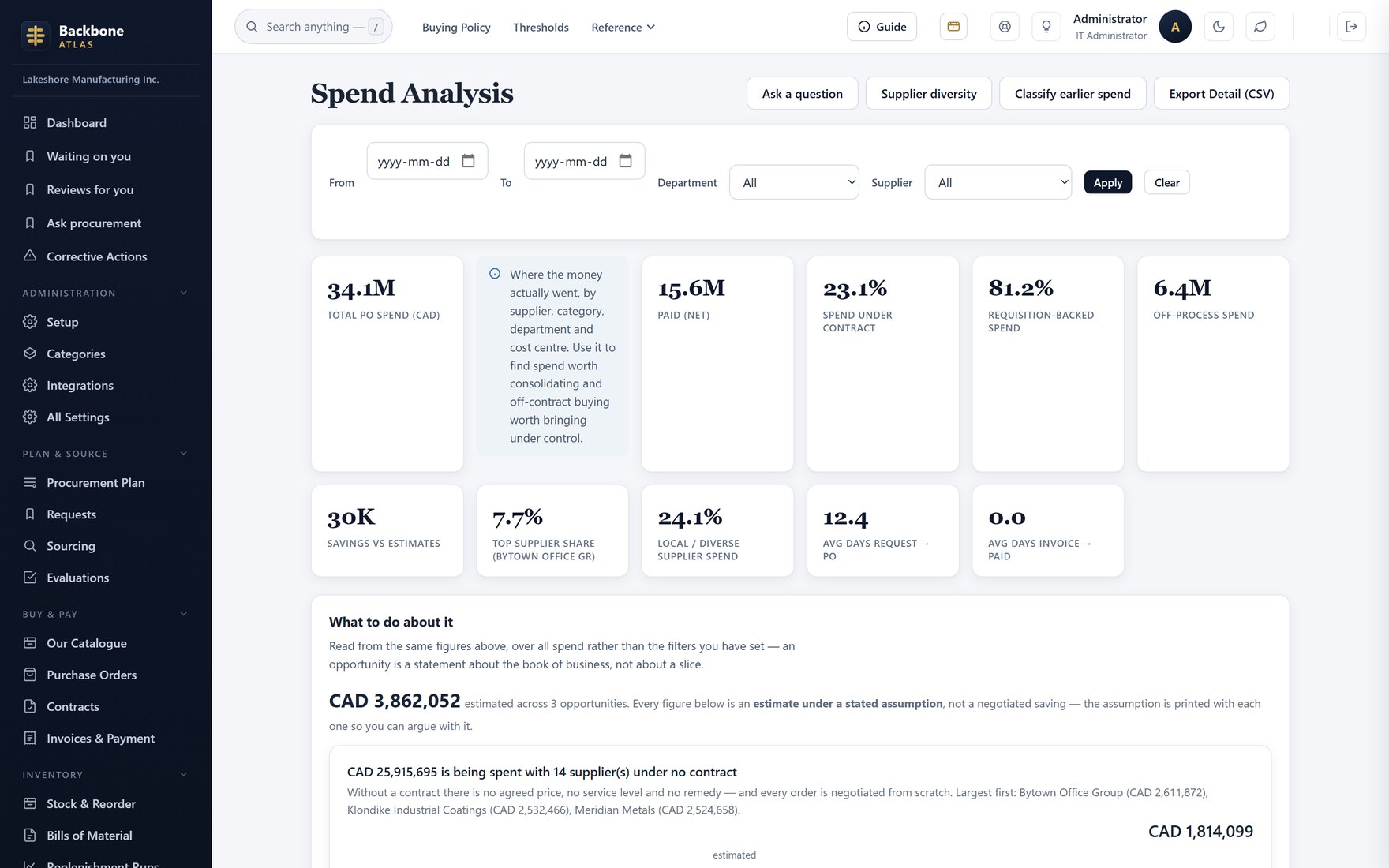
Spend analysisContracted, requisition-backed and off-process spend, side by side.